Hands on efforts to build more supportive learning environments for every child in Syria

UNICEF equips teachers with psychosocial support skills to improve the education process
By UNICEF Syria
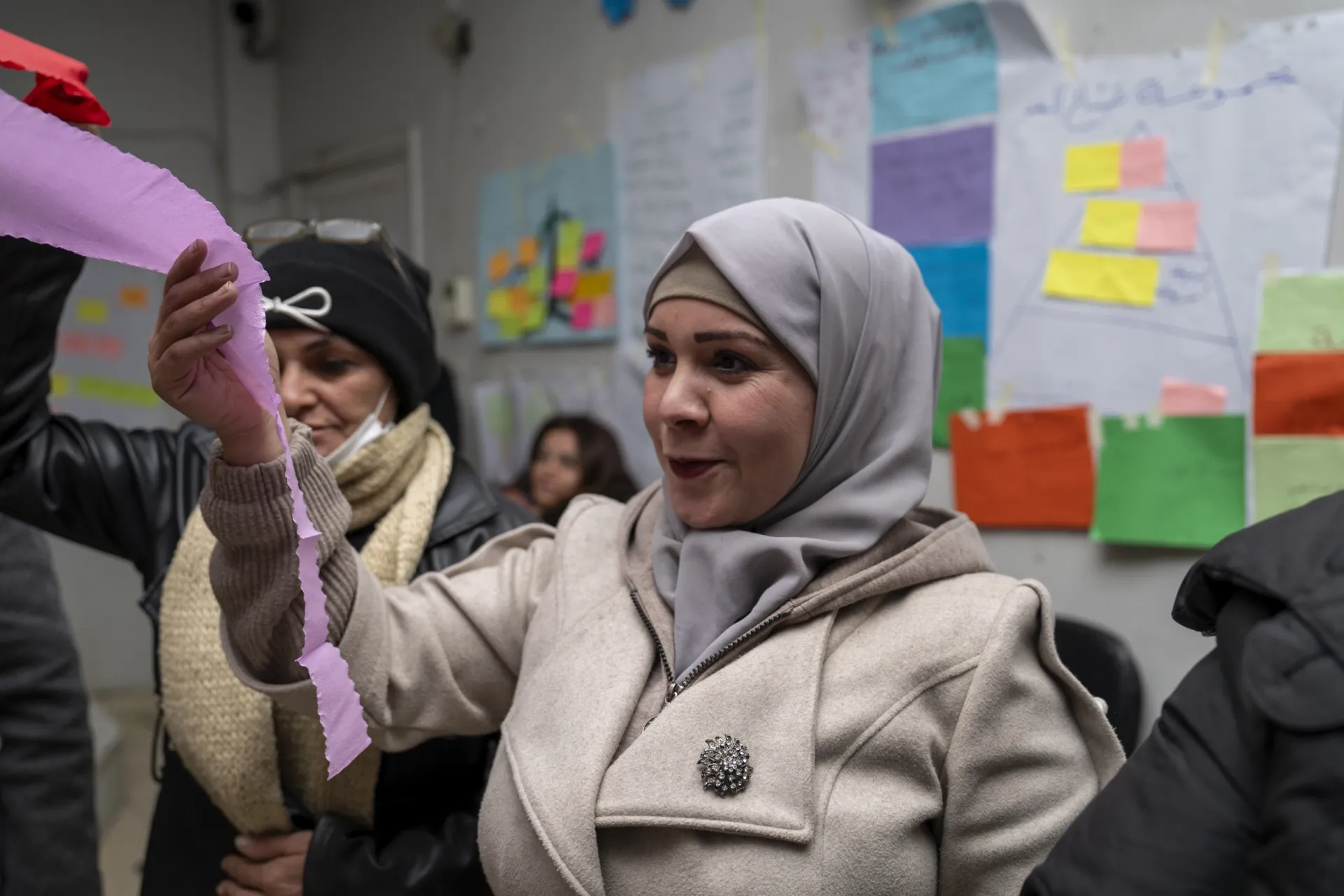
A woman holds onto a pink ribbon.
UNICEF/UNI962323/Johnny Shahan
16 March 2026

Bab Sharqi, Damascus - UNICEF continues to support the education system and strengthen teachers’ capacity to respond to children’s learning and well‑being after years of conflict and displacement.

As part of these efforts, teachers and education staff took part in a national Psychosocial Support (PSS) programme held during the 2026 semester break. Over five days, 1,500 education personnel were trained by 126 facilitators across 13 governorates, through a cascading training approach that ensures wide and sustainable reach.
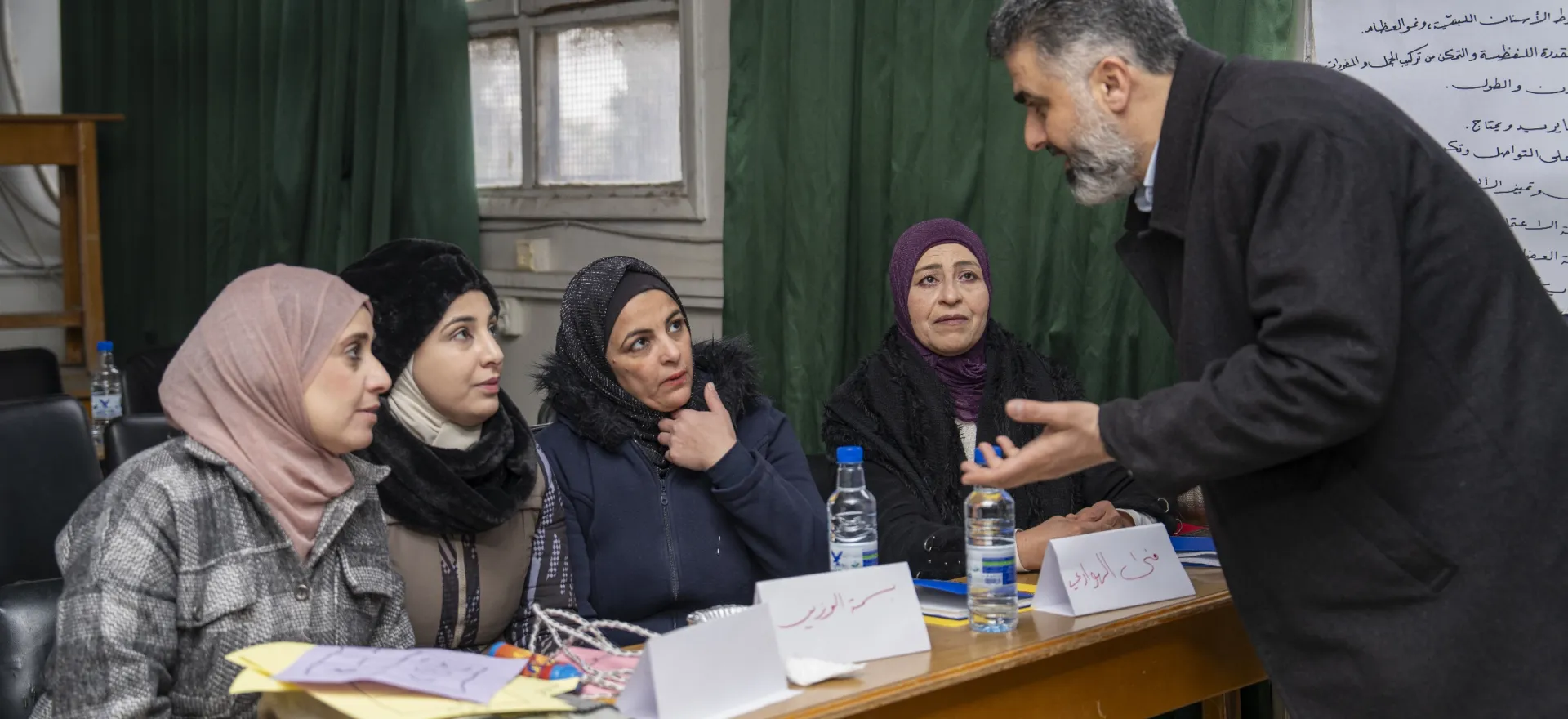
A man speaks to four women who are sitting behind a table.

UNICEF/UNI962471/Johnny Shahan

At the Bab Sharqi training centre in Damascus, educators engaged in practical sessions where they practiced active listening, explored ways to create safe and supportive classrooms, and learned how to recognize and respond to students in distress. Through interactive activities and peer exchange, participants strengthened their skills in Psychological First Aid, self‑care, and age‑appropriate psychosocial activities that can be integrated into daily school life.
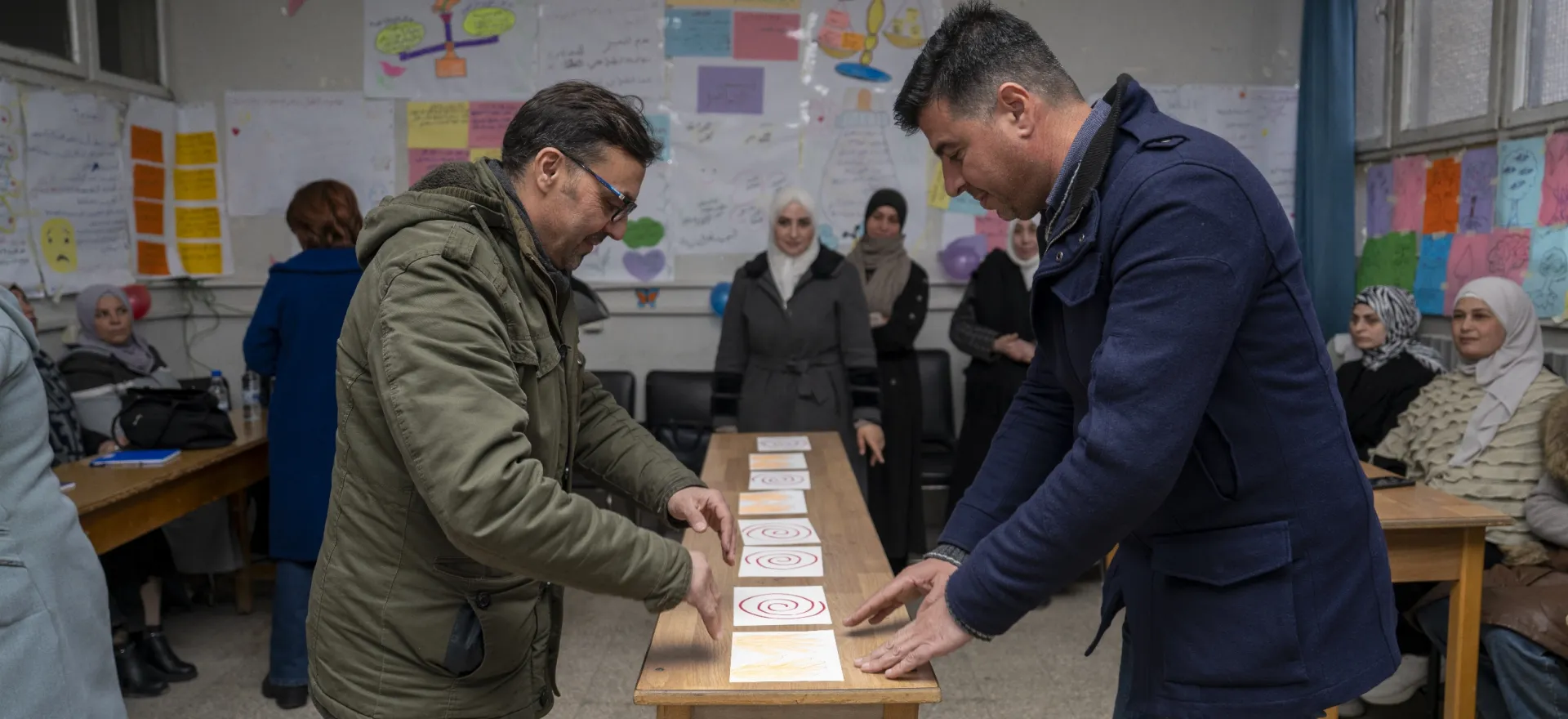
Two men standing on opposite sides of a long narrow table, concentrate on some cards that are laid out in front of them.

UNICEF/UNI962351/Johnny Shahan

These educators are now bringing what they learned back to their classrooms, helping strengthen students’ emotional well‑being, resilience, and sense of belonging.

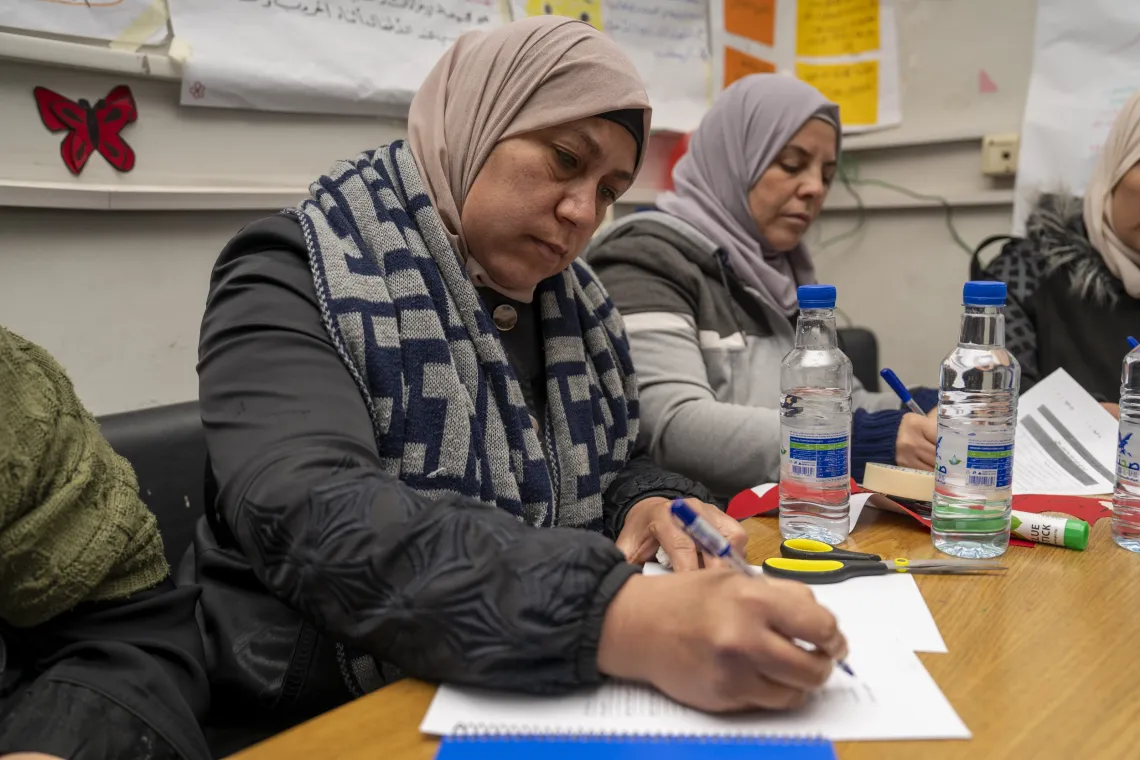
Two women taking notes. Two women taking notes.
UNICEF/UNI962468/Johnny Shahan Wafaa, a Grade 2 teacher, takes part in a UNICEF supported psychosocial support training for educational personnel at the Bab Sharqi training centre in Damascus. “I hesitated to join the training during the break, but now I wish it had been longer. I gained so much from every insight shared by the trainers and colleagues,” she said.
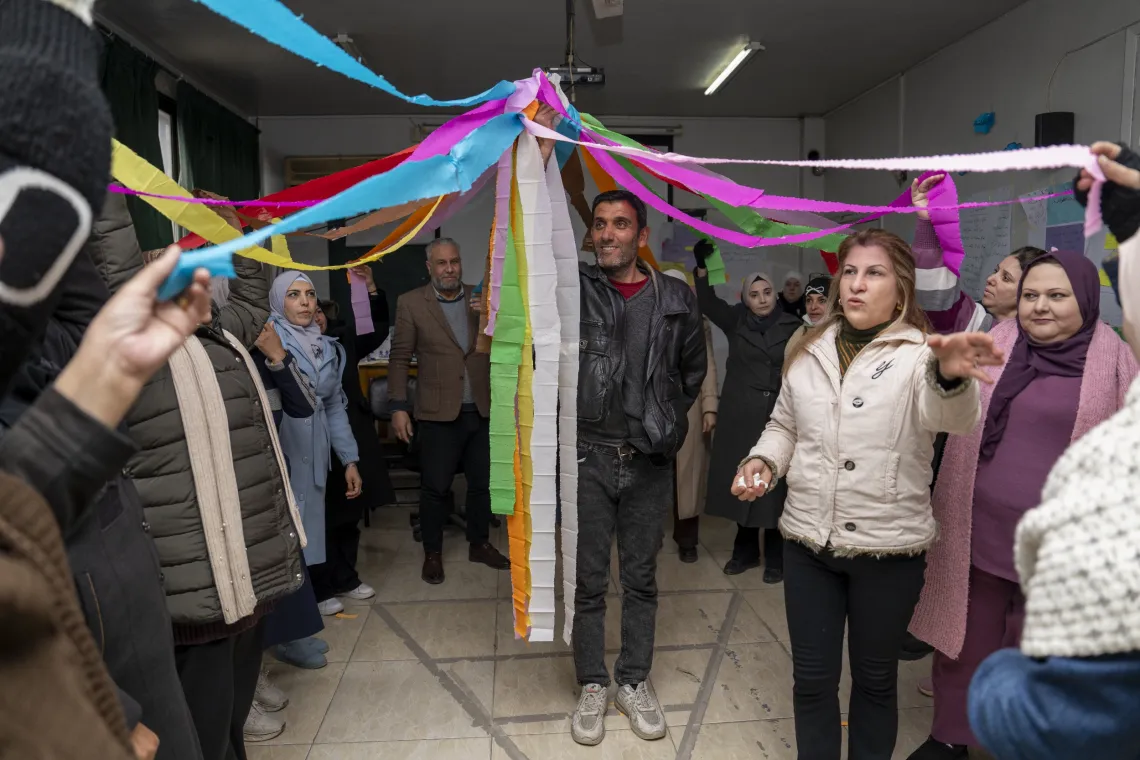
A group of people stand in a circle each holding a coloured ribbon tied together in the middle of the group, with a woman explaining something to them. A group of people stand in a circle each holding a coloured ribbon tied together in the middle of the group, with a woman explaining something to them.
UNICEF/UNI962322/Johnny Shahan Teachers take part in a group activity during a UNICEF supported psychosocial support training for educational personnel at the Bab Sharqi training centre in Damascus. “Self-care was a key focus of this course. Teachers need to be well themselves to support children in the classroom,” said Feryal, a trainer.
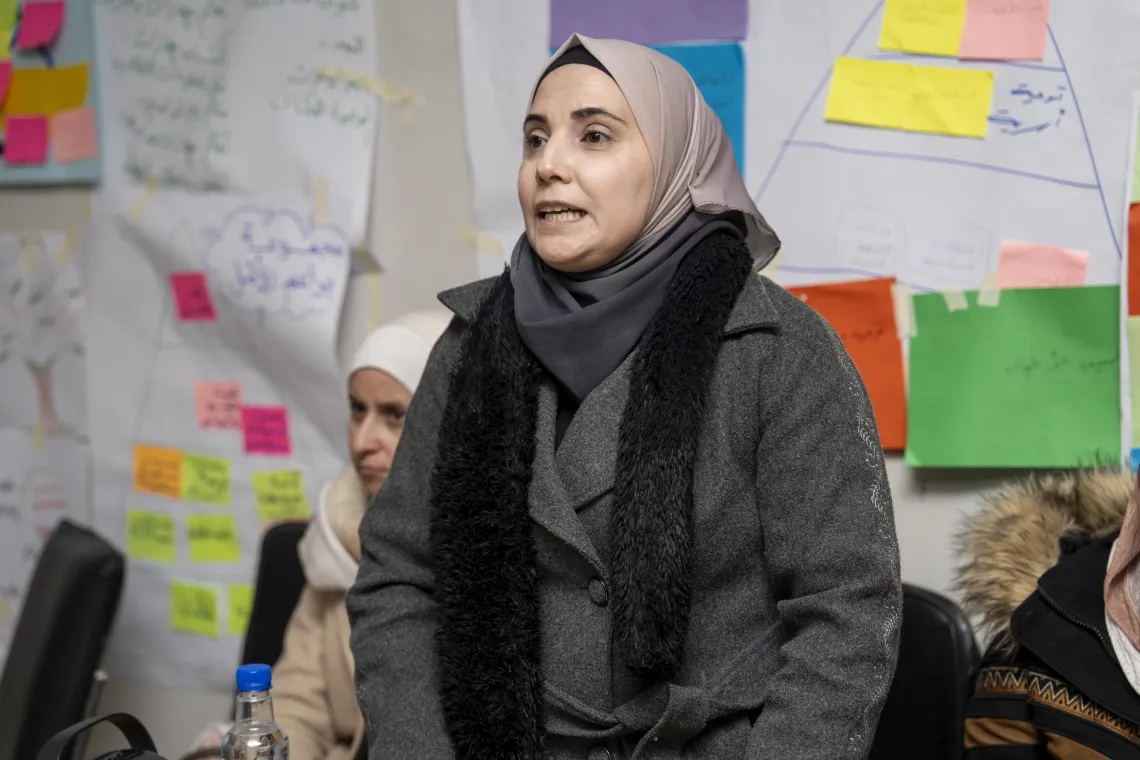
A woman stands up in a class while speaking. A woman stands up in a class while speaking.
UNICEF/UNI962152/Johnny Shahan Reem, a Grade 1 teacher, takes part in a UNICEF supported psychosocial support training for educational personnel at the Bab Sharqi training centre in Damascus. “When I first heard about the training, I felt encouraged and knew it would be informative. Despite the long distance and challenges of getting here, I did not miss a single day,” she said. “I learned a strong set of meaningful activities that I can apply with my students. I am really excited to put them into practice.”
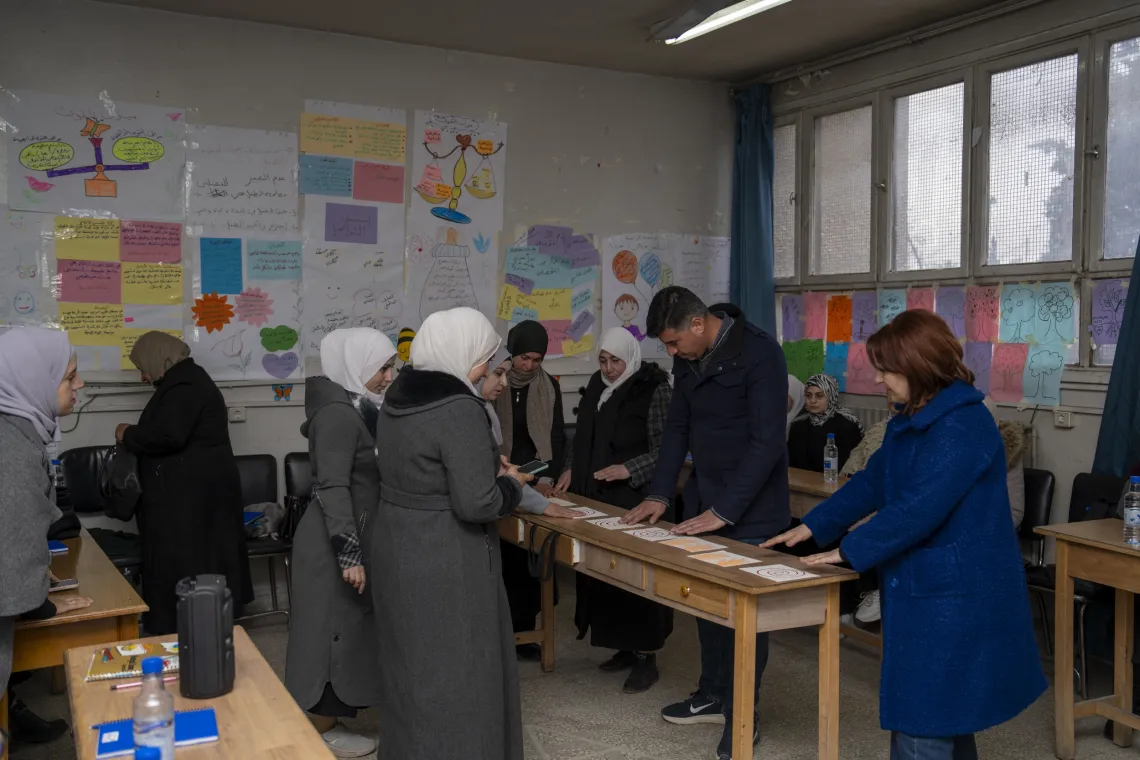
Teachers take part in a group activity, standing around a long narrow table, sorting items on it. Teachers take part in a group activity, standing around a long narrow table, sorting items on it.
UNICEF/UNI962338/Johnny Shahan Teachers take part in a group activity during a UNICEF supported psychosocial support training for educational personnel at the Bab Sharqi training centre in Damascus. “This training created a safe space for teachers to share their challenges and support one another. Peer support truly matters,” Salma, a trainer, said.
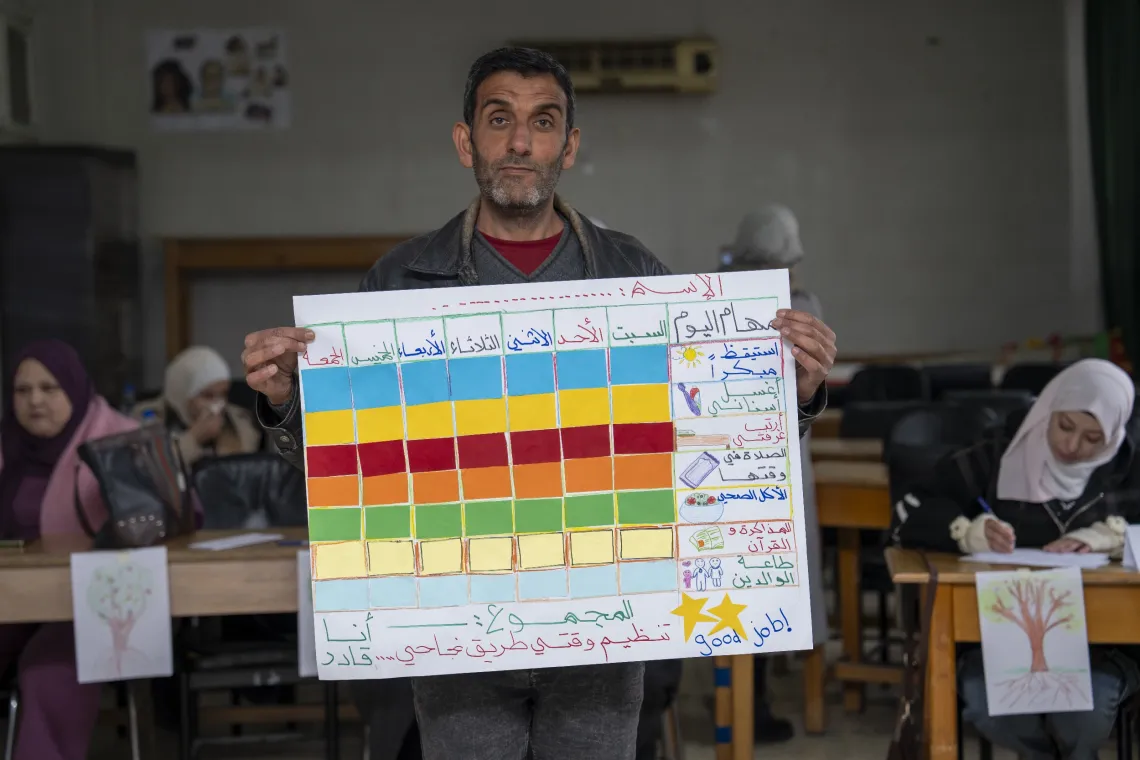
A man holds up a large chart with colourful bars. A man holds up a large chart with colourful bars.
UNICEF/UNI962470/Johnny Shahan Lutfi, a Grade 3 teacher, shows a table created with his colleagues to help children plan and organisae their day, during a UNICEF supported psychosocial support training for educational personnel at the Bab Sharqi training centre in Damascus. “We all need support. This training provided us, as teachers, with the tools we need to give our best to our students,” he said.
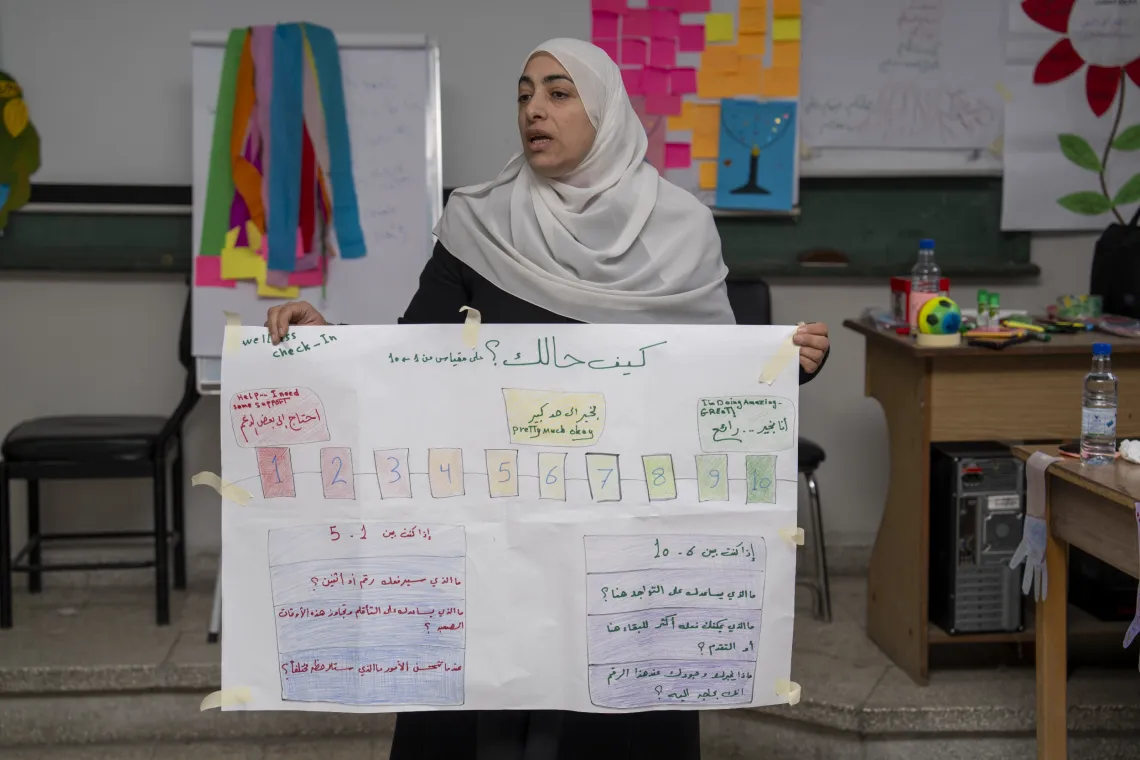
A woman holds up a large poster with a colourful chart and handwritten Arabic text. A woman holds up a large poster with a colourful chart and handwritten Arabic text.
UNICEF/UNI962472/Johnny Shahan Salwa, a trainer, explains to teachers how to identify strengths and weaknesses during a UNICEF supported psychosocial support training for educational personnel at the Bab Sharqi training centre in Damascus. “This training is not a luxury, but an urgent necessity to support teachers, and through them, benefit children,” Salwa said.
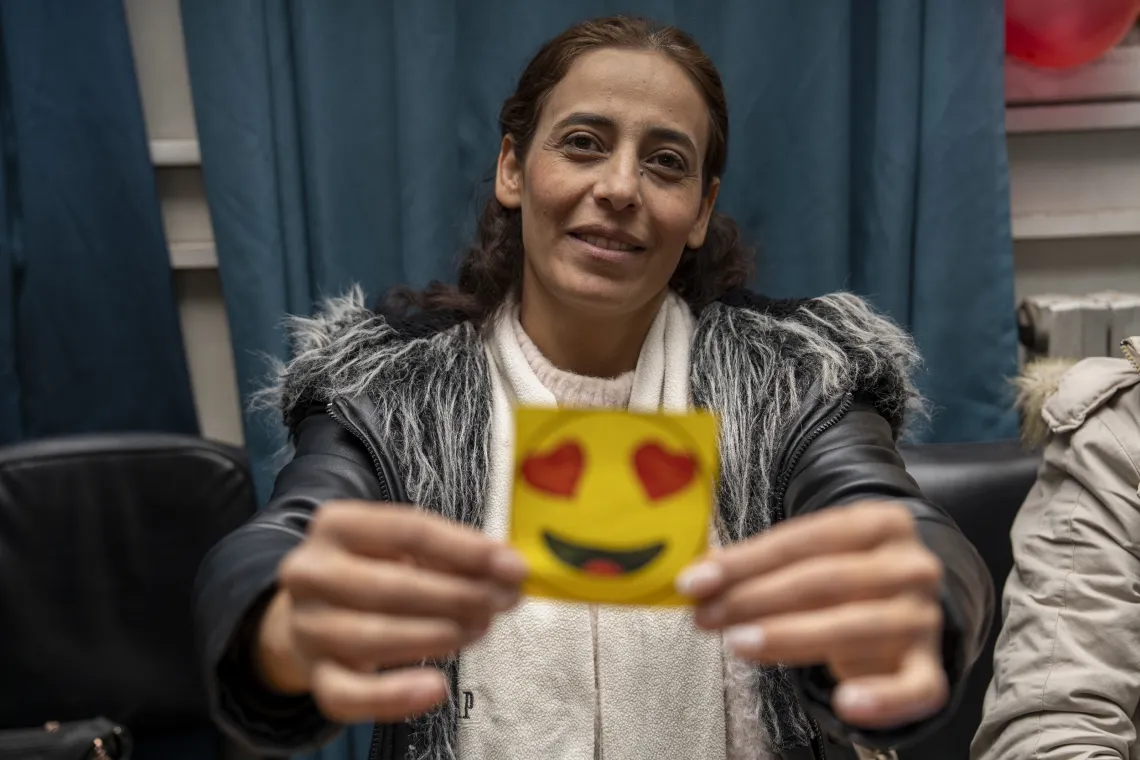
A woman holds up a yellow cardboard cutout of a smiling emoji with red heart-shaped eyes. A woman holds up a yellow cardboard cutout of a smiling emoji with red heart-shaped eyes.
UNICEF/UNI962403/Johnny Shahan Amal, a Grade 4 teacher, takes part in a UNICEF supported psychosocial support training for educational personnel at the Bab Sharqi training centre in Damascus. “I can’t make a child smile if I am not able to smile myself. This training helped me discover my strengths and brought back my positivity that I will transfer to my students,” she said.
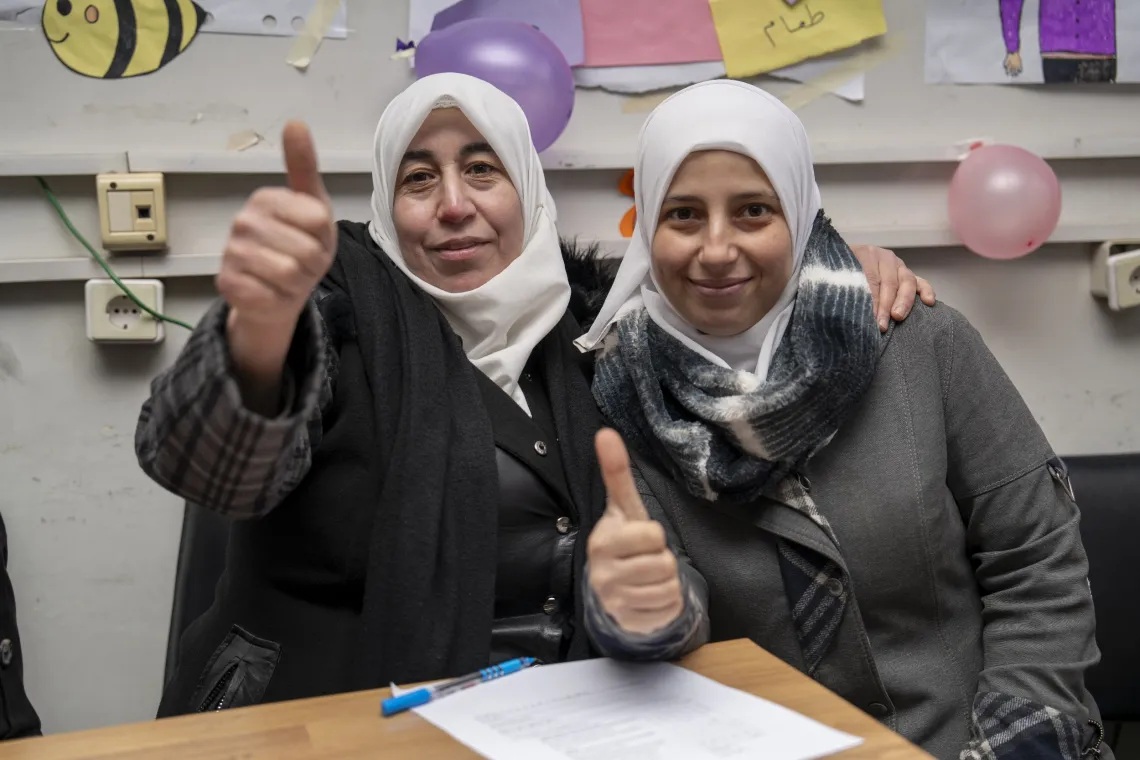
Two women sitting next to each other, smile while both give a thumbs up. Two women sitting next to each other, smile while both give a thumbs up.
UNICEF/UNI962469/Johnny Shahan Hiba and Razan, early childhood educators, during a UNICEF supported psychosocial support training for educational personnel at the Bab Sharqi training centre in Damascus. “Early education classes are foundational. I now have techniques and activities that will help children enjoy school and start strong from day one,” Razan said.

This support was made possible by the invaluable contributions from the Government of Japan and the Government of the Republic of Korea.

UNICEF remains committed to ensuring that all children can access quality, safe, and inclusive education.