Digital learning helps children in Al-Hasakeh to continue their education
UNICEF supports children to access digital education tools at home-based learning points

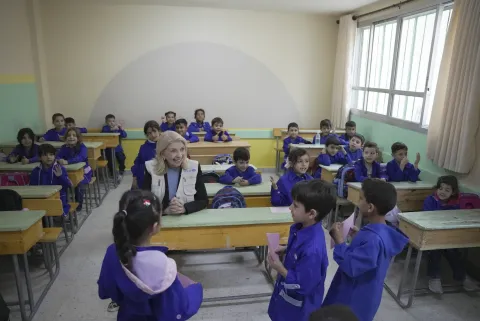
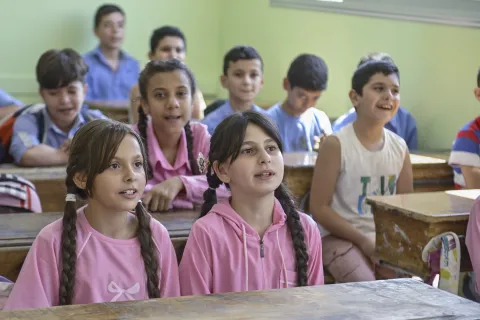
UNICEF is supporting children whose education has been disrupted by the conflict in Syria to continue learning. In Al-Hasakeh governorate, as part of UNICEF’s new digital learning programme in Syria, a number of home-based learning points -volunteered by community members or teachers to compliment learning centres- started using the digital tools. UNICEF supported the light rehabilitation of these home-based learning points and equipped them with a laptop, a projector, and a portable alternative power source. In the programme, teachers rely on presenting videos and facilitating interactive activities on the Learning Passport platform, based on the UNICEF-supported self-learning programme, especially designed to remedy the learning gaps of students who missed out on periods of education. The teachers were also supported with a training on the digitalized self-learning programme and the Learning Passport.

“Digital learning has made the children more excited about coming to class and more engaged in the learning. The tools we use have enriched the education process. Incorporating digital methods in education helps the students to learn more effectively and provides efficient and affordable means to explain new ideas. So far, I’ve received positive feedback from caregivers whose children are benefitting from the digital learning. They’re as excited as the children about it.”
“Arabic is my favourite subject, and I enjoyed learning the alphabet. I like being in class here.”


“At home, I use my notebook to practice what we learn in class, but during class I love using the tablet. I like that we have exams here.”
“I’ve been attending the classes for 6 months. I like learning here and using the tab. At home, I use my dad’s mobile to revise my lessons. English and Arabic are my favourite subjects, because I’m good at both,”


“I joined the class 10 days ago. I like to read, and I enjoy using the tab for that. I wish to become a doctor when I’m older to treat children who are sick.”
“I’ve learned a lot here! I’ve learned some English, which is my favourite subject, and how to read. I also got to know more about animals.”


In 2023 UNICEF has reached more than 2,200 children through digital learning in Al-Hasakeh governorate, including displacement camps. The activities were funded by EU Humanitarian Aid (ECHO), German Federal Ministry for Economic Cooperation and Development (BMZ) through the KFW Development Bank, Global Partnership for Education (GPE) and Government of Australia.