UNICEF Syria fact sheets
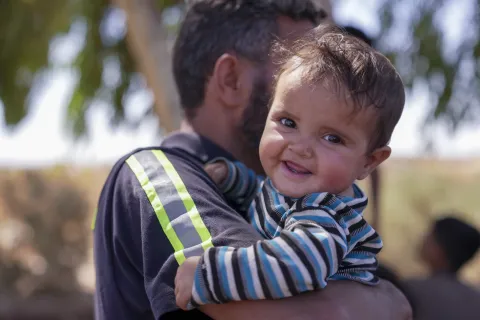
UNICEF aims to reach children no matter where they are or live.

Syria continues to face one of the most complex emergencies in the world
13,000 children killed or injured since the conflict began.
90 per cent of people live in poverty.
7 million children need humanitarian assistance.
70 per cent of the discharged sewage is untreated and causes pollution.
Half of the people rely on unsafe water sources.
Nearly half of school-aged children are out of school.
One in three schools are no longer in use.
Half of the primary health care is offline.
UNICEF in action
With the strong presence on the ground and partnerships with local communities and organizations across multiple sectors, UNICEF aims to reach more children and families. Upholding the humanitarian principles, UNICEF supports integrated, multi-sectoral programming and continues to improve sustained, equitable and safe access to critical basic services in areas where the needs are the highest.
Water, sanitation and hygiene promotion
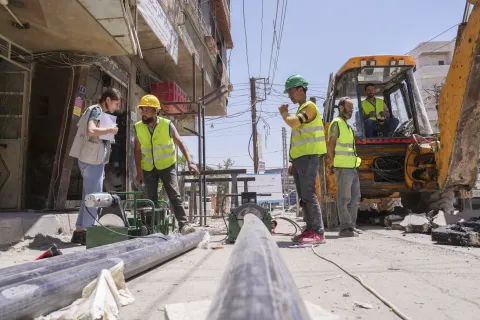
UNICEF helps to reduce deterioration of the water, sanitation and hygiene systems through partially restoring their functionality by using cost effective interventions to provide more children and families in Syria access to clean water and reliable sanitation. UNICEF also ensures the delivered water is safe for drinking and promotes basic hygiene practices.


Health
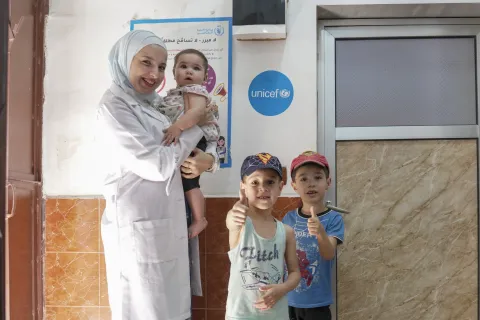
UNICEF supports local NGOs to provide primary health care for children and women and works with community volunteers on at-home newborn care to reduce newborn mortality. UNICEF also rehabilitates health centres, provides vaccines and cold chain equipment for the immunization programme, and equips health workers with knowledge and skills on maternal and child health.
Social and behavioural change
UNICEF works with local partners to engage communities to instill positive and protective practices for women and children. This includes immunization, responsive parenting, healthy feeding and sanitation practices and other actions to contribute to children’s wellbeing.


Nutrition
To prevent the longer-term negative impact of malnutrition, UNICEF is scaling up its preventive nutrition programmes. The interventions focus on the first 1,000 days of a child’s life, improvement of children’s diets through dietary diversity, micronutrient supplementation (home-food fortification), and capacity building of frontline health workers and community volunteers to improve caregivers’ awareness of adequate infant and young child feeding practices.
Education
UNICEF works to address the immediate and longer-term education needs in the country, with a focus on interventions that foster enhanced learning and well-being for all children, from pre-primary to adolescent. We establish learning spaces and rehabilitate schools to increase inclusive and safe access for children, support the development of learning materials, measure learning outcomes and support teachers, who are the core of the education process.


Child protection
UNICEF is helping to build a comprehensive child protection system to prevent and respond to violence, abuse, neglect and exploitation. We support the development of child protection professionals to provide integrated child protection and social services for children. We also work with children, their caregivers and families, and their communities to provide psychosocial and parenting support; raise awareness on the risks of mines and unexploded ordnances; and monitor and report on grave violations against children in armed conflict.
Social policy
UNICEF continues scaling up the use of cash transfers for the most vulnerable children – including children with disabilities and children in poor urban areas. Linking cash assistance to case management has shown to lead to a significant reduction in negative coping strategies in terms of cutting essential healthcare, education expenses and compromising food intake for children.


Adolescent development and participation
UNICEF promotes adolescents and youth’s resilience and coping capacities by providing them with access to services and skills-building for enhanced employability, strengthening their social, civic and digital engagement and fostering of volunteerism and social cohesion-building. We enhance young people participation in advocacy, data collection, and evidence generation, and build their capacity to cope with emergencies.
UNICEF, in coordination with partners, aims to ensure accountability to affected populations with integration of gender, child safeguarding as well as prevention from sexual exploitation and abuse into its programmes.
UNICEF aims to reach children no matter where they are or live.
UNICEF has field offices in Aleppo, Deir ez-Zor, Homs, Qamishli and Tartous.
Key planned results by the end of 2023
5.3 million people accessing a sufficient quantity and quality of water
2.4 million children and women accessing primary health care
489,000 children accessing community-based mental health and psychosocial support
2.6 million children supported with educational services and supplies in formal settings
1.6 million primary caregivers receiving infant and young child feeding counselling

UNICEF appeal
US$468.5 million to meet the needs of children in Syria in 2023.
The greatest funding requirements are for restoration and rehabilitation in WASH, health, education, in earthquake affected areas, while protection remains a high priority.
Highlights
Syria continues to face one of the most complex emergencies in the world. With the strong presence on the ground and partnerships with local communities and organizations across multiple sectors, UNICEF aims to reach more children and families. Upholding the humanitarian principles, UNICEF supports integrated, multi-sectoral programming and continues to improve sustained, equitable and safe access to critical basic services in areas where the needs are the highest. Download these factsheets to learn about the situation of children in Syria.