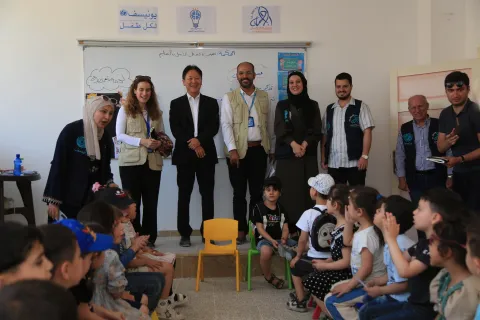
Supporting children at a critical moment of return

As families arrive from Lebanon through the Joussieh border crossing, UNICEF delivers integrated services to meet urgent needs and restore hope
By: UNICEF Syria
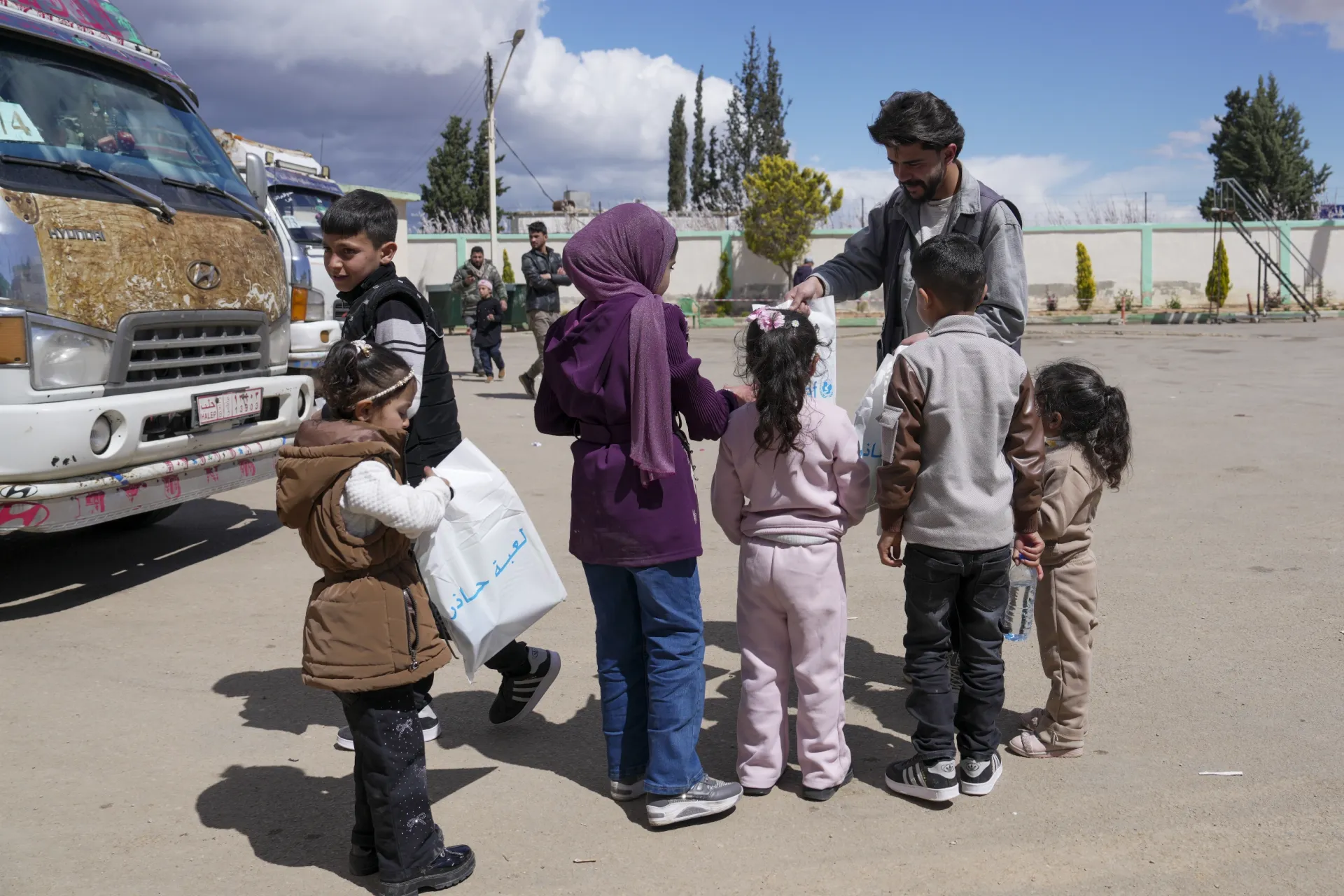
Children receive mine risk education kits from a UNICEF-supported worker.
UNICEF/UNI975344/Johnny Shahan
09 April 2026

Joussieh Border crossing, Homs - One month after the escalation of hostilities in Lebanon, cross‑border movements into Syria have increased significantly. By 4 April, more than 240,000 people had crossed into Syria, including nearly 37,000 Lebanese nationals.

At the Joussieh border crossing in Homs Governorate, children and their families arrive after long and distressing journeys, facing exhaustion and deep uncertainty about what lies ahead. In response, UNICEF and partners are delivering life‑saving, multi‑sectoral support to ensure that children receive care and protection upon arrival. 

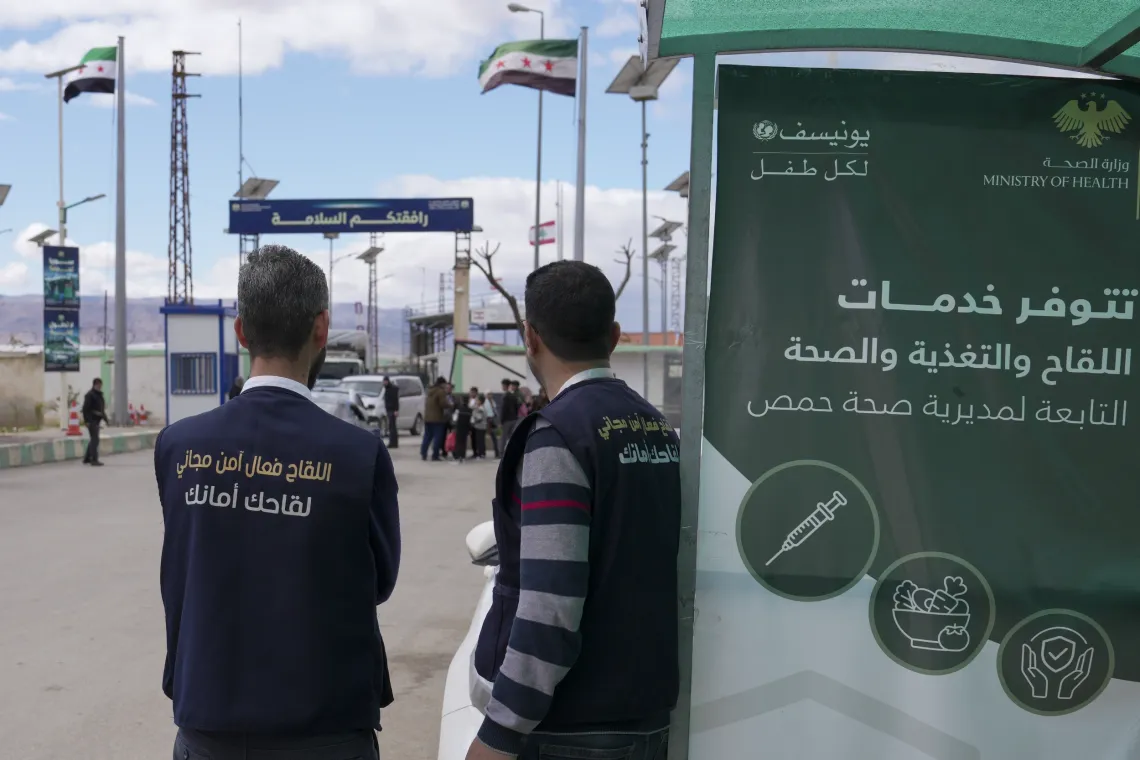
Two men look at a border crossing, where loaded trucks are waiting. Two men look at a border crossing, where loaded trucks are waiting.
UNICEF/UNI975331/Johnny Shahan A UNICEF-supported mobile health and nutrition team welcomes families arriving from Lebanon at the Joussieh border crossing, providing essential services for children, including vaccinations, primary health care, and nutrition screening, in Homs Governorate. “Families arrive exhausted and afraid,” said Bassel, a health worker. “Our presence is essential, not only to provide healthcare for children, but also to reassure families that they are now safe and in caring hands.”
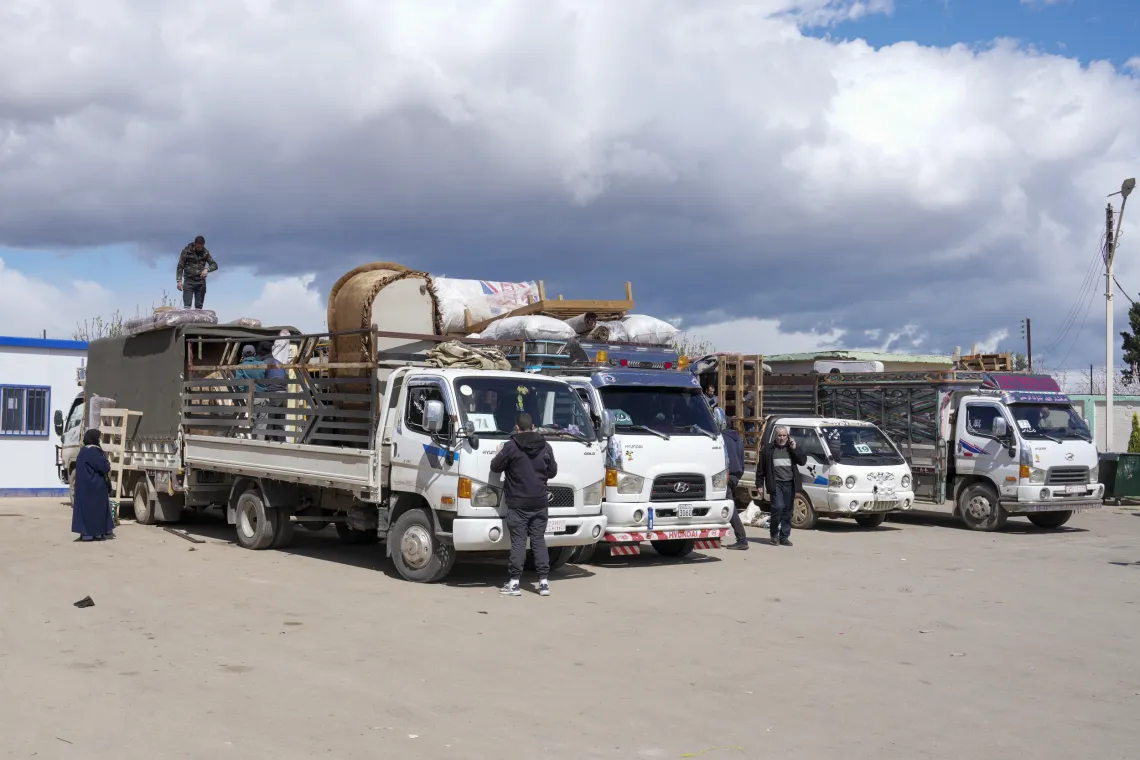
Trucks and cars loaded with belongings are parked in a row. Trucks and cars loaded with belongings are parked in a row.
UNICEF/UNI975339/Johnny Shahan Families travel in cars and trucks loaded with their belongings at the Joussieh border crossing in Homs Governorate. “We fled Syria in 2013 and settled in Lebanon. Now the journey begins again,’ said Saada, a mother of five and a grandmother of six. ‘We will live in an empty warehouse until we can find a solution.”

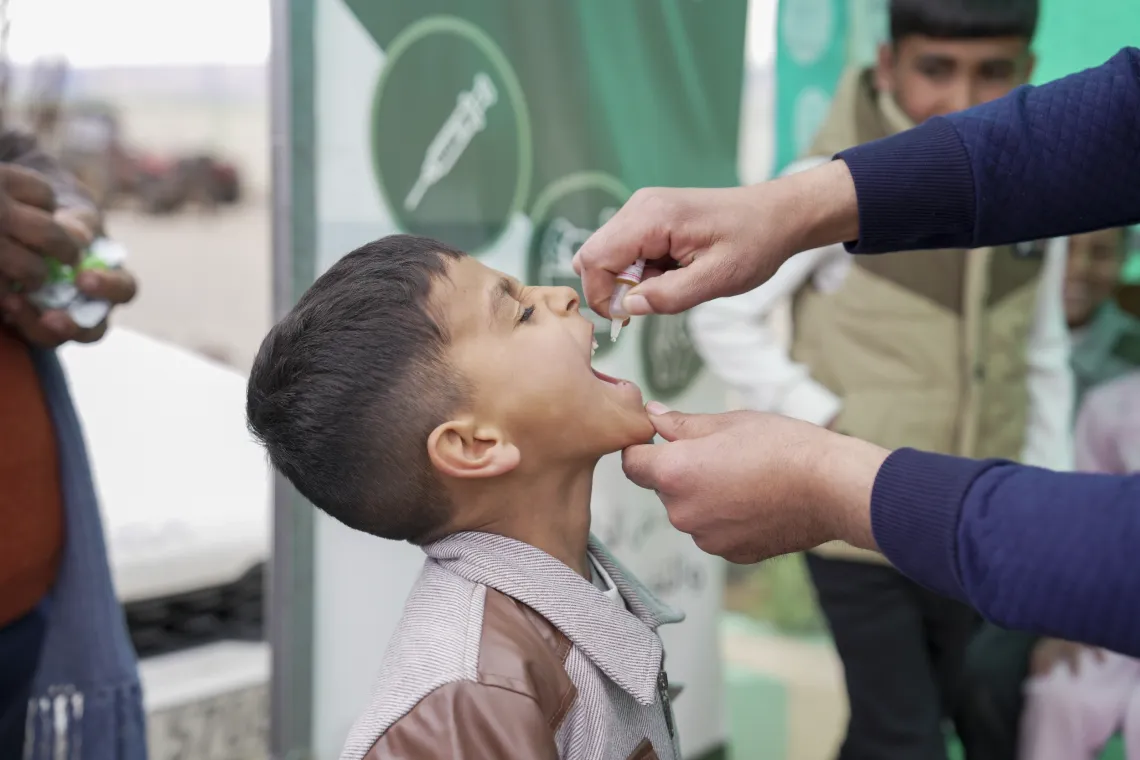
Through UNICEF‑supported mobile health and nutrition teams, essential services have reached to nearly 1,800 people. These included vaccinations for more than 890 children, primary health care consultations for over 3,200 children, and nutrition and maternal health counselling for some 100 mothers. To address immediate nutrition risks, lipid‑based nutrient supplements were distributed to children, alongside micronutrient supplements for pregnant and lactating women.

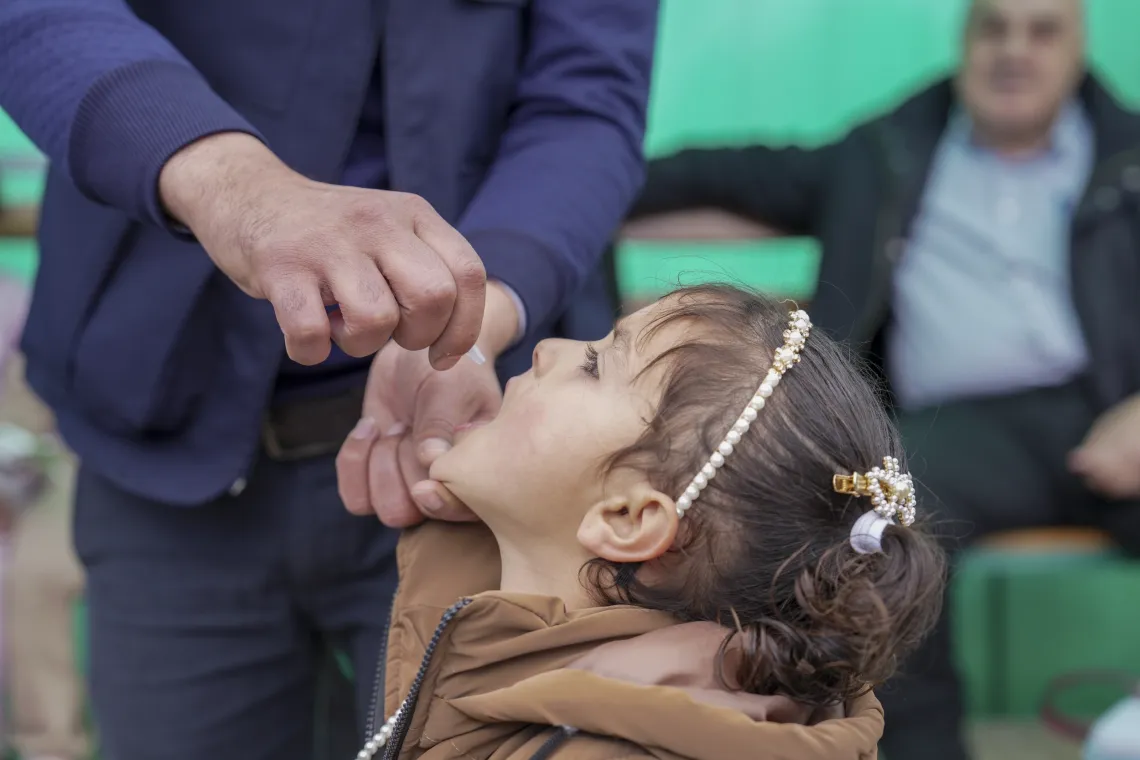
A little girl with her titled back, receives polio vaccine drops in her mouth. A little girl with her titled back, receives polio vaccine drops in her mouth.
UNICEF/UNI975336/Johnny Shahan Sham, 4, receives a polio vaccine from a UNICEF supported mobile health and nutrition team upon her arrival from Lebanon at the Joussieh border crossing in Homs Governorate.
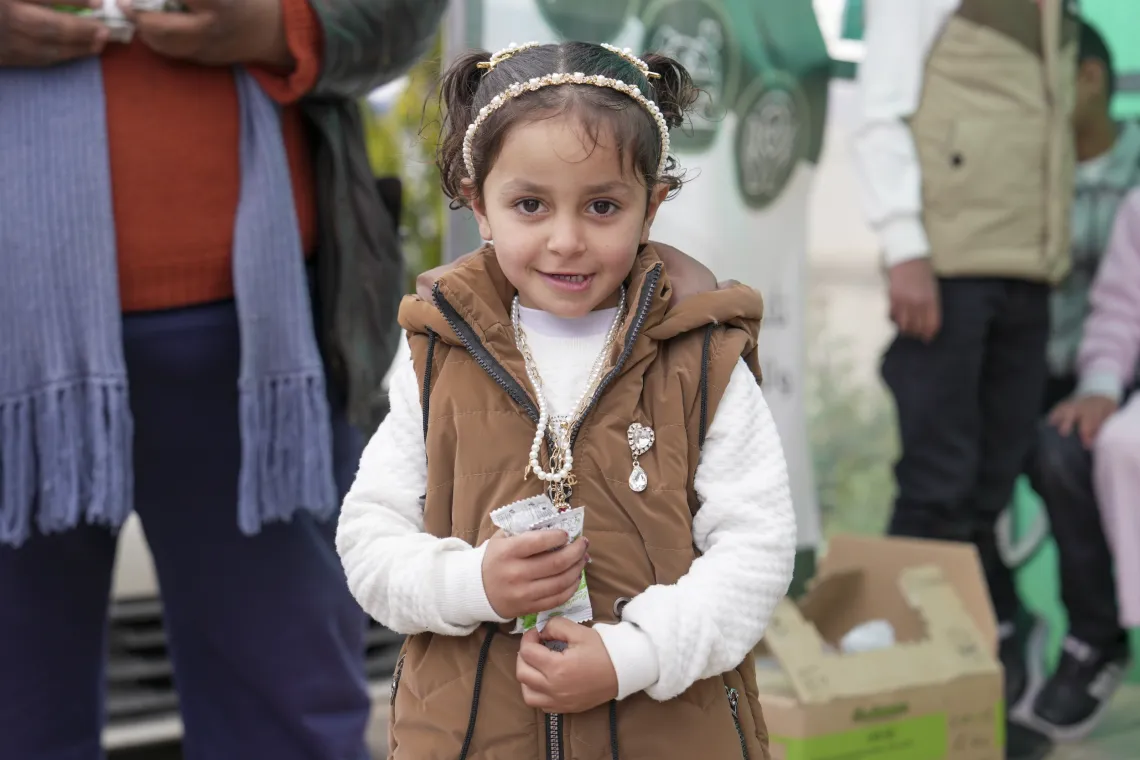
A little girl holding a small package, smiles for a photo. A little girl holding a small package, smiles for a photo.
UNICEF/UNI975334/Johnny Shahan Sham, 5, holds nutrition supplements provided by a UNICEF supported mobile health and nutrition team at the Joussieh border after arriving with her family from Lebanon crossing in Homs Governorate. “We are returning to rural Aleppo after 14 years away,’ her father Ahmed said. “We don’t know where to stay as we don’t have a home.”
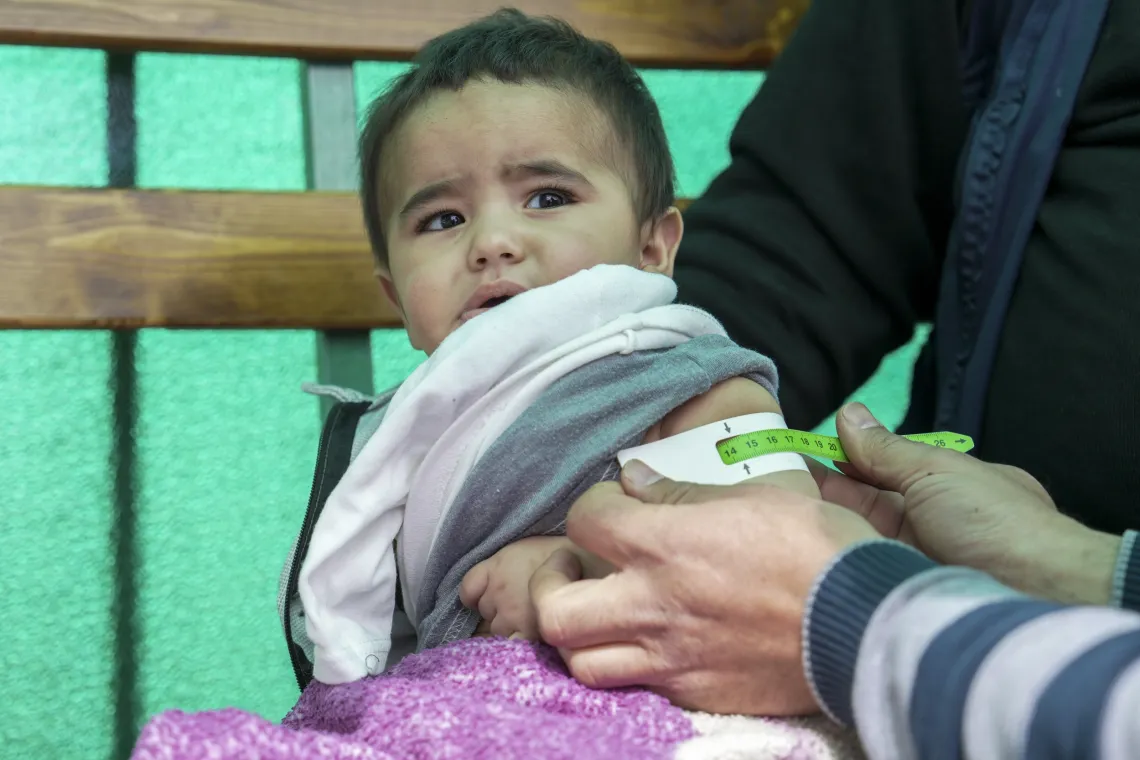
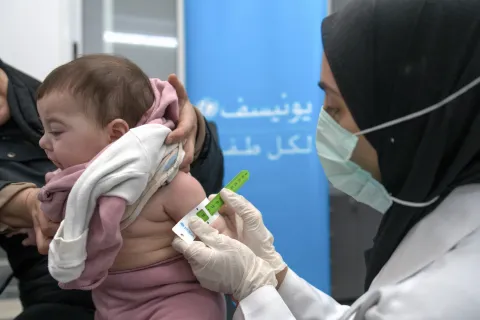
An infant boy looks up while his upper-arm circumference is measured to estanblish his nutritional status. An infant boy looks up while his upper-arm circumference is measured to estanblish his nutritional status.
UNICEF/UNI975338/Johnny Shahan Mohamed, 9 months, undergoes a nutrition screening by a UNICEF supported mobile health and nutrition team upon his arrival from Lebanon at the Joussieh border crossing in Homs Governorate. “The difficult security and economic situation in Lebanon forced us to return to Syria with our six children,” said their mother, Aisha. “Our house is destroyed. My only hope is for a better life for my children.”
A little boy with his head tilted back, receives polio vaccine drops in his mouth. A little boy with his head tilted back, receives polio vaccine drops in his mouth.
UNICEF/UNI975335/Johnny Shahan Adam, 5, receives a polio vaccine from a UNICEF supported mobile health and nutrition team upon his arrival from Lebanon at the Joussieh border crossing in Homs Governorate. “We were relieved and grateful to be met by the medical team as soon as we entered Syria,” said his father, Ahmed.

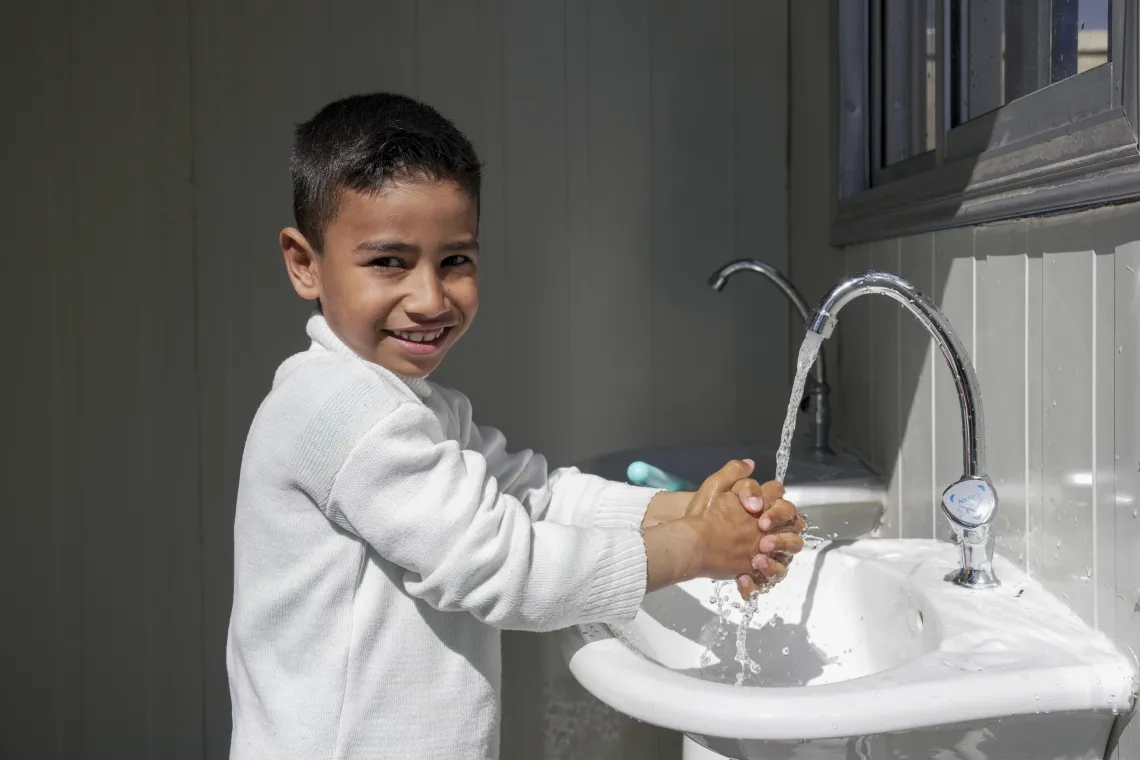
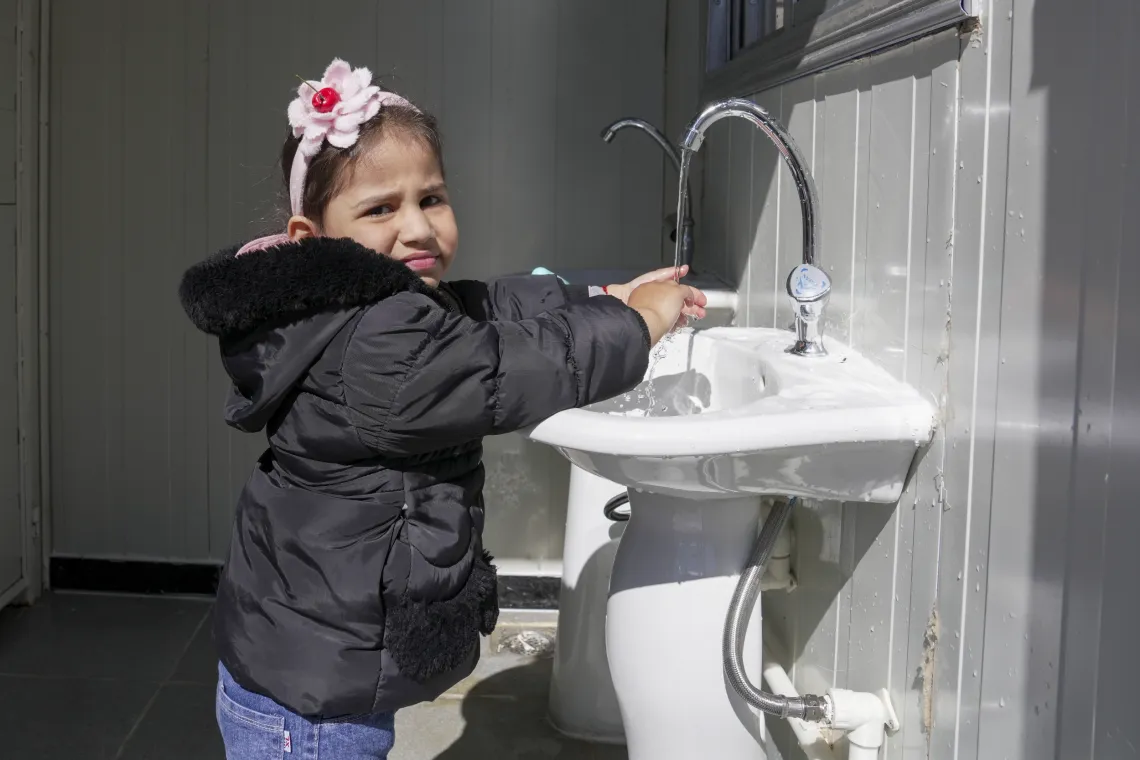
To promote safe and dignified conditions at the border, UNICEF has rehabilitated previously installed water and sanitation prefabricated units, improving access to safe water and sanitation for returning families. 

A young boy smiles as he washes his hands in a sink. A young boy smiles as he washes his hands in a sink.
UNICEF/UNI975333/Johnny Shahan Mohamed, 6, who recently arrived with his family from Lebanon, washes his hands at a UNICEF-rehabilitated water facility at the Joussieh border crossing, Homs Governorate. “I feel sad to have left our home in Lebanon. Now we are going to Aleppo, a place I don’t know, but my mother has told me so much about it and says it is beautiful.”
A little girl with a headband with a pink flower on it, washes here hands at a sink. A little girl with a headband with a pink flower on it, washes here hands at a sink.
UNICEF/UNI975332/Johnny Shahan Joud, 4, who recently arrived with her family from Lebanon, washes her hands at a UNICEF-rehabilitated water facility at the Joussieh border crossing, Homs Governorate. “The security situation in Lebanon became extremely frightening, and the children were terrified by the sounds,” said her grandmother, Aziza. “We left with nothing but the clothes we were wearing. We are returning to Aleppo, but we no longer have a home there. For now, we will stay with relatives until we can find a solution.”

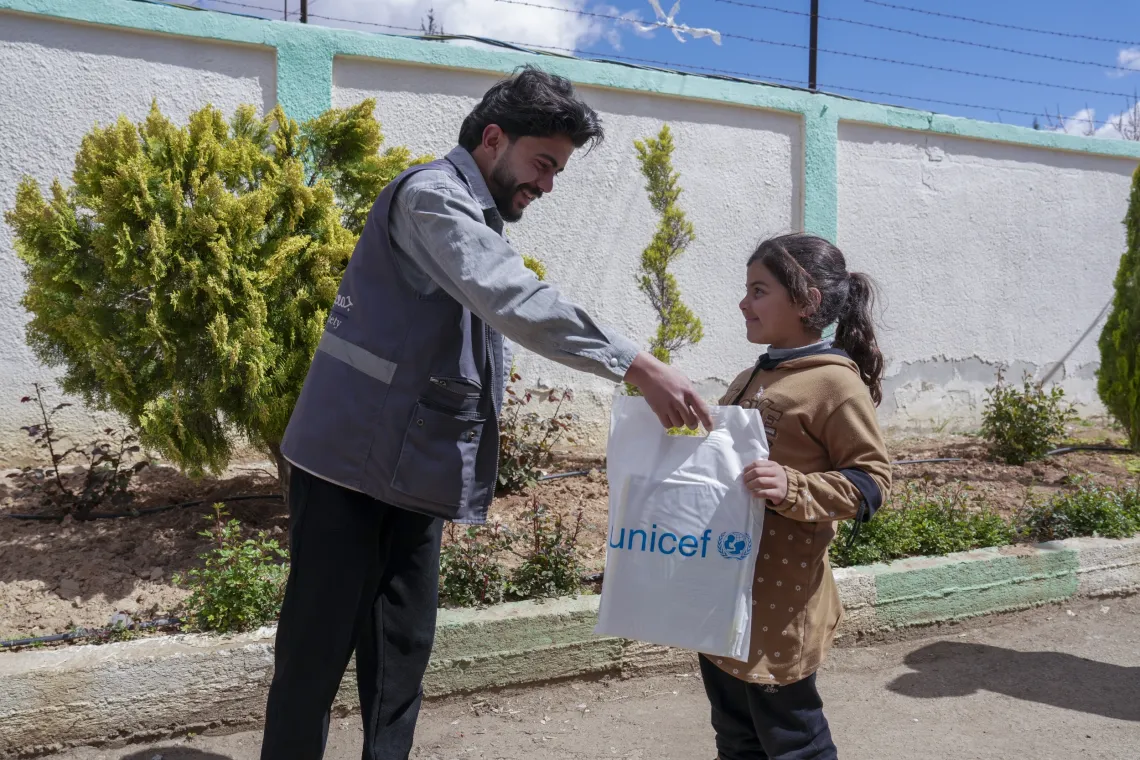
Child protection interventions remain a critical pillar of the response. UNICEF is supporting arriving children through the distribution of Explosive Ordnance Risk Education (EORE) kits, reaching nearly 600 children as of 6 April. The kits, designed to be engaging, help raise awareness of life‑threatening hazards and provide children with meaningful activities during long waiting hours at the border.

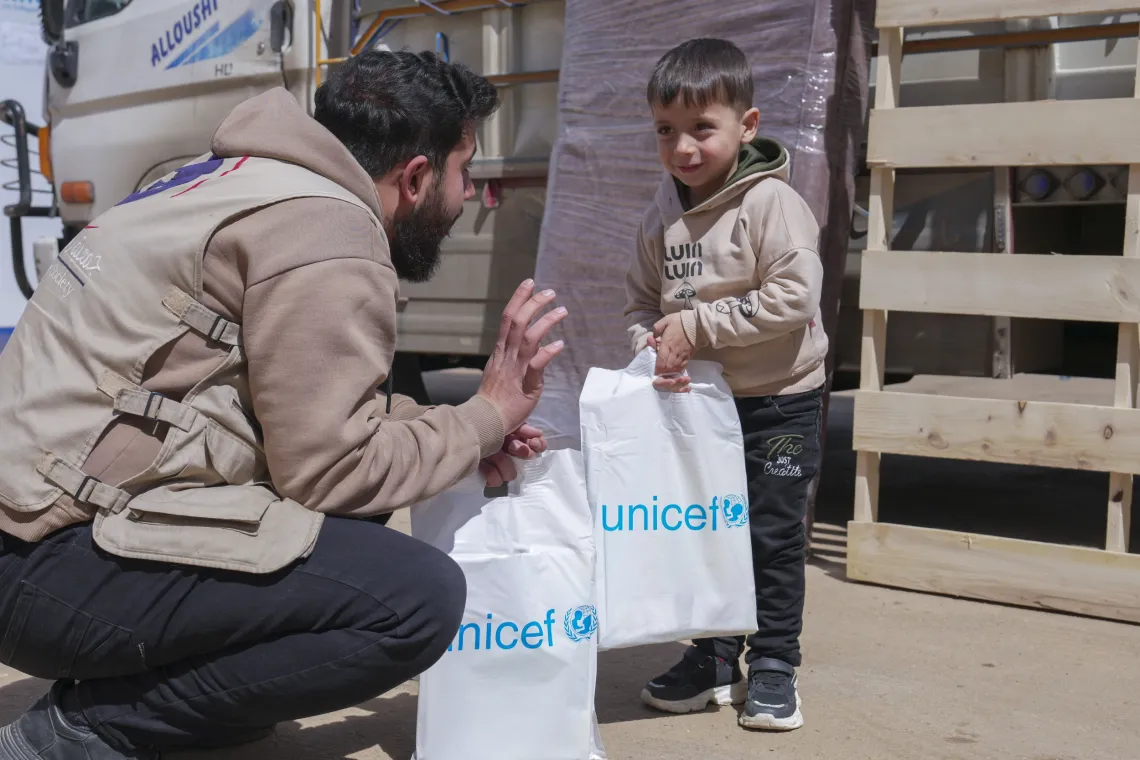
A young boy holds a white bag with a UNICEF logo on it, while listening to a man explaining something to him. A young boy holds a white bag with a UNICEF logo on it, while listening to a man explaining something to him.
UNICEF/UNI975340/Johnny Shahan Motaz, 5, receives a mine risk education kit by a UNICEF-supported worker at the Joussieh border crossing in Homs Governorate. “I will use this nice kit with my cousins in Syria,“ he said.
A young girl receives a bag with a UNICEF logo on it from a man. A young girl receives a bag with a UNICEF logo on it from a man.
UNICEF/UNI975341/Johnny Shahan Haneen, 8, receives a mine risk education kit from a UNICEF-supported worker at the Joussieh border crossing in Homs Governorate. “The happiest thing about returning to Syria is going to school for the first time,” she said.
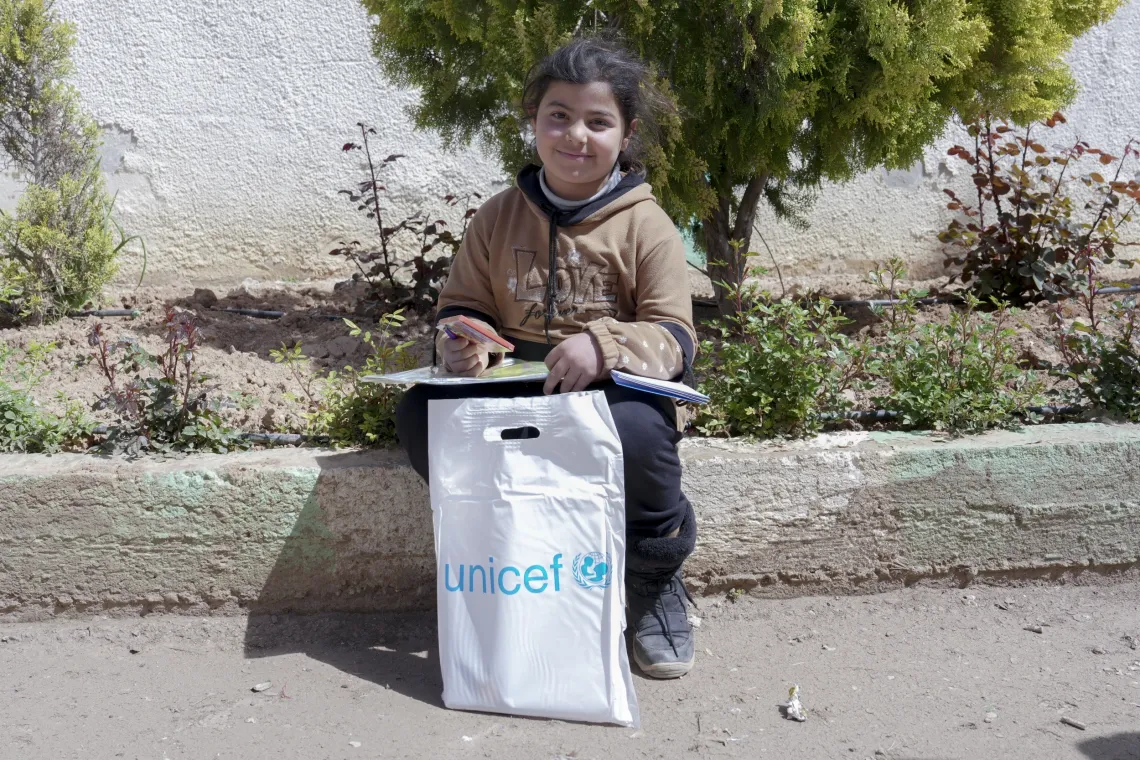
A little girl sits on the curbside with a white bag with a UNICEF logo on it in front of her. A little girl sits on the curbside with a white bag with a UNICEF logo on it in front of her.
UNICEF/UNI975343/Johnny Shahan Haneen, 8, happily explores the contents of the mine risk education kit she received from a UNICEF-supported worker at the Joussieh border crossing in Homs Governorate. “I will start coloring the book as soon as we arrive home in Idleb,” she said.

To support the hygiene and well‑being of women and girls, some 280 adolescent girls and female caregivers have received dignity (LAHA) kits to date, with distributions ongoing to reach the targeted 500 beneficiaries who fled with little or no personal belongings.

Collection row media
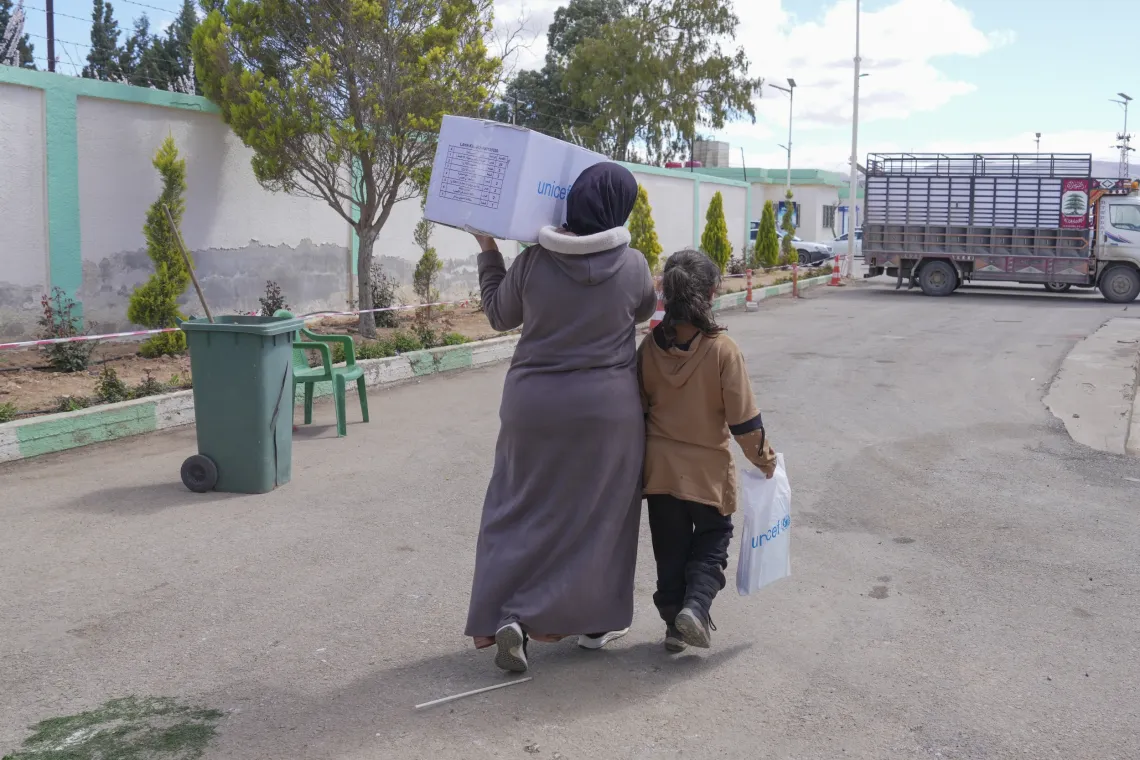
A woman carrying a large box on her shoulder, walks next to her daughter who is carrying a while bag. A woman carrying a large box on her shoulder, walks next to her daughter who is carrying a while bag.
UNICEF/UNI975342/Johnny Shahan Nashwa and her eight-year-old daughter Haneen carry UNICEF supported dignity and mine risk education kits provided at the Joussieh border crossing in Homs Governorate.

UNICEF remains committed to safeguarding the rights of every child during emergencies, ensuring they are protected, healthy, and able to access essential services, while supporting families as they rebuild hope for a safer and more stable future. 

This support was made possible by the invaluable contributions from the German Federal Ministry for Economic Cooperation and Development (BMZ) through the KfW Development Bank and the Foreign Commonwealth and Development Office (FCDO).