From university to the community
Students driving social norms change in North Kordofan

Sudan remains one of the countries with highest prevalence rates of female genital mutilation (FGM) globally. While national data shows a gradual decline — from 89 per cent in 2010 to 83.9 per cent in 2018 — the practice remains nearly universal in several states.
North Kordofan is among the most affected, with an estimated 97.7 per cent of women aged 15–49 having undergone FGM ((2018/19 Simple Spatial Survey Method (S3M-II), a rate significantly higher than the national average.
While the harmful practice was criminalized under national law in 2020, enforcement remains challenging due to deeply rooted social norms that continue to sustain it, particularly in rural communities. Putting thousands of girls at risk of harm, health complications, school dropout and child marriage.
Recognizing that legislation alone cannot transform behaviour, UNICEF partnered with a local academic institution — the University of Kordofan — to explore innovative approaches to accelerate social norms change.
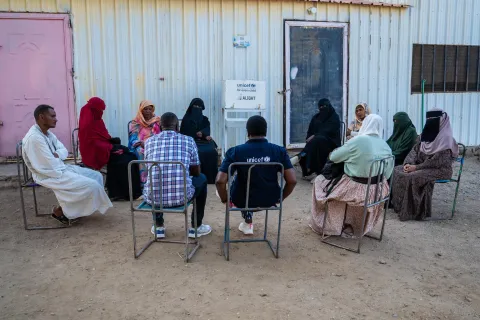
The initiative brought together academic expertise, community and youth leadership, positioning university students as change agents. Through continued engagements with key influencers such as midwives and local leaders, the partnership sparked community-led dialogues to challenge long-standing social expectations affecting girls.
This locally rooted model positioned students as a new generation of advocates and opened space for deeper, community-driven conversations on FGM, child marriage and gender-based violence.

The partnership
The collaboration between UNICEF and the University of Kordofan recognized that transforming deeply rooted social norms requires trusted local institutions capable of engaging communities over time. This meant exploring innovative approaches and partnerships beyond traditional programme models to support sustainable social and behaviour change.
The University of Kordofan offered a unique comparative advantage. As a respected academic institution with strong community ties, it combines research, community engagement and a mandatory student community service programme — providing a natural platform to connect knowledge, youth leadership and community action.
Beyond community engagement, the partnership also helped expand dialogue with key actors from the health and justice sectors, strengthening awareness of the legal and health consequences of harmful practices.
Moreover, majority of students from the Community Development College originate from the same communities where FGM and child marriage were prevalent. This created a unique opportunity to facilitate dialogue on sensitive topics with greater trust, cultural understanding and acceptance.
By mobilizing university students as facilitators and change agents, the partnership fostered intergenerational dialogue and positioned young people as a new generation of advocates working to transform harmful social norms.
The partnership model
The partnership introduced an integrated package of interventions linking social norms change, systems strengthening and support for the care and protection of survivors.
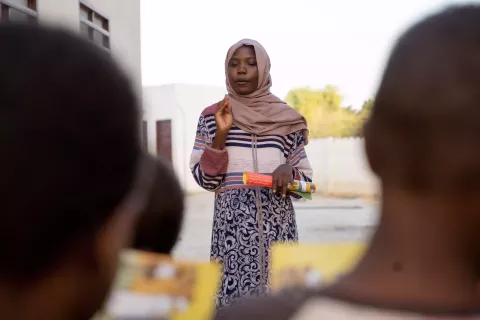
At community level, university students from the Community Development College were mobilized as change agents, acting as a bridge between communities, service providers and local authorities. Through community dialogues, public awareness activities and theatre performances, they helped create safe spaces for discussion and reflection on the abandonment of FGM and other harmful practices.
At the institutional level, the partnership contributed to strengthening the capacity of frontline professionals by engaging actors from the health and justice sectors on the health and legal consequences of FGM and child protection risks, supporting improved prevention, reporting and response.
At the service level, the initiative supported case management, psychosocial support and referral pathways, contributing to improved access to care and protection services for survivors.
At the coordination level, the partnership reinforced collaboration through engagement with the State FGM Task Force and community networks. The initiative also stimulated strong institutional ownership within the university.
“Through student activities on and off campus, media engagement and community outreach, we supported efforts to combat FGM, child marriage and violence. Many communities involved have declared their commitment to abandon harmful practices,”
"This momentum encouraged us to develop a comprehensive educational programme involving medical specialists, psychologists, educators, religious leaders and sociologists to continue this work and strengthen awareness among young people and communities."
By connecting prevention, response and coordination, this locally led model helped create an enabling environment for sustainable social norms change and strengthened protection for girls.
The impact of the partnership
The partnership helped create safe spaces for communities to question deeply rooted social norms that have exposed girls to harmful practices for generations. By linking youth leadership, community engagement and collaboration with local actors, the initiative supported locally led efforts to prevent FGM and child marriage and encouraged open dialogue within families and communities.
At the community level, the initiative empowered women and young people to become advocates and lead change within their own communities.
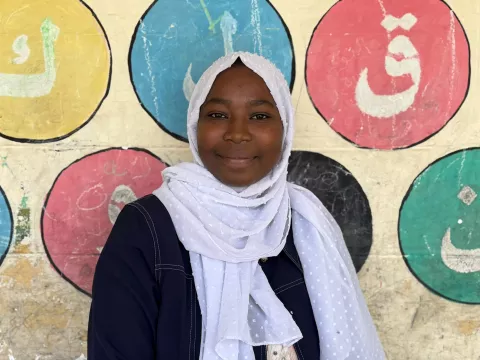
“I was subjected to female genital mutilation when I was ten years old. Today, I am a self-reliant woman and a mother of an eight-year-old daughter. My husband and I have committed not to circumcise our daughter so she can grow up healthy and strong. Through trainings organized by the Community Development College of Kordofan University, I began conducting dialogues and awareness sessions in schools and in the community. Together with other volunteers, we formed protection groups and worked to change harmful beliefs among girls, boys and women in our community” said Ilham, one of the participants.
Students also became active agents of change within their own villages.
“We are grateful to the community college staff who supported us in creating four protection groups and networks in our village and in three neighbouring villages. With their help, we facilitated discussions among young men and women, and many students have since joined and become active in efforts to combat harmful practices,”
A defining moment for the young advocate came when he helped save three girls from attempted mutilation after receiving a tip off from a protection committee in a neighbouring village. Acting quickly, the committee intervened, prevented the act, and ensured the perpetrators were brought before the court and charged under the existing law.
“We continue our work to raise awareness and preserve the wellbeing of our community,” he added.

Lessons learned
The partnership demonstrated strong potential to contribute to reducing this deeply rooted harmful practice and highlighted the role universities can play as strategic partners for social norms change and localization.
Key lessons include:
- Universities can serve as trusted and sustainable platforms for community engagement and behaviour change.
- Mobilizing students as change agents helps bridge communities, institutions and services.
- Linking social norms change with health, justice and social services strengthens prevention and response.
- Engaging young people supports long-term impact by nurturing a new generation of community leaders.
- Locally led approaches increase community trust, ownership and sustainability.
This model shows strong potential for replication in other states where harmful social norms remain deeply rooted.