Reaching more children with vaccines
Frontline health workers, parents and partners are helping children catch up on lifesaving vaccines and protecting them from preventable diseases

Vaccines provide children with early protection against diseases and help prevent life-threatening diseases. That is why, even in emergencies, immunization cannot stop.
The war in Sudan has severely disrupted the health system, including routine immunization services. Health facilities and cold chain infrastructure have been damaged or destroyed. Millions of children have been displaced, living in congested areas and many trapped in conflict areas, causing many to miss routine vaccinations and leaving them vulnerable to vaccine- preventable diseases.
By 2024, the numbers of children reached with lifesaving vaccines had plummeted with the country recording one of the lowest immunization coverage rates. The decline contributed to outbreaks of vaccine- preventable disease that claimed the lives of children.
The number of zero-dose and under- vaccinated children also continued to rise, with Sudan accounting for 42 per cent of all zero-dose children in the Middle East and North Africa region in 2024.
Despite these challenges, UNICEF and partners, working closely with the Federal Ministry of Health, continued to deliver routine immunizations services and outbreak response campaigns, helping protect children from life-threatening diseases.
The efforts and investments paid off.
According to the 2026 WHO and UNICEF estimates of National Immunization Coverage (WUENIC), Sudan recorded a remarkable recovery in childhood immunization coverage with the third dose of the diphtheria (whooping cough), tetanus and pertussis (DTP3) rising from 39 per cent in 2024 to 71 per cent in 2025 - a significant step towards restoring protection for children.


2025 - A year of restoration
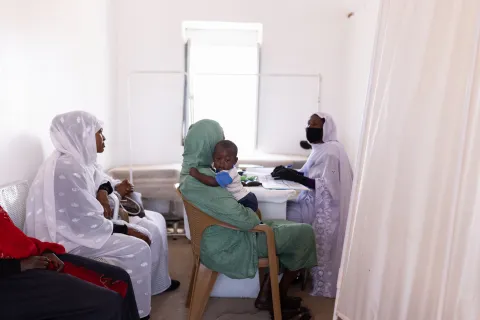
It is vaccination day at Al Thorwa Health Centre.
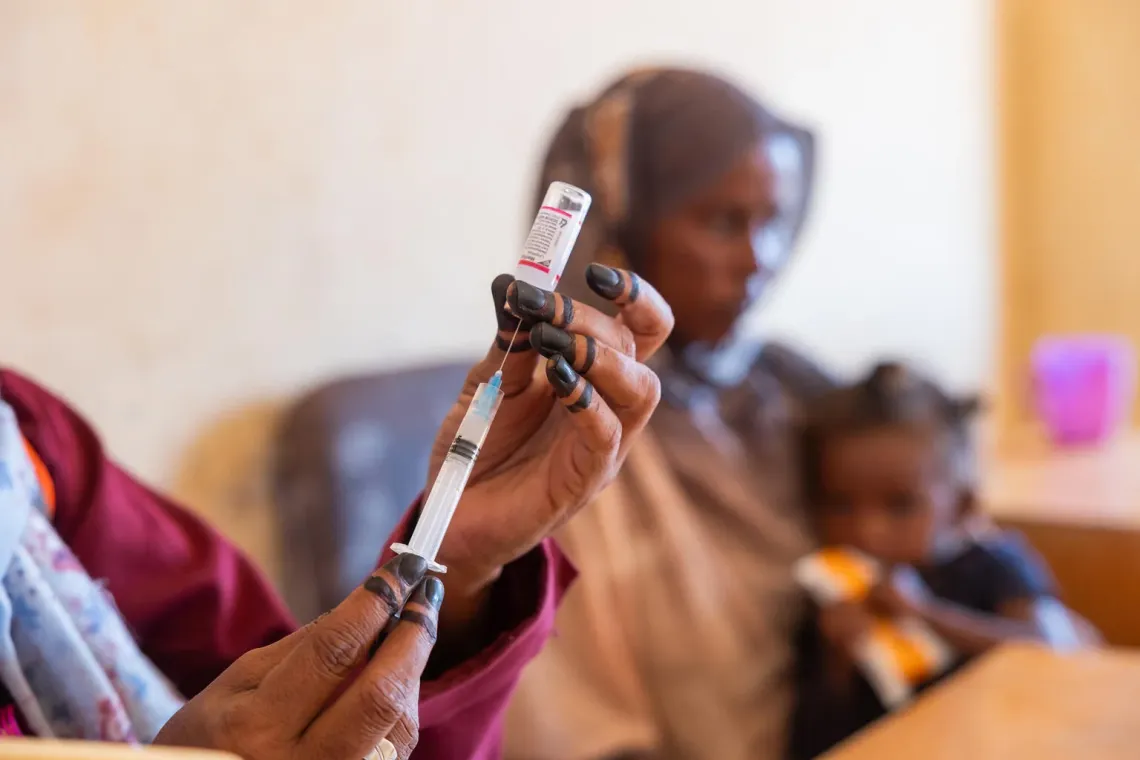
Mothers carrying their babies on the lap patiently wait outside a small room where Intesar prepares for another busy day-turning vaccines into vaccinations.
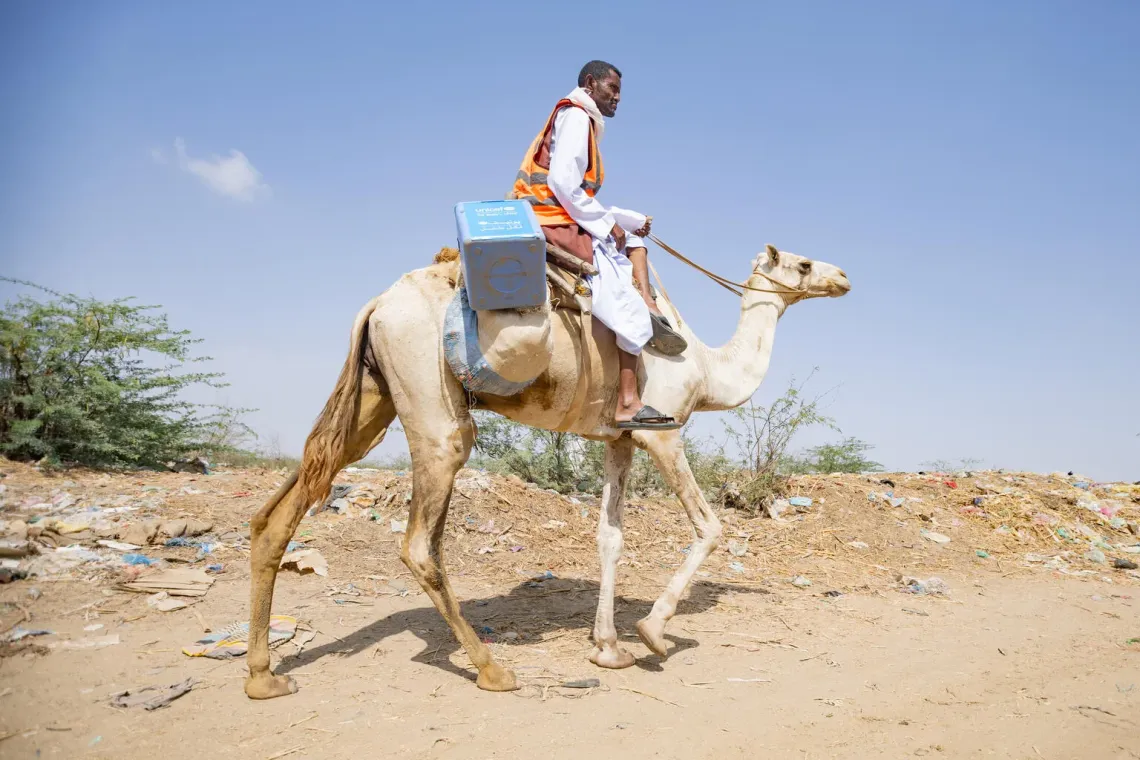
Her day begins by transferring vaccines from a large refrigerator into a small but protective vaccine carrier placed beside her. The small blue cold box keeps the vaccines at the required temperature, ensuring they remain safe and effective throughout the day.
Working under difficult conditions and often serving large numbers of children, vaccinators like Intesar are ensuring routine immunization continues despite the conflict.
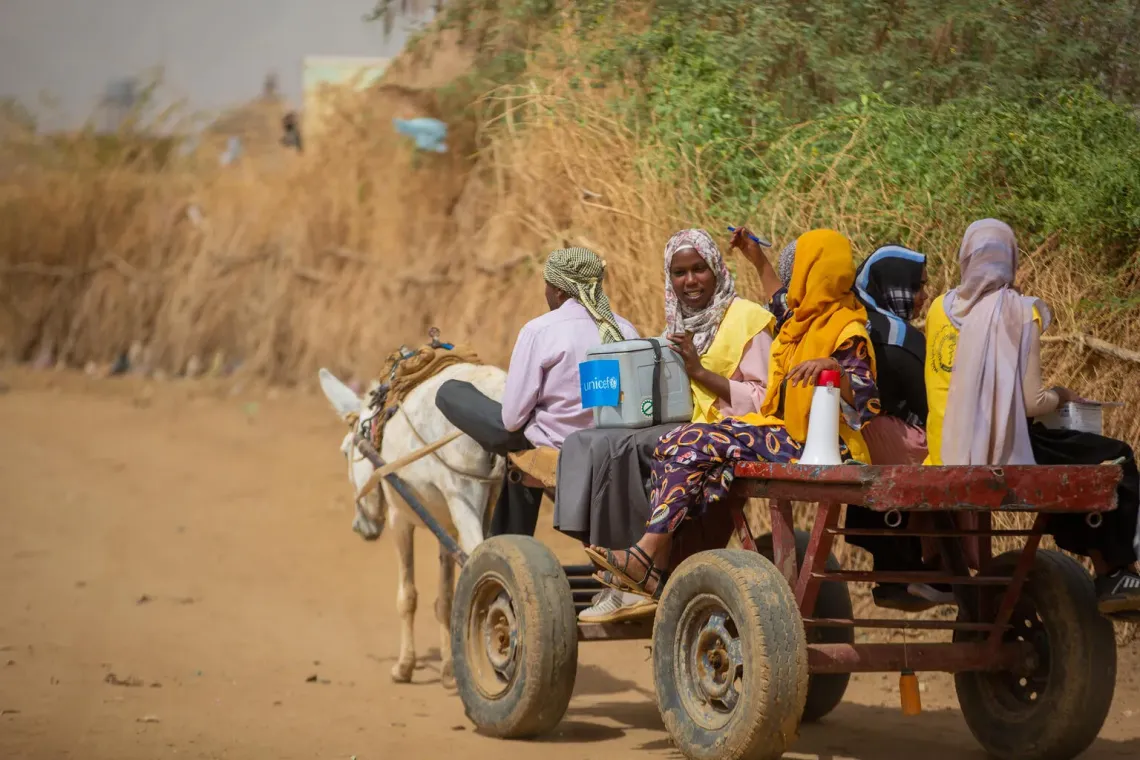
Faraway in Central Darfur, Ezzeldin’s day also starts early. At the health facility, he attends to the long queues of parents with their children. On other days, he travels to remote communities to reach children who might otherwise miss out on lifesaving vaccines.
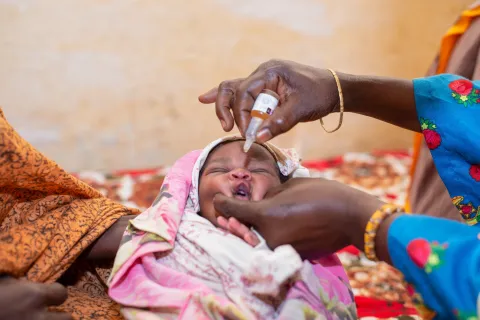
In Zalingei, community volunteers like Hanan go from house to house during polio outbreak response campaigns, ensuring every eligible child receives two drops of the oral polio vaccine, protecting them from a highly infectious disease that disproportionately threatens children under five years.
In Mastura, a remote locality in West Darfur, routine vaccinations came to a halt when conflict cut off access to the area. When a child contracted measles, the disease spread rapidly through the community, putting many more children at risk and claiming young lives.
Despite the insecurity, UNICEF and partners delivered vaccines and supported a measles-rubella catch-up campaign, protecting children aged 9 months to under 15 years against the highly contagious disease.
"We could not stand by as measles continued to spread. We just couldn’t wait for the fighting to stop," said Mohammed Sanossi, UNICEF’s health extender.
Through the dedication of frontline health workers and volunteers, coupled with the strong collaboration between the Ministry of Health, UNICEF, WHO, Gavi and other national partners, Sudan has made significant progress in restoring immunization services in the past year.
The path to recovery
Speaking about the recent improvements in immunization coverage, Mohammed Al Haboub, UNICEF Immunization Specialist, attributed the progress to the collaborative efforts implemented through Sudan’s Expanded Programme on Immunization (EPI) Emergency Plan.
Through accelerated immunization activities, healthcare workers delivered immunization services not only at health facilities but also through outreach services, reaching children who might otherwise have been missed.
Improved security in some areas also enabled frontline workers to reach communities that had previously been inaccessible, allowing immunization services to reach 30 per cent of the target population living in the Darfur and Kordofan regions.
The establishment of the cross-border vaccine supply route through Chad into western Sudan also enabled vaccines and immunization supplies to reach previously inaccessible areas, helping sustain routine immunization services.
Together, these efforts ensured that more children received lifesaving vaccines and were protected from preventable diseases.
2025 immunization gains
Together with the Ministry of Health, WHO, Gavi and other partners, UNICEF achieved significant results during 2025, including:
- Vaccination of more than 12.5 million children under 15 years against measles and rubella (MR) through nationwide campaigns conducted during 2025 and 2026. The campaigns also led to the introduction of MR into Sudan’s routine immunization schedule and contributed to controlling ongoing outbreaks.
- Delivery of over 40 million doses of Gavi-funded vaccines to Sudan with approximately 30 per cent of these delivered to hard-to-access areas through cross-border operations via Chad, to support the continuity of routine immunization services nationwide.
- Conducting a diphtheria vaccination campaign across 17 localities in six high-risk states of River Nile, Blue Nile, Khartoum, Northern, Red Sea, and Kassala, reaching more than 2 million individuals aged 5–20 years – more than the target population.
- Providing incentives to more than 8,000 frontline workers (FLWs), including vaccinators, supervisors, cold chain staff, health promotion teams, and surveillance personnel that ensured continued delivery of routine immunization services. An additional 20,000 frontline workers were also supported during the implementation of the MR and diphtheria campaigns across the country.
- Providing 946 electric and solar-powered refrigerators, and 11 walk-in cold rooms, through the Gavi’s Cold Chain Equipment Optimization Platform (CCEOP) and other support, which significantly expanded the national cold chain capacity and vaccine storage.
Sustaining the gains
UNICEF, the Ministry of health and partners remain committed to reaching every child with lifesaving vaccines, regardless of where they are. Together, they continue to:
- Restoring and sustaining routine immunization programmes to ensure children receive all the recommended vaccinations on time.
- Strengthening the health system gravely affected by the conflict to support vaccinations including cold chain infrastructure.
- Delivering lifesaving vaccines and supplies across the country to support routine immunization and outbreak response campaigns.
- Mobilizing parents and caregivers to seek routine immunization services for their children.
“The focus should be on routine immunization, as it is the foundation for protecting children against vaccine-preventable diseases,” said Al Haboub.
Sustaining this progress will require continued funding and safe, sustained and unimpeded humanitarian access to children across Sudan, including those living in conflict-affected areas. Without these, recent gains could be reversed, leaving children vulnerable to diseases that vaccines can easily prevent.
The progress achieved over the past year demonstrates that even in one of the world’s most challenging humanitarian crises, immunization programmes can continue to reach children. It is a powerful reminder that vaccines save lives and that every child deserves the protection they provide.