Care closer to home for children and families in Sennar
With support from UNICEF and the World Bank, Alwehida Primary Healthcare Centre is providing essential health and nutrition services for displaced and host communities.

Two years ago, Alwehida Primary Healthcare Centre (PHC) operated without reliable clean water, essential medicines or basic medical equipment.
Constructed in 1998, the health facility in remote Sennar locality served a relatively small number of patients living nearby and up to 5 km away. For these communities, Alwehida was the closest place to access lifesaving care and treatment.
When the conflict displaced thousands of families across Sudan, Alwehida PHC became a critical lifeline for both displaced and host communities. Patient demand surged as families arriving from Khartoum, Al Jazirah and Darfur sought access to healthcare, placing unprecedented pressure on the facility's limited resources.
Growing pressure on health services
Conditions at the facility and the services available continued to deteriorate. Without medicines and equipment, even basic services became difficult for families to access. Ageing infrastructure, poor sanitation and a lack of clean water further compromised service delivery and increased the risk of infection for both patients and health workers.
Many families travelled long distances in search of medical care and treatment.
“We lacked equipment and the environment was not conducive for many consultations,” said Nada, a medical assistant at the facility.
Even the simplest procedures became difficult. For Amna Algadir, a registered nurse, routine procedures were impossible without basic supplies like gloves.
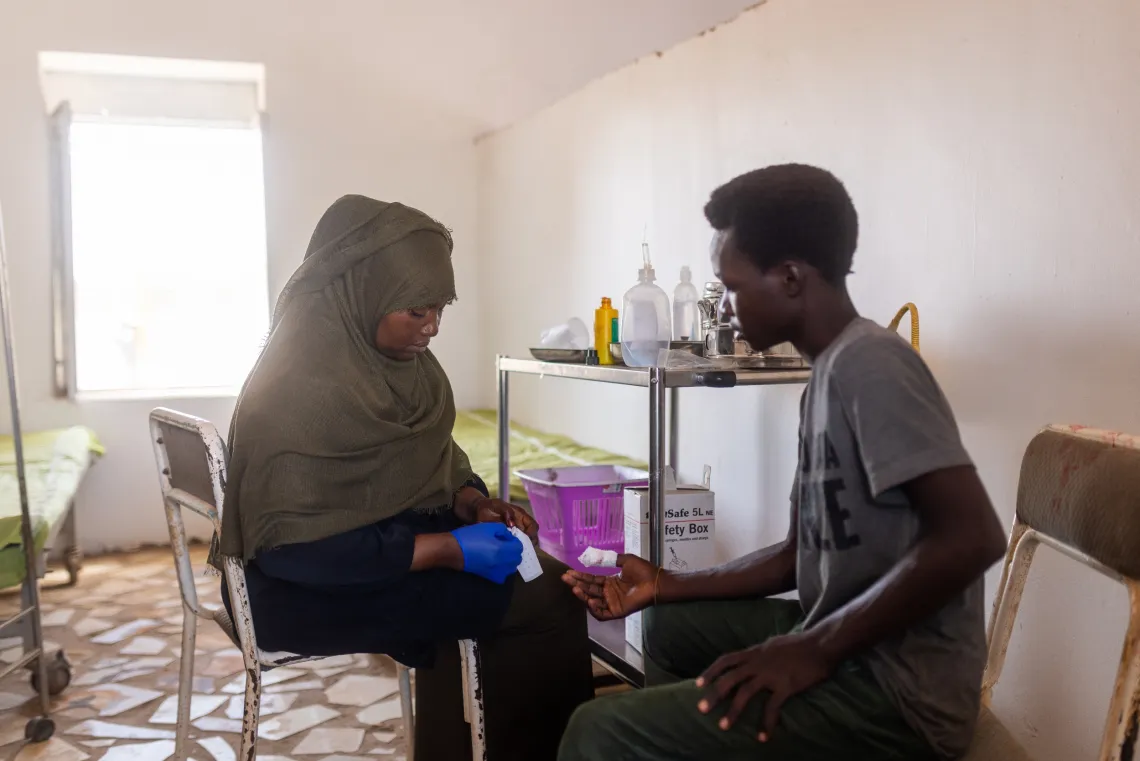
“We lacked the necessary equipment and supplies, so operated at limited capacity,”
Daily patient referrals became common, contributing to a significant decline in consultations at the facility.
Restoring essential health services
In 2025, UNICEF through the Sudan Health Assistance and Response to Emergencies (SHARE) project, delivered in partnership with the World Bank, helped change this. Following extensive community consultations, the rehabilitation of Alwehida PHC began with one goal: improving access to essential healthcare for children and families, including those displaced by conflict.
Months after rehabilitation, the facility provides a safer and more inclusive environment for patients and health workers, helping improve both access to and quality of care. The improvements have contributed to increased utilization of services, reduced patient referrals and improved access to timely diagnosis, treatment and preventive care for children and families.
Clean and safe water is now available through elevated tanks connected to treatment rooms, strengthening infection prevention and control during daily consultations.
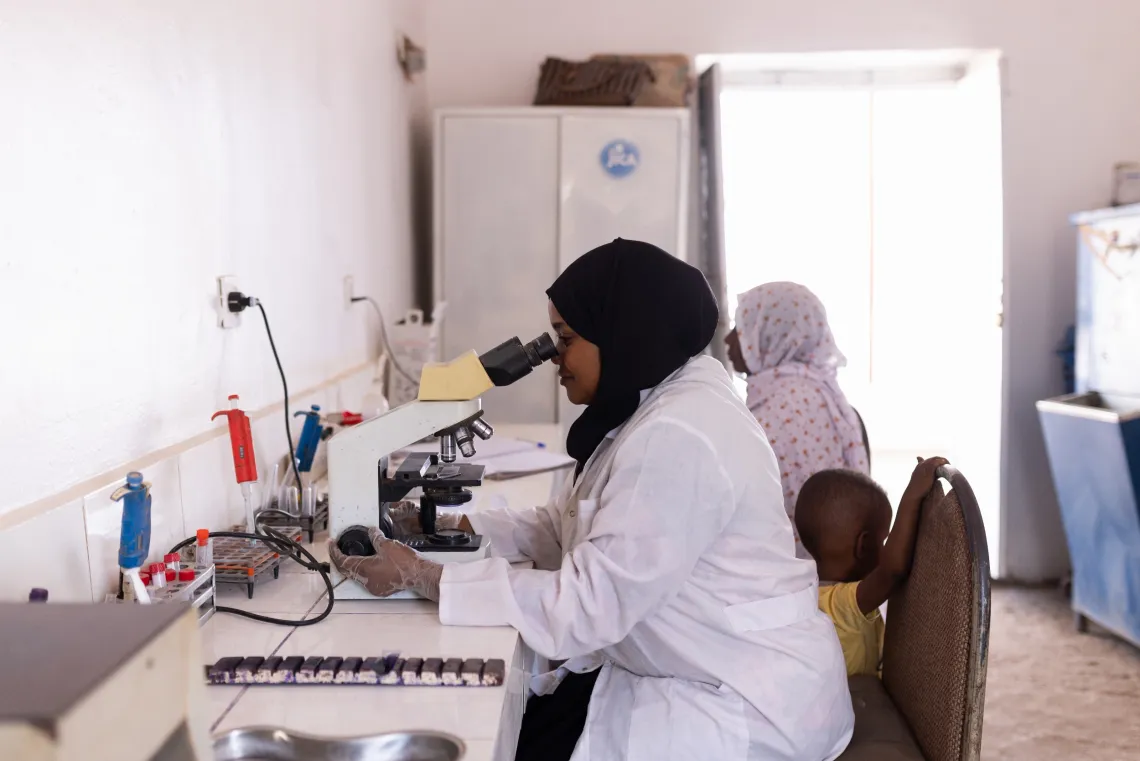
The support also included new equipment.
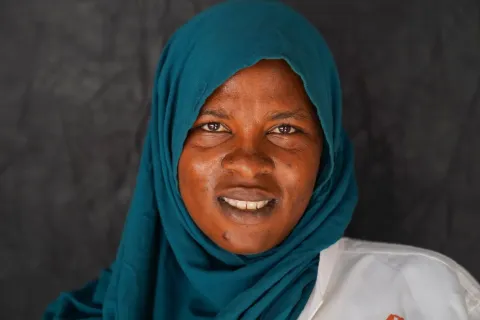
With the new equipment, Amna Awad, a laboratory scientist, can perform rapid tests that support timely diagnosis and treatment.
“All the tests are now done here. There is no need for patients to travel far,” she explained.
The improvements are benefiting the community while also boosting the morale of frontline health workers who continue to deliver essential services.
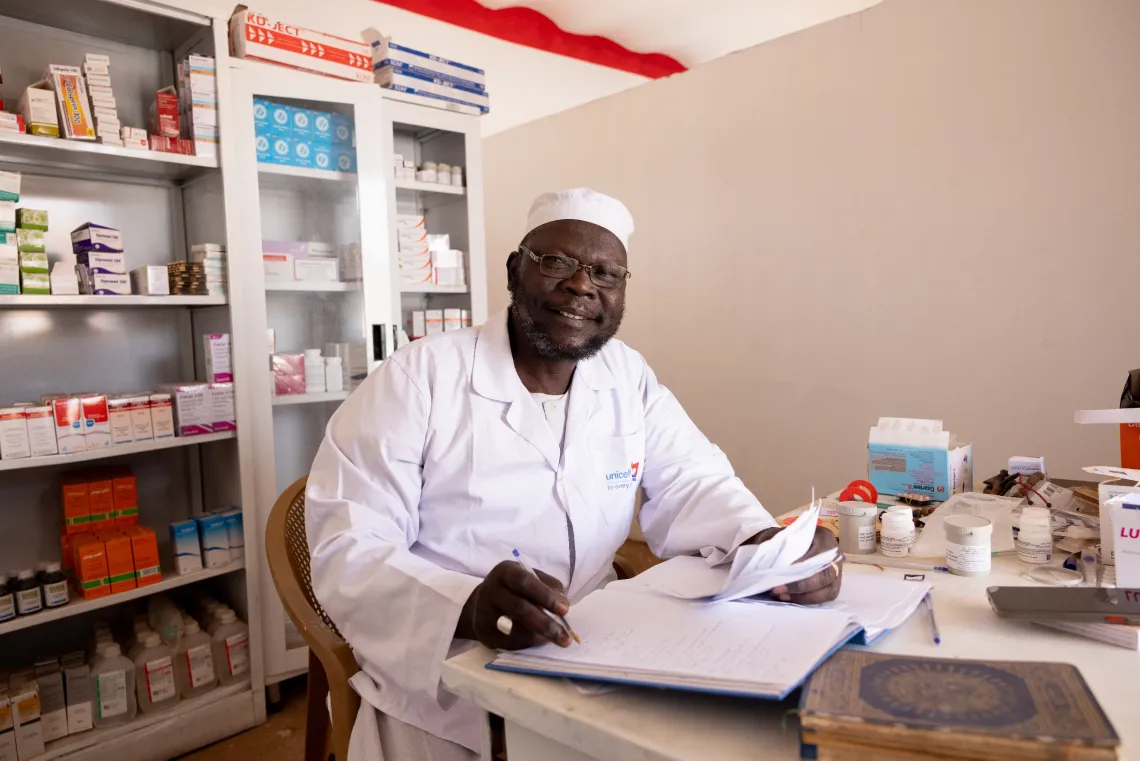
In another room, Abdalrahman manages a fully stocked pharmacy with essential medicines and supplies provided by UNICEF and partners at no cost to patients.
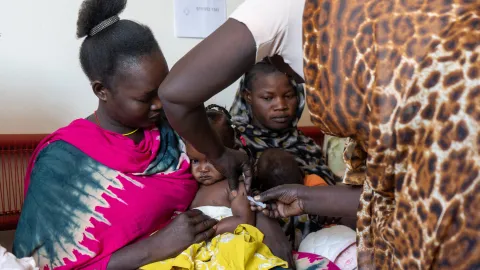
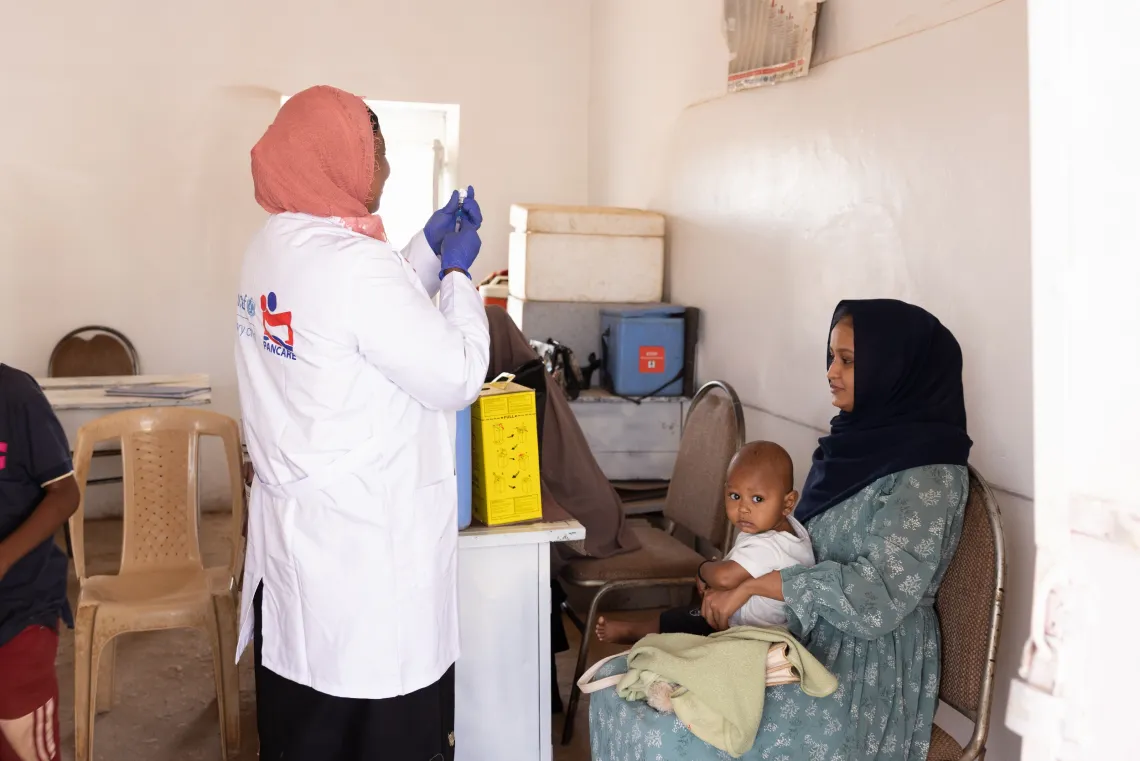
For families who have lost homes and livelihoods, free medicines and services can reduce financial pressure. Additional health and nutrition supplies and vaccines are also available to support the treatment of children and other family members who visit the facility every day.
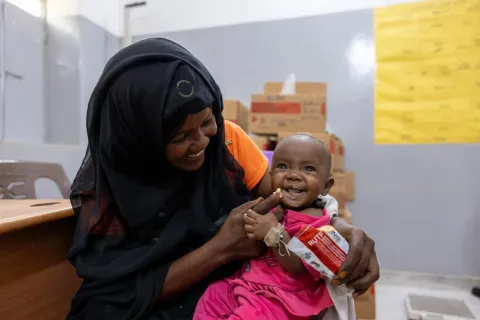
The revitalized facility also supports the delivery of essential nutrition services, including screening, counselling and referral for children at risk of malnutrition, helping ensure timely care for the most vulnerable children.
“It makes a profound difference.”
“The relief I see in patients and their families, knowing that a financial burden has been lifted, gives me strong motivation to continue serving the community,” Abdalrahman said.
Strengthening community ownership
Today, patients no longer need to travel as far in search of services. The improvements have strengthened confidence in the quality of care, encouraging more people to seek services at the centre.
“Earning the trust of residents from our neighborhood and surrounding areas is deeply meaningful to us,” said Nada.
“With all the new equipment, we are fully prepared to handle various cases and treat injuries at any time.”
A key feature of the project is the sustained involvement of community leaders and members throughout planning and implementation. Their continued participation in facility oversight, health promotion and community engagement is helping increase demand for services while strengthening the long-term sustainability of healthcare for displaced and host communities.
Today, Alwehida PHC serves an average of 500 patients each month.
Through SHARE, UNICEF and partners have helped strengthen Alwehida PHC as a trusted healthcare centre where displaced and host communities can access essential health and nutrition services close to home, including timely lifesaving care for children and families.