The Power of Art
Through drawings and paintings, children affected by conflict illustrate violence and its effects

When provided with an opportunity, children and young people can transform and communicate complex issues in the simplest and most impactful way.
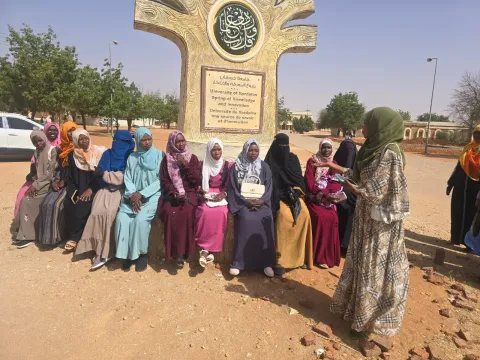
This is the objective of the UNICEF supported art workshops benefitting displaced children in Kosti and Rabak localities located in Sudan’s White Nile State. Majority of them have arrived from Khartoum, Khartoum Bahria and Omdurman. The activity conducted at the youth training centre was delivered with support from State Council for Child Welfare (SCCW) and the community safety organization.
Today, White Nile is home to thousands of displaced children who have fled conflict and in search for safety. With the recent clashes affecting Gezira state, many more displaced children have and continue to arrive. As the displacement crisis deepens, reports of violence against children are also soaring. Displaced children are facing heightened risks of abuse, violence, exploitation, and separation from their caregivers.
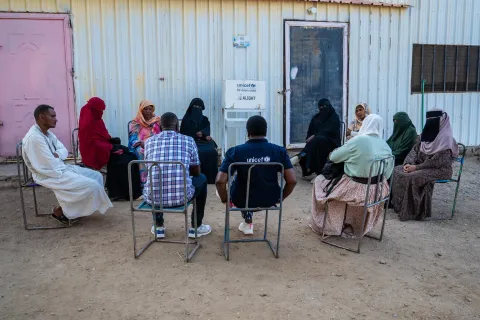
With support from trained counsellors and social workers, UNICEF is educating children, and young people aged 14 to 22 years and affected by the ongoing conflict in Sudan – displaced and those from host communities on identifying, preventing, responding, and reporting violence around them about. A total of 170 have been reached with these activities.
Today more than ever, as children remain on the move and at risk of violence and abuse, the activities remain very critical.
A selection of children has been equipped with information and now foot soldiers traversing and educating communities on violence and its dangers on children, while 20 girls and boys were selected and trained on using art as a form of communication and change against the vice.
Illustrating violence against children
Through UNICEF art workshops, a unique and impactful approach, children, and young people were trained to convey issues through art and drawing. Led by facilitators with experience on trauma and psychologists, children were taught to analyze problems they encounter and transform them into drawings that reflect the concrete reality and expressively communicate them through drawings to provoke action and the change they want to see.
“It was a beautiful experience through which we can make a change in society and contribute to creating solutions to deeply rooted problems,” said 19-year-old Al-Mujtaba.
Armed with a canvas, papers, paint, pencils, and brushes, they illustrated the various forms of violence and their impact on children. Despite the complexity of the subject, the children and young people took on the challenge and the results are mind-boggling drawings. Some of them have experienced violence while others have witnessed it or know a child who has. These are their experiences and expressions.
In the simplest way possible, children created expressive art/drawings that convey and communicate ideas and messages to audiences, and yet be understood without any verbal explanations.
Behind every powerful illustration is a message and what is even more powerful is they were done by children and young people. Through the workshops, they are empowered with information and ready to be change agents in their communities and ensure they are free from violence.
The art workshop and many other activities delivered around social norms and Gender Based Violence (GBV) are part of UNICEF supported interventions under the Sudan free of FGM programme delivered with funding from the UK and Canada governments. During the crisis, the programme activities have been integrated into the ongoing UNICEF emergency response to support children affected by the ongoing conflict and are benefitting many.
What better way to communicate violence. Here is a selection of some of the illustrations.

Every girl deserves a teddy bear and not a wedding bouquet. She is a child and not a bride. This is child marriage and its effect on girls through the eyes of Nasr.

“My artwork speaks to Female Genital mutilation and the harm is causes children who are forced to endure it,” articulated 17-year-old Moataz who is displaced from Khartoum.
Moataz appeals to parents not to force their children into early marriage and expose them to harmful traditional practices. “These harmful practices have no religious or medical basis, but rather harmful customs and traditions. “Let us break this cycle that is very harmful to children,” he adds.

A Saleema generation is a happy generation. Keep children Saleema. Keep children free from FGM.
Saleema means whole, healthy in body and mind, unharmed, intact, pristine, and untouched, in a God-given condition.
Advocating to keep girls Saleema is part of the initiative launched by the National Council of Child Welfare (NCCW) and UNICEF to protect girls from female genital mutilation.
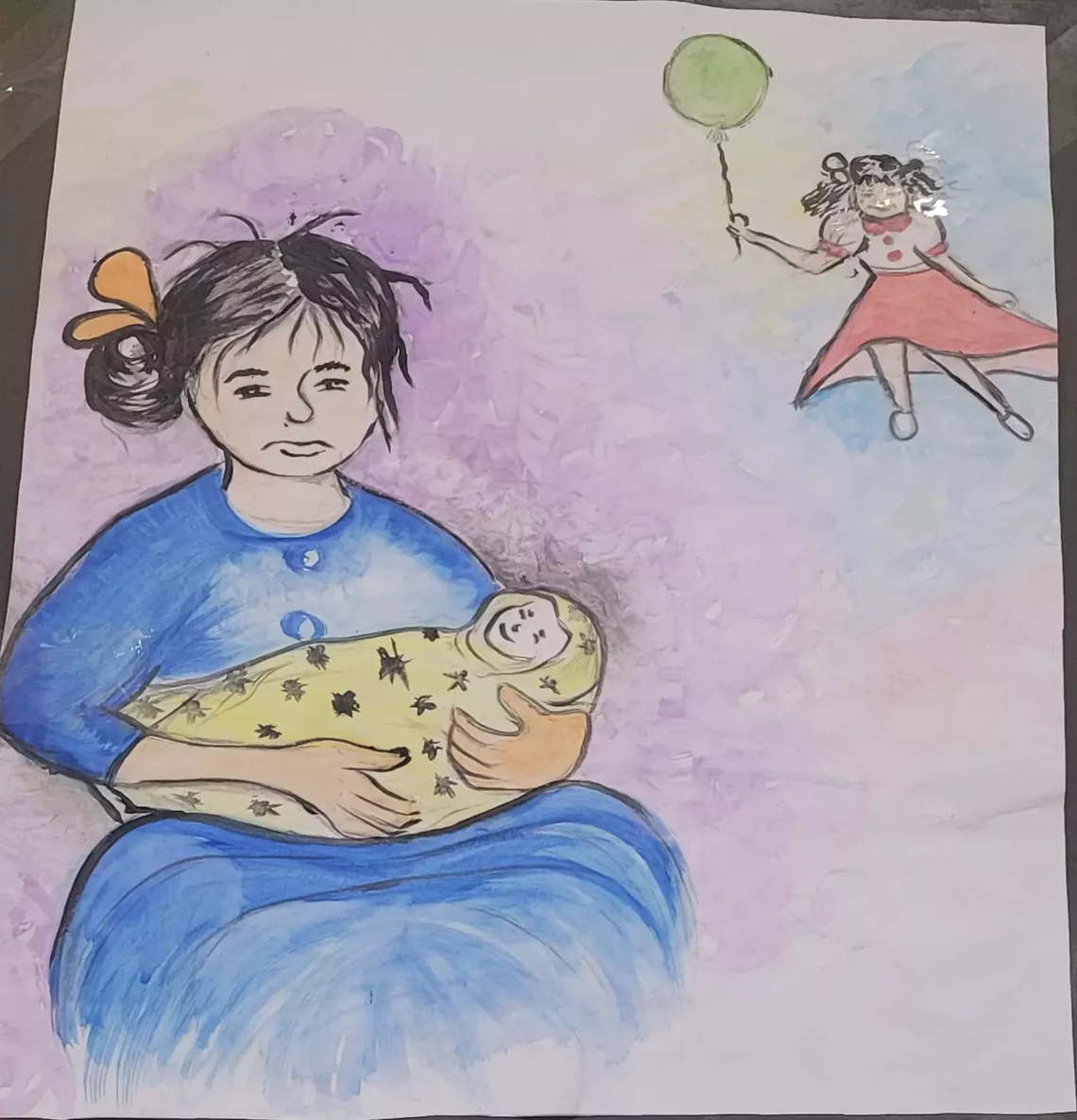
Children love to play and that is what they should do until they are old enough to marry and become mothers. Children cannot raise children.

“My painting speaks to child marriage and the impact it has on children,” explained 19-year-old Al-Mujtaba.
“Child marriage is harmful because it robs children of their childhood. When married, children will not be able to continue with their education and they will face many challenges. While their peers enjoy childhood, children married young struggle with responsibilities at a very early age including taking care of children. Children cannot raise children,” he affirms.
His message to parents is to support their children and ensure they enjoy their childhood. “Provide them with the love and values they need to become responsible people in the future. Child marriage destroys their future.”

Children belong to classroom – where they will tap into opportunities for a better future. While other children enjoy learning, thousands are married off young and their futures crashed.

Love and protect children from female genital mutilation. It robs them of their childhood.

The joy of a Saleema girl is impossible to miss. Fathers can and should protect their children from FGM – keeping them saleema. Every girl is born Saleema, let every girl grow Saleema.
Additionally, children affected by the conflict – at gathering points and in communities, also benefit from a package of services delivered with UNICEF support including access to critical information on their risks, rights and needs, mental health and psychosocial support, case management for GBV survivors, designing and making bags and crafts with key messages and Saleema club activities.
As the situation in Sudan remains volatile, exposing more and more children to immerse suffering and unsafe spaces away from home, UNICEF continues to work with partners to prevent and respond to gender-based violence during these difficult times with a special focus on girls and women – who are usually more at risk of gender-based violence.
Empowering children and young people will contribute to stopping violence, now and in the future.
The drawings were also exhibited during the 16 days of activism against Gender Based Violence.