Nourishing hope
How nutrition counselling helps mothers protect children from malnutrition in Sudan

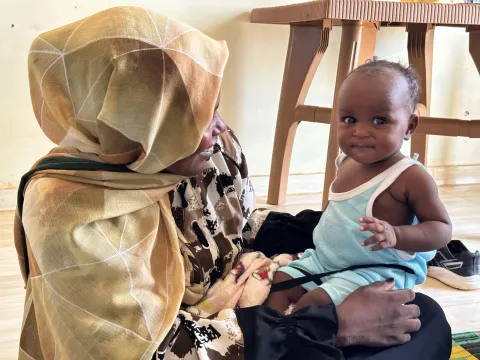
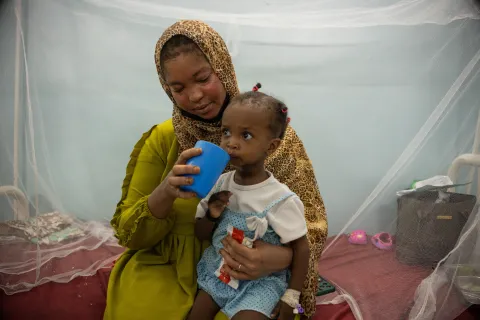
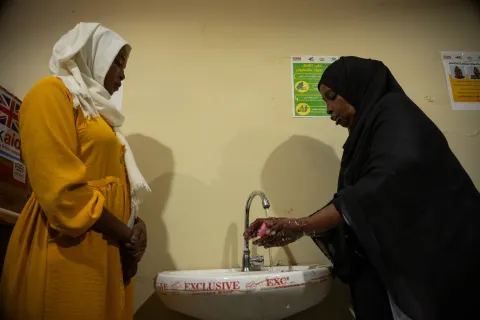
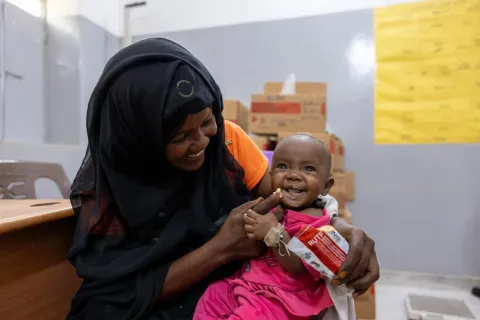
On a hot afternoon, a group of mothers carrying their little ones arrive at the temporary nutrition clinic in Garb Al Matar gathering site. The UNICEF-supported clinic, nestled in the middle of a large gathering site, provides displaced families with a full package of primary health care services, including curative and preventive nutrition services.
Inside a large UNICEF tent is a well-designed breastfeeding corner where pregnant and lactating mothers learn good feeding practices for healthy babies. Posters with illustrations conveying key nutrition messages hang across the tent and are used during the various sessions held. It is hot, but over 20 mothers and their infants weather the heat to learn.
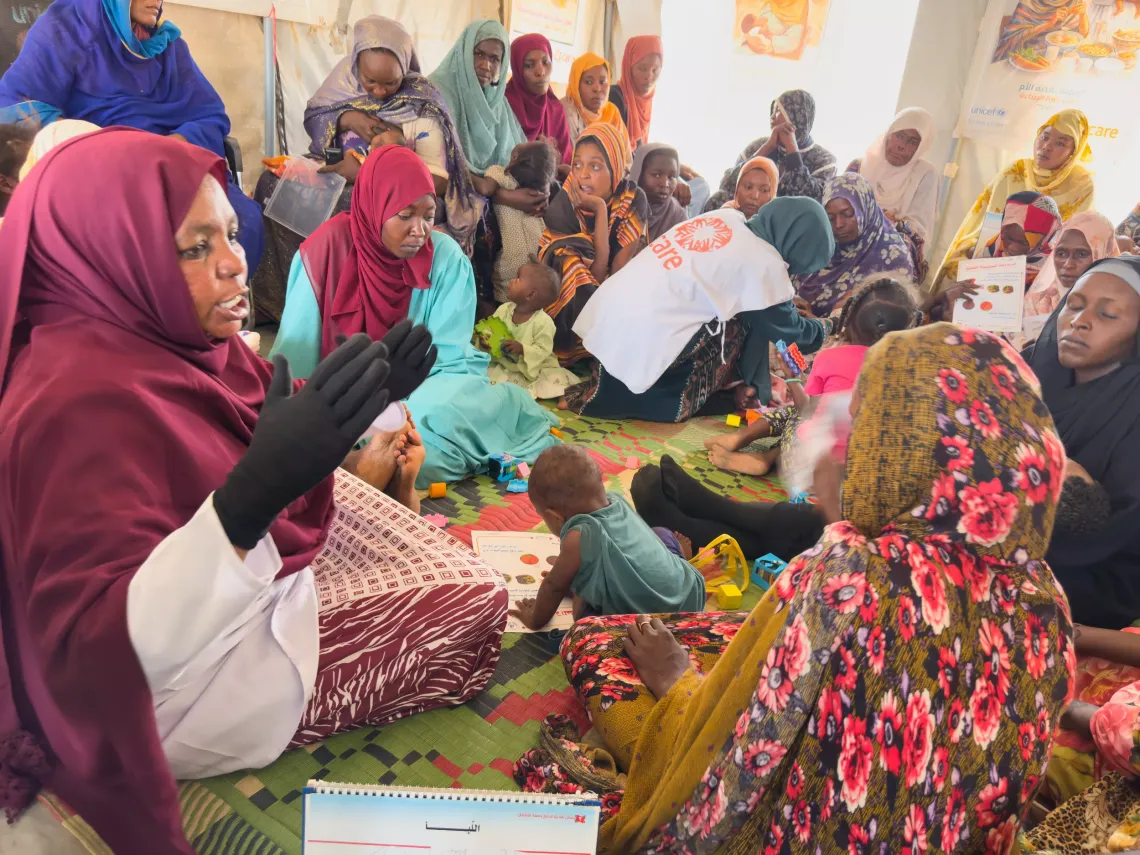
Mahasin, a nutritionist, leads the day’s session focusing on exclusive breastfeeding during the baby’s first six months, a period that falls under the first 1,000 days – a critical period during child development. She distributes cards with illustrations and simplified translated messages to the mothers as they settle down. The room is buzzing with children happily cooing as they lay on their mother’s laps, while others sleep soundly. Many mothers are breastfeeding, a practice highly recommended.
Another nutritionist moves around the room with a coloured-coded mid-upper arm circumference (MUAC) tape, measuring the children’s arms to ensure growth milestones are on track and to identify any cases of malnutrition.

Using simplified counselling cards, Mahasin explains the importance of exclusive breastfeeding, reminding mothers that breastmilk alone is sufficient and nutritious for their children until six months of age. The sessions are interactive, with Mahasin encouraging mothers to share experiences. This approach helps them learn from one another while Mahasin provides accurate information and demystifies myths and misinformation.
Concerned, one mother asks if she can give her child water before six months due to Sudan’s high temperatures. “Sometimes I worry that he is thirsty,” she says. Mahasin gently explains this is not necessary, using the opportunity to share additional information on the topic. She also demonstrates how to position babies during breastfeeding to ensure proper latching and feeding.

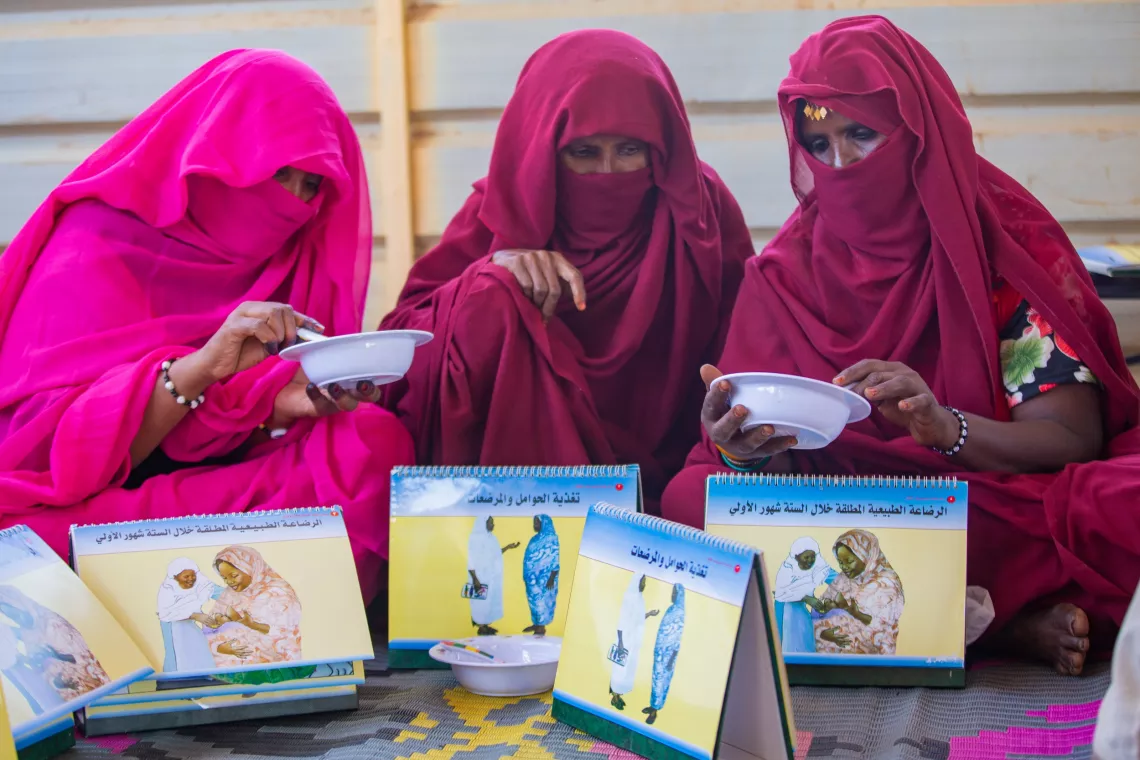


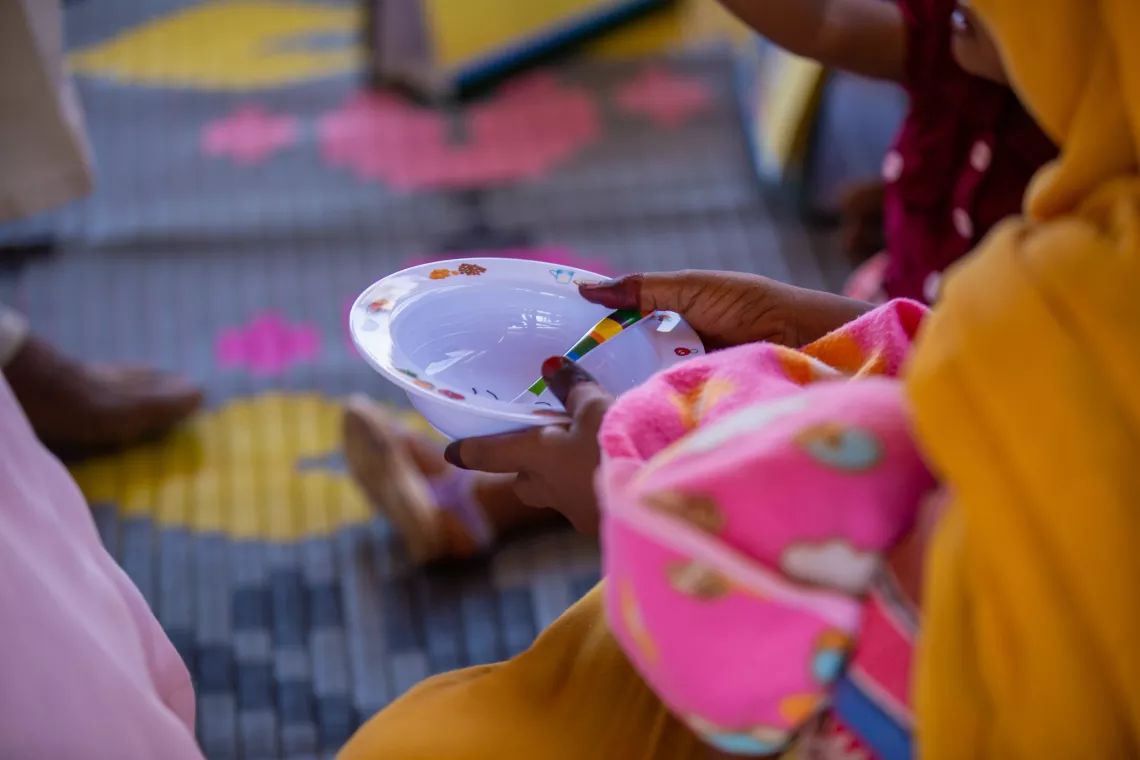
Held three times a week, these nutrition sessions equip mothers with essential knowledge on key family care practices they need to nurture their children under two years old. Practices such as exclusive breastfeeding, complementary feeding, and immunization remain critical to raising healthy babies, even during the crisis.


Healthy meals, healthy babies
Optimal feeding practices are fundamental to a child’s survival, growth, and development, but crises can cause major disruptions. UNICEF’s nutrition response is prioritizing prevention by promoting infant and young child feeding sessions, equipping mothers with the knowledge and skills to nurture, feed, and care for their children from an early age, helping protect millions from malnutrition.
The delivery of high impact malnutrition prevention interventions, including infant and young child feeding counselling sessions, is made possible with the generous support of the governments of the United Kingdom and the Netherlands.