No place to call home
The harsh reality of children and families displaced from Gezira - for the second time

“I don’t see any future,” Tawassul, 12 years.
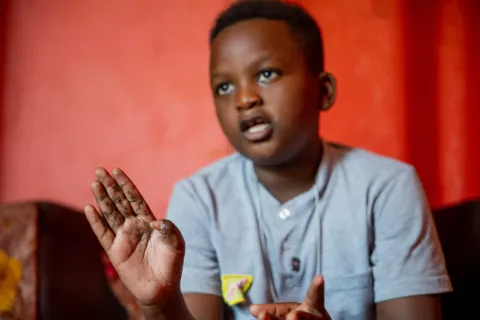
“We left my brother behind. I feel lonely without him,” Muayad, 13 years.
This is the harsh reality for thousands of children that recently lost their ‘homes’ when they fled Wad Madani town in Gezira state about 200km southeast of the capital Khartoum.
Tawassul and Muayad plus thousands of children and their families are now displaced for the second time as the gruesome war continues to spread in Sudan. Their suffering is unimaginable.
No child should be forced to leave their home because of war. Not once, not twice.
Wad Madani was a safe haven for more than 490,000 internally displaced people for eight months since the war broke out in Khartoum in mid-April. Today they are on the move again and have no place to call home.
On 15 December, intensified fighting broke out between the two warring parties causing panic, fear and mass displacements into the neighbouring states of Sennar, Gedaref and White Nile.
Women, children, caretakers, young and old were seen fleeing the state on foot, in buses, on cargo lorries, bicycles, motorcycles in search of safety. Suitcases on the head and children strapped on their backs with others holding their arms, mothers and caretakers hit the road.
Many are left stranded by the roadside after dark as they wait for daybreak to resume the journey to unknown destinations.
How long they will run and where else to go, remains a puzzle for many of these already vulnerable populations. They just keep going.
What is evident from the exodus on the roads, is the toll this war has had on people especially women and children.
In her recent visit to Wad Madani, the UNICEF Representative Mandeep O’Brien met 3-year-old Samia.
“She struggled to speak, but was so expressive in her desire to walk with me. I can only fear what is happening to her and the children trapped in the crossfire,” she added.
Prior to the new clashes, there was already a strain on the basic services following the large numbers of displaced people in Wad Madani. A cholera outbreak had been confirmed with over 1,800 cases. With the on-going mass displacement, importation and further spreading of the outbreak to other neighboring states is feared.
In Sennar state, the town is congested by new arrivals. It is the nearest state where many families have sought refuge.

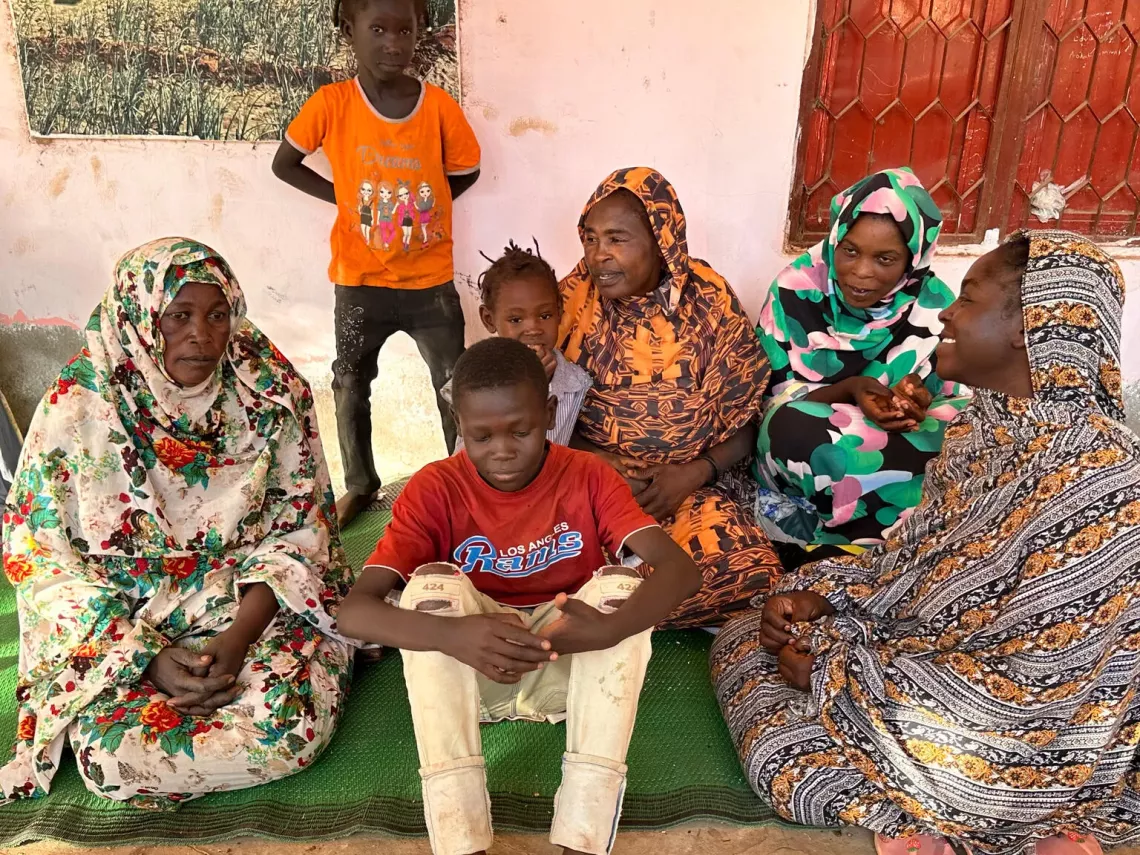
Among them is 13-year-old Muayad. When the shooting started, his family fled and left his brother behind. He was not at home at the time. The war has separated Muayad from his brother. Not sure when he will see him again, Muayad remains hopeful but lonely.
“We left my brother behind. I feel lonely without him.”
He remains with his extended family from Khartoum, a support system he badly needs during this time.
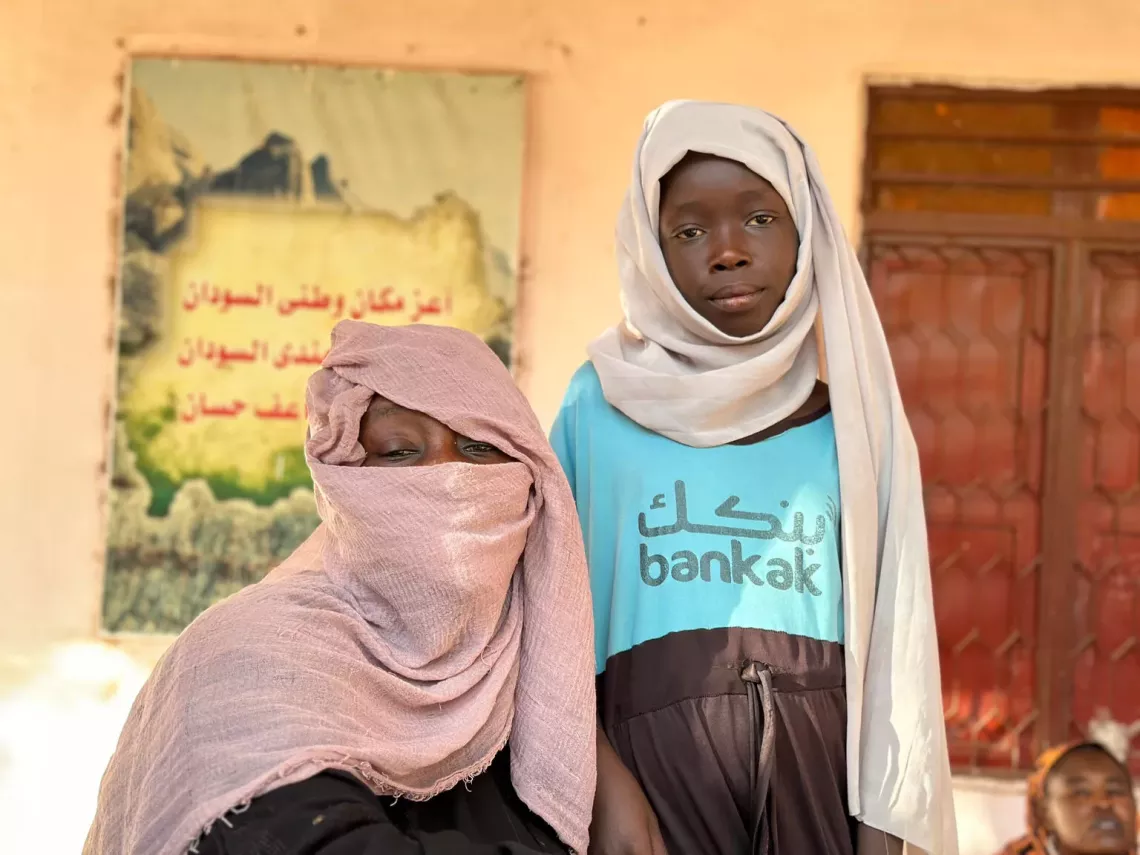
12-year-old Tawassul is on the run with her mother again. She has totally lost hope for a better future and is giving up.
“I don’t see any future,” she shares.
They originally fled from Khartoum.

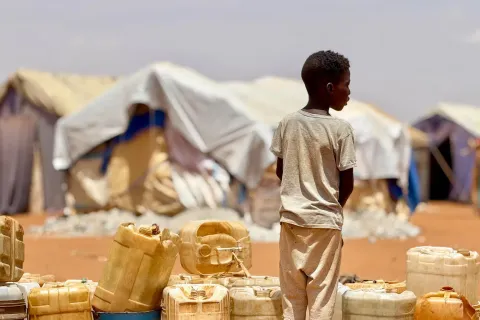
At a gathering shelter for displaced people, a family prepares their next living space upon arrival in Sennar. It is under the tree and in the open. Unsure of where to move next, this will be their home until peace returns.


Children and their families prepare to settle at a gathering shelter for displaced people in Sennar. They have just arrived from Wad Madani. As the cold season approaches, with little or no belongings, the cold and mosquitoes will gravely affect children and expose them to deadly diseases like malaria and pneumonia.

Displaced families queue for water at a gathering shelter. Limited access to safe water for drinking and for practicing basic hygiene can lead to disease outbreaks such as cholera.

While children suffer most during emergencies, they will always be children. Displaced children have a light moment upon arrival at a gathering shelter in Sennar. The ongoing crisis in Sudan has displaced over 3 million children – now the largest child displacement crisis in the world.

It has been many months of the unending war in Sudan. With luggage on the back and another package in hand, a young girl treks with other people fleeing the recent clashes in Wad Madani. Children in Sudan need peace so they can return home and live a normal life.
Wad Madani has served as one of the strategic hubs for UNICEF’s humanitarian operations since fighting broke out in April this year, benefitting thousands of people and alleviating their suffering.
The recent escalation of attacks in Gezira state and across many other states in Sudan is deepening the suffering for children in Sudan. UNICEF calls for peace to avert a generational catastrophe.
UNICEF is working with partners to reprioritize and deliver life-saving WASH, health and nutrition, and child protection interventions to support affected populations in and outside Wad Madani town.