Hygiene - a matter of life and death
Delivering lifesaving integrated WASH services for displaced families

“Marwa and Sarah died of cholera,” 13-year-old Amin sadly recalls. They were two of his best friends. The incident remains fresh like it happened yesterday.
Amin and his family of five – three siblings and parents- arrived at one of the gathering site, in Port Sudan in April 2023, fleeing the war in Khartoum. Since then, thousands of families fleeing from conflict from across the country have joined them. Today, this gathering site hosts over 1,000 people- approximately 200 families. About 40 per cent are children like Amin and his friends.
“When we arrived, there were very few people here,” Amin recollects. But as the war raged on, more people have arrived.
The spiraling number of arrivals posed yet another life-threatening challenge, greatly straining the water and sanitation facilities, which could hardly sustain the numbers.
“Suddenly, this place became filthy, and people started dying. We had too many flies. Flies would come from the dirt to the food, which people would then eat,” Amin shares.
During wartime, unsafe water and inadequate sanitation facilities are more likely to affect children faster than the violence from the conflict. Exposure to diarrhea-related illness, such as cholera, can be just as deadly.
UNICEF’s WASH Officer Shaza Elkhawad recalls how unhealthy the shelter was. “The sewage system collapsed. Water taps broke, flooding the whole compound and creating breeding places for deadly mosquitoes. Garbage was everywhere. Open defecation was common when the toilets filled up.”
The whole environment became a death trap for the already vulnerable displaced communities, and in no time, the first case of cholera was confirmed, claiming the lives of three people-two of them Amin’s close friends.
“I used to play with them inside that tent and in the compound here,” he reminisces.
Stepping up to save lives
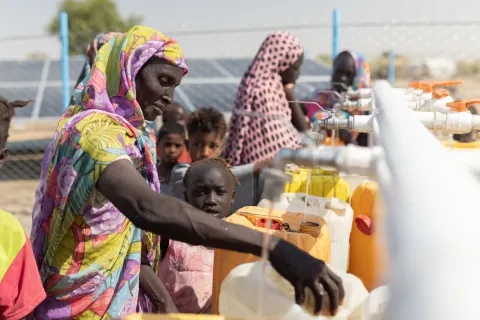
Through its USAID-supported emergency response, UNICEF intervened, delivering an integrated package of water, sanitation, and hygiene (WASH) services to gathering shelters hosting displaced families, like the Dakhliat Albanat gathering site.
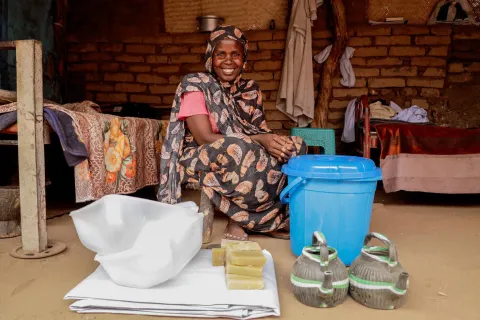
Through UNICEF’s implementing partner, children and families are now benefiting from clean and safe water supply, hygiene education and promotion, waste management, toilet rehabilitation and desludging, and critical WASH Supplies, mainly water containers, soap, waste bags, cleaning materials like brooms, brushes, squeezers, rugs, sanitary napkins to promote hand washing with soap and personal and environmental hygiene.
WASH committees have also been formed and trained to ensure families keep their environments clean and free from diseases. This will also ensure the sustainability of the change witnessed today.
The families have drawn a roster detailing who cleans what, where and when. Keeping the gathering shelter clean is a collective responsibility.

As mothers sweep the compound, Amin and other children join them, leading by example.
“We clean to protect ourselves from diseases. The situation is considerably improving now,” Amin says.
Investing in children as agents of change
As everyone goes about their morning routine (younger children running around, mothers cleaning and cooking), Amin and his peers sit in one corner of the UNICEF high-performance tent in the compound.
Today, they are engaging in a unique hygiene-related activity. Through simple but impactful ways, the children learn about hygiene and sanitation practices. UNICEF’s supported interventions are preparing them to become hygiene champions at the IDP site.

Once children are equipped with knowledge, they will not only practice what they have learned but will also share the information with their families.
The children’s session is a follow-up from an earlier training on sanitation and hygiene, but this time it involves learning through fun. With paper, pencils, and coloured markers, they use art to bring the importance of hygiene and sanitation to life. Amin takes the lead. He has witnessed firsthand the impact of unhygienic environments, including death. The sessions end with children translating what they learned into simple but effective drawings. Even the very young ones are engaged.

“My drawing emphasizes the need to keep our surroundings clean to protect us all from diseases,”13-year-old Amin explained.
“I wish for a clean and beautiful compound full of flowers and not garbage.”

“Handwashing with soap and water keeps our hands free from bacteria,” said 14-year-old Abdulhadi.
“To keep our homes and spaces clean, throw all garbage in a dust bin,” he voiced.

“Store water in clean and covered containers to prevent flies that can contaminate it,” 14-year-old Suhat shared in her drawing.
“Contaminated water makes us sick,” she continued.
Creating clean and safe environments has become a routine at the shelter. The young and the old have been reached with the information and are now practicing what they have learned. The cleanliness at the shelter is testament to their change in behaviour, with the WASH committees monitoring progress and ensuring the practices are maintained.
Amin confirms the sessions have benefitted him, his peers, and their families. “They taught us handwashing and the times it should be done, like before eating, after using the bathroom, and after playing soccer. They brought us colors and taught us about cleanliness. They even performed plays for us. We have learned a lot about cleanliness.”

The WASH interventions are ensuring over 31,000 displaced children and families and host communities access lifesaving water, sanitation, and hygiene promotion interventions to survive life-threatening diseases that could kill them faster than the conflict.