How water brought entire community together in Sudan’s East Darfur
A water point gives a community an opportunity to prosper.

- English
- العربية
Zeinab Mustafa is originally from Shanabla village which lies 186 kilometers from El-Daein, the capital of East Darfur state, in the deeply rural locality of Sheiria. She returned to the village in April 2017 after years in a displacement camp in Nyala in South Darfur state due to conflict. When the mother of six children returned home, her community found that the wells that had traditionally supported the village had nearly dried up. As a result, Zeinab began fetching water each day for use in her home.
The only water source available to Zeinab and her community was a two-hour walk and was also unprotected, which is dangerous in a very volatile conflict area. She found herself making the exhausting journey every day to fetch water for her family. In response, the community dug one shallow open well in the ground. To collect water, the villagers would climb down the hole and fill their water containers from the scarce and unreliable water that slowly collects at the bottom of the well. They would then carry the water on their back or by donkey. This process even involved children who were by then too exhausted to attend school. The livestock of the community was becoming weak and sick with direct impact on their livelihoods.
This village of Shanabla is home to about 4,000 persons and its almost 800 households have only recently returned after more than 10 years of displacement in squalid camps in South Darfur due to conflict. The first families began to return in March 2017.
More than 7,000 people in the locality live in makeshift houses as nomadic herders. They rely on camels, cattle, goats and sheep for survival. The need for water especially with their lifestyle puts them at risk as more and more people are dying from contaminated water as well as conflicts with neighboring communities over access to water resources.
Khalid Ahmed, a 40-year-old father of 5 children and a peasant farmer from the village of Shariah makes the two kilometers journey to fetch the brown and contaminated water. “This is our only hope. It is all we have here,” he says remorsefully while bending to fetch water from the hand-dug well. Sometimes the water runs dry and they have to dig deeper.
“We literally join the diggers as we patiently wait for the water to flow,” he explains.
Access to clean water and the problems it causes could never be understated. Community members also suffered from serious diarrheal diseases and the lack of a borehole well meant that the wells are shared between the community and their livestock. Additionally, they couldn’t gather enough for bathing or washing clothes leading to a serious hygiene issue.
There is no borehole well there, so mothers and children have to get drinking water from shallow wells shared with donkeys, camels and cattle. They can’t gather enough for bathing or washing clothes.
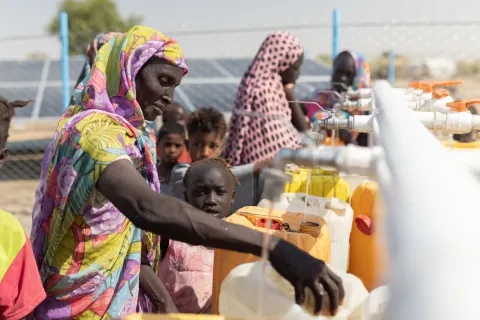
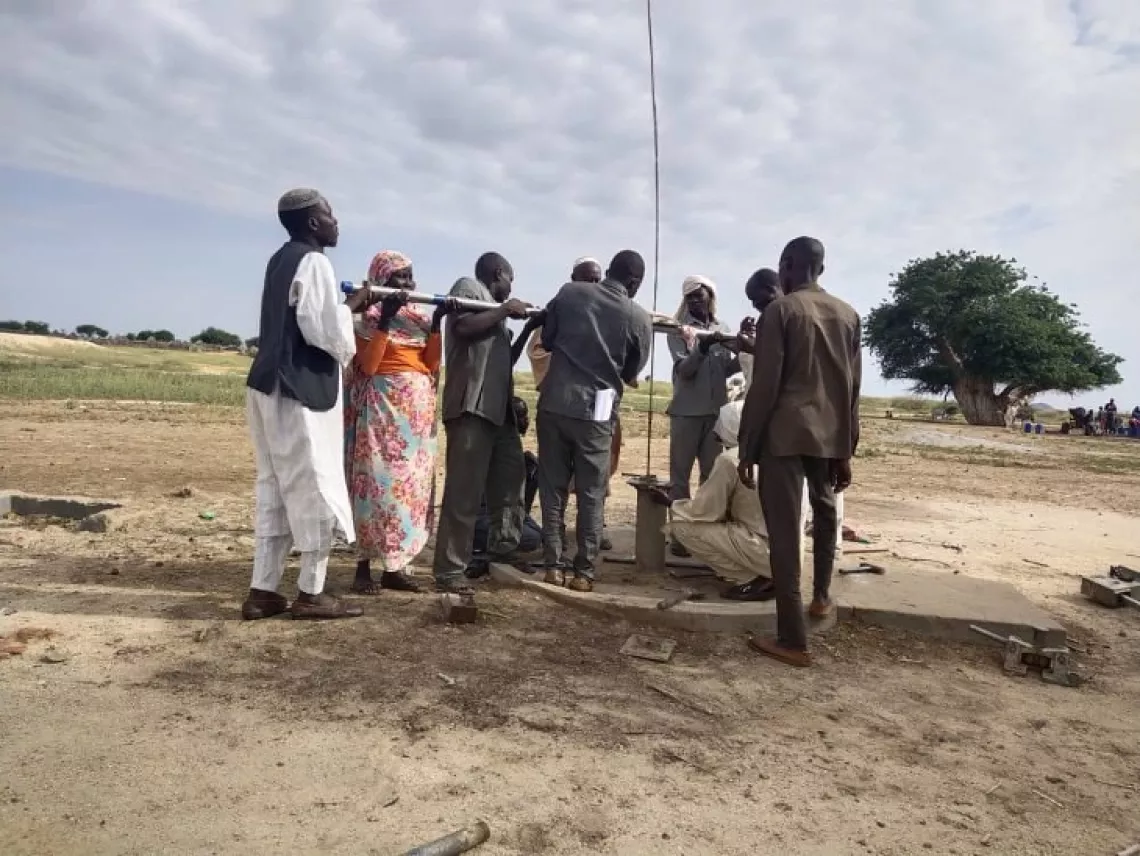
After consulting with the state government, UNICEF visited the village of Shanabla to assess water and sanitation conditions. The assessment resulted in Shanabla immediately being placed on the list of sites for support from UNICEF’s water supply and environmental sanitation activities and the agreed upon intervention was the establishment of a water point. The water point has brought a multitude of changes to the community, including the development of a water committee that has been trained to help with the maintenance of this new water and sanitation resources. The water committee explained that all the households have agreed to collect a monthly tariff contribution of 20 Sudanese pounds for the upkeep and repair of the water point.
Before the development of the water point, Zeinab Mustafa had to fetch water two times a day.
“My legs would ache,” she said
“We never used to bathe at home. Without the water point, I cannot imagine the suffering. All the developments we have seen would not be here,” added Zeinab.
Access to safe water has changed her life and brought a sense of peace and happiness. She can now invests her time in other chores.
Najwa Mekki a resident of Shanabla said she felt "liberated" due to access to clean water less than a kilometer away.
"I used to wake up very early to fetch water and return late in the evening to find my children crying from thirst. I am now drawing water within the vicinity and I am very grateful. We used to share drinking water with animals, but not anymore," said Najwa.
Water has become a resource that can be shared. Travelers visiting from neighboring communities can stay longer, as water is no longer a limited resource. Friendships and bonds are created. While UNICEF’s water project has led to the reduction of local conflict, the broader situation across the whole front line has improved.
Following the completion of the water point, it is anticipated that 50,000 people will directly benefit from improved water supply and sanitation services.
Our thanks and heartfelt gratitude goes to our invaluable partner, the Peace-Building Fund (PBF), which supports the peace process and addresses the causes of conflict. Their effort greatly contributed to saving the livelihood of the local community and curtailing the outbreak of waterborne diseases and infections which in turn reduces the rate of mother and infant mortality.