How poor access to nutrition made Arafa almost lose her twins
UNICEF is helping the twins recover, but much more needs to be done to prevent millions of other stories receive a different ending

Arafa Musa cuddles her twins Mawada and Mushtaha while waiting for their review at Dar Al-Salam health facility in Port Sudan.
Occasionally speaking to them softly as the breastfeed in turns. They are at the facility for the weekly checkup after enrolment on the outpatient therapeutic programme for nutrition treatment and care.
Mawada is severely acute malnourished while Mushtaha moderately acute malnourished. Especially severe acute malnutrition is life-threatening and without treatment, the children suffering are at high risk of death.
On the waiting bench are several other mothers with severely acute malnourished children. Some look small, thin, and frail while others have oedema – swelling in the feet.

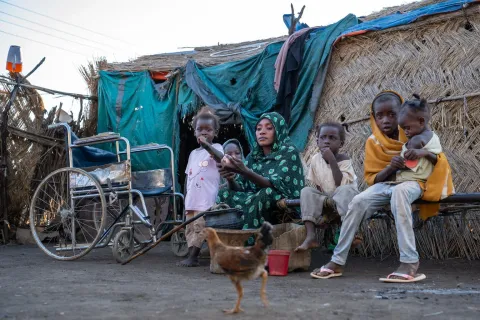
These children are just a fraction of the hundreds of thousands battling the worst and most deadly form of malnutrition across the country. With the war continuing, clashes spreading across many more states and pushing families out of their homes, parents and caretakers are struggling to find nutritious food to support proper growth and development of their children especially those below five years. Currently, in Sudan, over 700,000 children are severely acute malnourished and without urgent care and treatment, they are at high risk of death. Poor quality diets remain a contributing driver of some of the malnutrition cases especially during the ongoing crisis.
To ensure children like Mawada and Mushtaha receive timely treatment, UNICEF is providing health and nutrition supplies including ready-to-use therapeutic (RUTF), and other essential nutrition items and medicines to various health facilities including those in hotspot areas. This is in addition to supporting the service delivery through health facilities and mobile teams which include the operation costs, capacity building, and monitoring activities.
Mawada’s steady progress
Held every Tuesday of the week, the OTP clinic at Dar Al-Salam health facility run by a team of nutritionists with Jawahir Bashir Ahmed as their lead, is open and treating severely and moderately malnourished children.
One by one, Jawahir attends to the mothers – screening the children, measuring their weight and height, checking for oedema, and entering their records in the pink cards. This is followed by a session with the mothers to discuss the progress of the children and subsequently providing replenishment of RUTF sachets they will need until the next appointment.
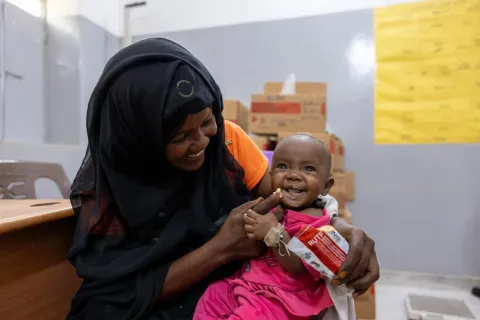
During the waiting time the children undergo an appetite test. Each child is provided with a sachet of the RUTF if severely malnourished and Ready-to-use Supplementary Food (RUSF) if moderately malnourished. Many are nibbling on the peanut like nutritious paste and sipping on water, but some are too weak to suck on it. The nutritionists closely watch them to identify those who fail the test. It would signify another problem.
Mawada eats the paste very well.
It is Mawada’s turn for screening. Her MUAC reading is still in the red zone. Despite making progress, she is still severely malnourished and her weight only 5kgs.


Impact of the poor-quality meals
A month ago, Arafa visited the facility with her two children – both unwell. Sadly, they were both malnourished with medical conditions. With immediate treatment, their health has greatly improved and now enrolled on the OTP programme until they fully recover.
Like many mothers at the facility today, Arafa thought the food she provided her children was nutritious enough to support their growth. She would later learn from the nutritionist - Jawahir that the children needed nutrient-rich foods for proper growth and development.
Globally and in Sudan, millions of children do not benefit from diets that support healthy growth and development, quickly pushing them into malnutrition.
“I fed them what we eat at home,” Arafa explained.
Arafa would like to diversify the diets of her children, but affordability remains a challenge. Her daily struggles with making ends meet affects her ability to afford the variety of foods recommended. But even when she obtained certain foods in the past, she didn’t mix them well for balanced meals the children require.
Since enrolment, Arafa is also benefitting from nutrition counselling provided at the health facility. She has learnt that as infants grow, their nutrient needs change rapidly and been equipped with knowledge on how to mix foods available at her home for better meals for her children. And that they should feed frequently to ensure their nutrient needs are met.
While they are late on their growth milestones, Arafa is optimistic that with the nutrition care provided at the facility, her children will thrive and get better soon.

“I hope to hear them say Mama (mother) and Baba (father) and hope they grow up healthy and bring happiness to my life,” Arafa shares with a sigh of relief.
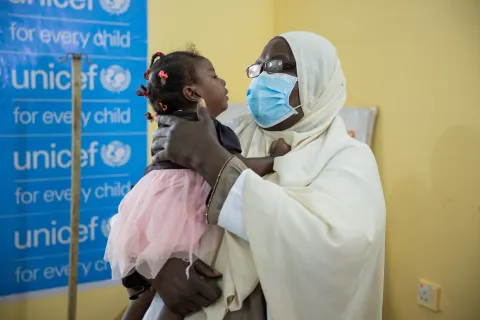
UNICEF’s Health and Nutrition Officer Ahmed Mustafa says “At Dar Al-Salam health facility, UNICEF supports the delivery of integrated healthcare services for children. Malnourished children under five years are enrolled on the OTP programme while mothers with children aged six months to five years plus pregnant and lactating mothers are enrolled on the Mother and Child Cash Transfer plus programme.”
Through all entry points, malnutrition among children is detected and treatment initiated to reduce on the impact. During antenatal care sessions, mothers are enrolled on mother support groups to learn more on breastfeeding and infant and young child feeding.

Arafa ends her visit at the facility with obtaining the required RUTF ration for her child and is determined to support her children heal and grow well. The supply chain of the nutrition supplies and the continuous delivery of nutrition services is maintained by UNICEF with funding from ECHO and other donors.