Generations undernourished
Tackling maternal and child malnutrition in Sudan

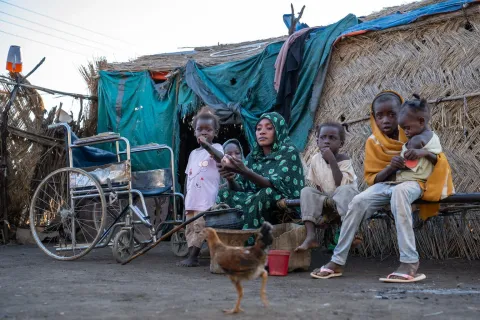
Eighteen months into Sudan’s devastating war, displaced families on the move are grappling with the harsh reality of finding food. For many, daily meals consist of inadequate and non-nutritious food, when food is available at all. Children bear the brunt of the crisis, but pregnant and lactating mothers are enduring malnutrition that endangers their health and the well-being of their unborn babies.
Qabil Awad, seven months pregnant at the time, decided to flee Khartoum with her four children. A former teacher, she could no longer work, earn a living, or provide for her family. Her husband’s unemployment compounded their struggles. Selling their furniture provided enough money for the family to embark on a perilous journey for safety.
“I thought that if we stayed in Khartoum much longer, I would lose my children,” she said.
Heavily pregnant and tired, she endured the long, grueling journey. Irregular meals and harsh conditions severely impacted her health. “We mostly survived on water and bread,” Qabil recalled. “Sometimes there was food, and other times there wasn’t.”
For pregnant women, access to nutritious, well-balanced diets is essential for both their survival and that of their babies. However, such diets were out of reach for Qabil. Far from Khartoum, in Atbara, she safely delivered her son Muhammad. Encouraged to exclusively breastfeed him for six months, Qabil remained optimistic, but her insufficient nutrition led to inadequate breast milk supply. Three months later, continued displacement to Kassala, and her poor nutritional status placed both mother and child at heightened risk of malnutrition.
“His health will be affected because I am sick and cannot breastfeed him well. He is not getting adequate nutrition,” she whispered.

Maternal health, the foundation for newborn survival
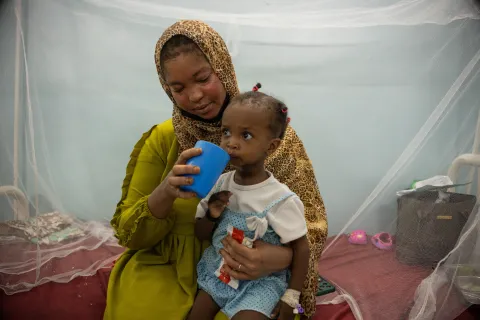
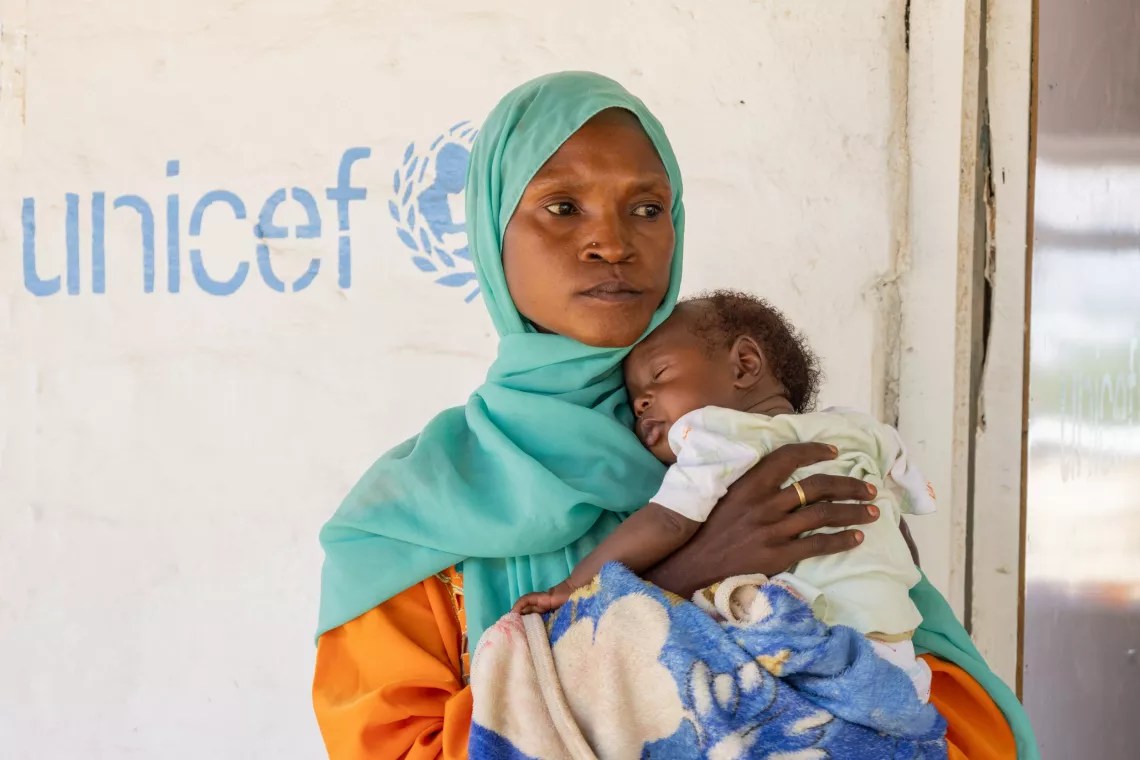
Recently, Qabil felt tired, dizzy, and weak. At the nearby UNICEF-supported Alkarama health clinic, she was treated for malaria. However, her arm circumference measured only 18.5 cm, confirming severely malnourished. Immediate treatment was critical to restore her health and enable her to continue breastfeeding.
“She is malnourished,” explained Hawa, a nutritionist at the clinic. “Our focus is on treating and supporting the mother to ensure she is healthy enough to breastfeed.”
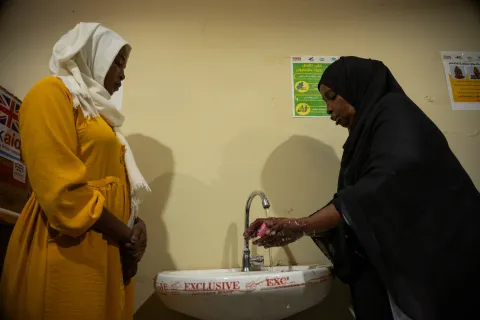
Hawa attributes the rising malnutrition rates among women and children to displacement, poverty, and food scarcity- all exacerbated by the ongoing war. At the health facility, Qabil is also benefitting from the nutrition counseling at the special nutrition corner, where she learned how to combine available foods at home for improved diets. In addition, she received nutrition supplements to boost her weight and immunity. This knowledge will be invaluable when Mohammed begins complementary feeding after six months.
“They advised me to eat well so that I could properly breastfeed the baby,” Qabil said.
UNICEF’s Undernourished and Overlooked: A Global Nutrition Crisis in Adolescent Girls and Women report highlights the generational impact of poor nutrition About half of children under two who experience stunting become stunted during pregnancy and their first six months of life. The impact is irreversible, affecting their health and development for a lifetime.
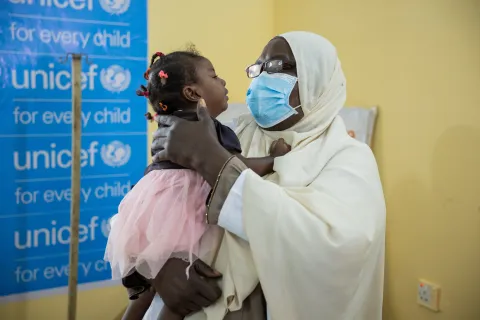
At Alkarama health clinic, UNICEF and partners are providing care and treatment for malnourished mothers, recognizing that healthy mothers are essential for healthy children. By her second visit, Qabil’s arm circumference had slightly increased to 19 cm, and she reported feeling stronger.

Hope and determination
As she continues her recovery, she is committed to following the advice she received and leveraging the support and knowledge from the clinic nutrition corner.
“In addition to the treatment I received, I now also eat regular food and whenever possible, add vegetables,” she concluded.