Find, test, and treat
Curbing child malnutrition through mass screening, immediate referral and treatment

Sudan is grappling with one of the worst malnutrition crises in the world. Close to four million children are acutely malnourished and an estimated 730,000 are suffering from severe acute malnutrition.
The already dire situation is exacerbated by the ongoing war that continues to push more children into malnutrition every passing day. With the upcoming lean season, millions of families on the move struggling to feed their children, and thousands of children trapped in conflict areas, with little or nothing to eat, it is feared that many more will be affected. The country’s breadbasket areas such as Gezira are under attack and children are paying the highest price.
The health system is also on the brink of collapse, interrupting the delivery of health and nutrition services.
UNICEF with support from the Government of the United Kingdom has launched integrated nutrition, hygiene, and health campaigns to urgently deliver critical services to as many children as possible especially those under five years.
Mass nutrition screening using the colour-coded mid-upper arm circumference (MUAC) measuring tapes and immediate referral of malnourished children under five years is one of the campaign interventions.
With these simple but effective tapes children whose measurements fall in the red and yellow zones, are identified, and immediately referred to the nearest health facility for treatment.

Find, test, and treat approach in action
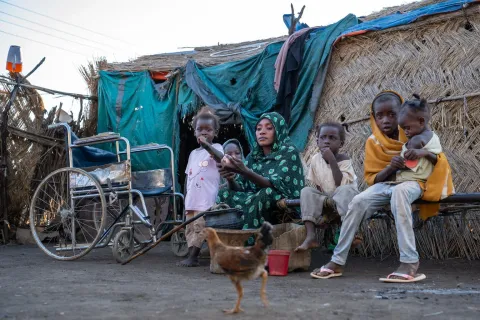
In Al-Arab neighbourhood located on the outskirts of Atbara town, is a non-Arabic community. Predominantly nomadic, these families are often on the move in search of water and pasture for their animals which greatly affects their healthcare-seeking behaviours and that of their children.
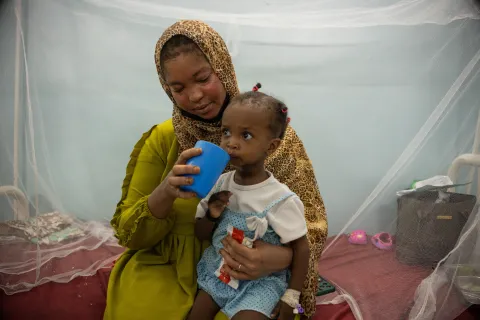
Malaz who hails from this community heard about the campaign and took advantage to access healthcare for her two-year-old daughter, Aida who was unwell.
“My daughter was weak and in need of help,” Malaz said. “She had pain in her head and an infection.”
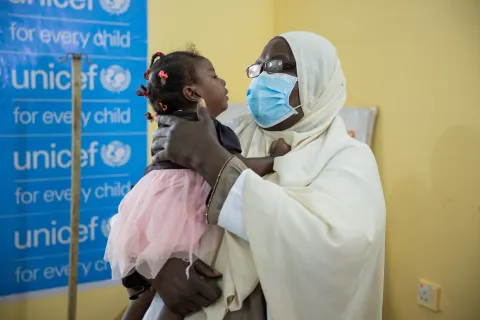
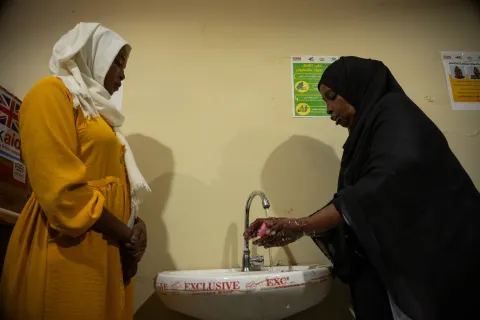
UNICEF-trained health workers are on the ground to deliver the campaign interventions that range from mass nutrition screening for children under five years, vitamin A supplementation, deworming, iron folate supplementation for pregnant women, hygiene promotion including optimal Infant and Young Child Feeding (IYCF) practices for pregnant women and mothers of children under two years, and distribution of soap to promote better hygiene practices that are closely linked to young child feeding and pertinent in reducing the incidences of diarrheal diseases.
Through integrated campaigns such as this, UNICEF and partners bring critical healthcare and other services closer to people, saving the lives of children and helping them to thrive.

Aida and the other children are saved
It is Aida’s turn. She is too weak and can hardly sit on her own. Malaz supports her while the health workers wrap the MUAC tape around her small little arm. Her measurement falls in the red zone – she is severely malnourished and needs immediate medical attention.
One by one, more children are screened, and the majority are severely malnourished. In a bid to curb malnutrition, UNICEF through integrated nutrition campaigns, is prioritizing mass MUAC screening and immediate referral and treatment for malnourished children under five years.
Malaz and the other mothers are immediately referred to Al-Arab health facility for enrolment in the outpatient nutrition programme. Here they will receive nutrition care and treatment for their children including Ready-to-Use Therapeutic Food (RUTF).
UNICEF has delivered and stocked sufficient supplies of RUTF, a peanut and the treatment to support treatment of malnourished children identified.
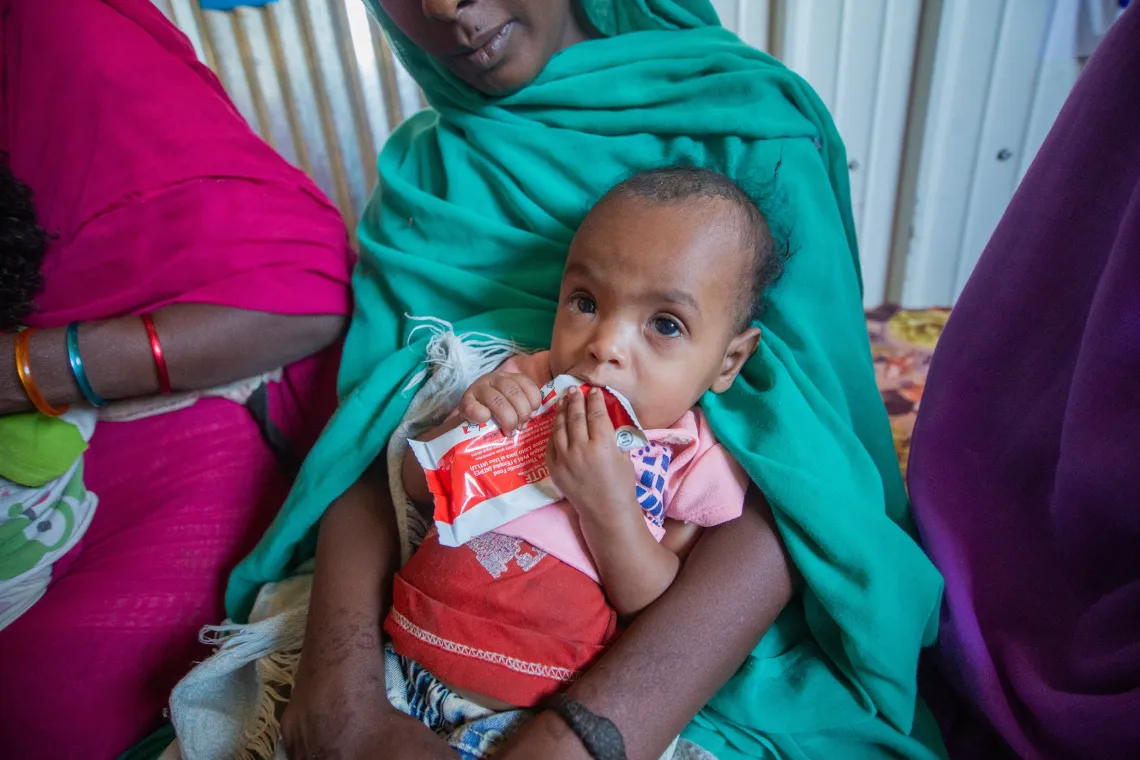
“I went to the campaign, and they gave me food for my daughter for her health to improve,” Malaz shares.
Like most of the other children, Aida liked the RUTF which made Malaz happy and hopeful after seeing her child eat.
As Aida begins her road to recovery, Malaz is optimistic that her child will soon recover now that she has received treatment.

“I wish she grows up and can play in the street,” she dreams.
As they return home, Malaz is provided with enough RUTF sachets to take and feed Aida as advised by the health workers. Her next appointment will be after two weeks to assess her progress.
With the generous support of the governments of the United States and the United Kingdom as well as the European Union and UN CERF, UNICEF has procured and delivered RUTF to lower-level facilities to support the treatment of millions of children suffering from malnutrition like Malaz.