Explosive remnants of war
A growing threat to children and families in Sudan

The danger of death and injury from unexploded remnants of war, including abandoned and unexploded bombs, is tragically real for children and families in conflict-affected Sudan. Despite ongoing war entering its second year, thousands continue to move from one state to another in search of safety, while many are making the tough decision of returning home.
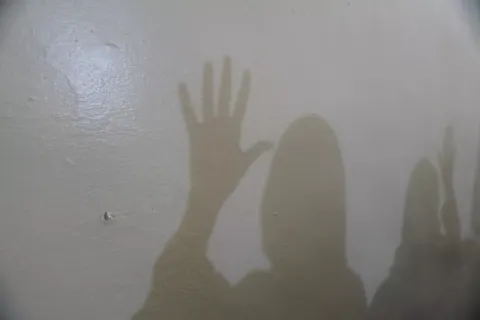
Three months ago, Muzan’s family returned to Omdurman, north of Khartoum, believing it was safe. Maneuvering through rubble and destroyed buildings, they reached their home, which had become a danger zone littered with explosives left behind after the war. These remnants often resemble harmless objects like fruits, fans, or toys, making them dangerously attractive to children yet deadly when triggered.
Typically, Muzan’s family settled in, unaware of the lurking danger. One touch of an unknown object led to an explosion, killing all four children and severely injuring him. To prevent such incidents, UNICEF conducts awareness sessions on explosive dangers. These sessions are integrated into child-friendly spaces and learning environments.
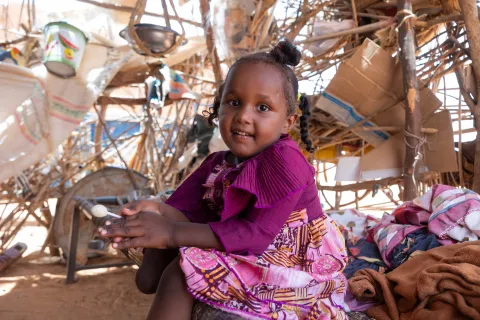
In Gedaref State, home to nearly one million displaced people including children, predominantly from Khartoum and AlJazirah, UNICEF and its partners have established safe spaces for children. Here they play, interact, learn, and they receive education on explosive ordnance risk, gender-based violence awareness, and mental health support.
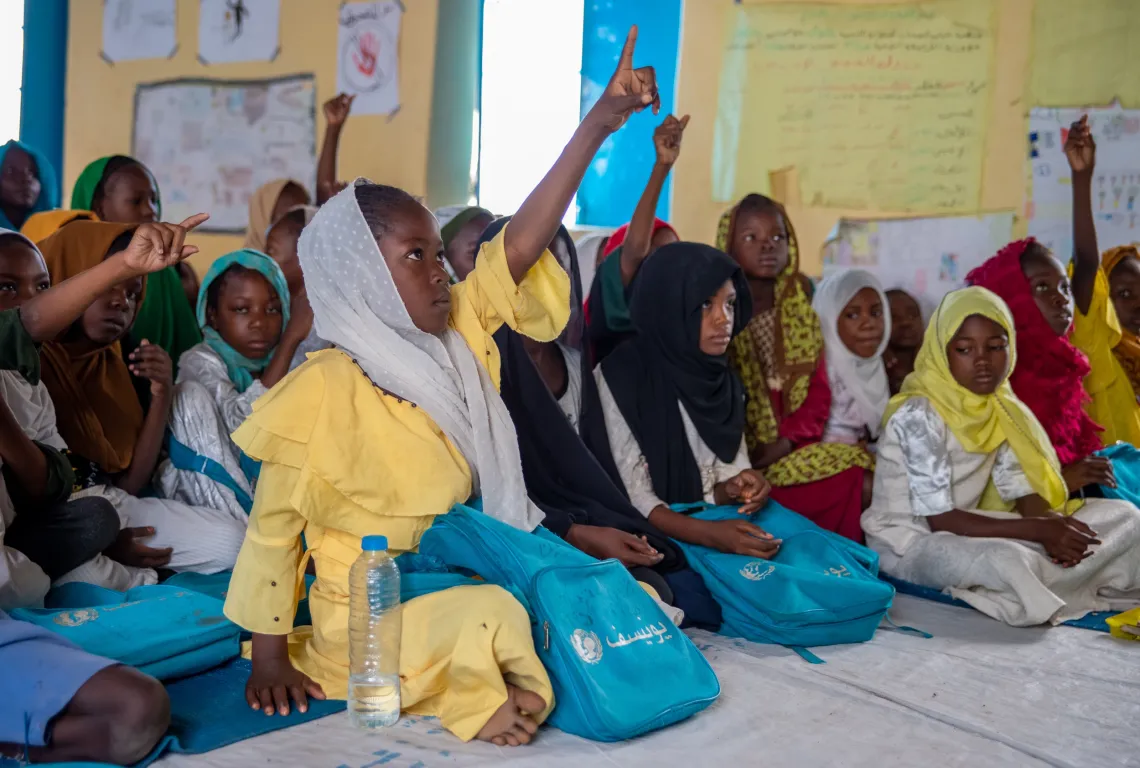
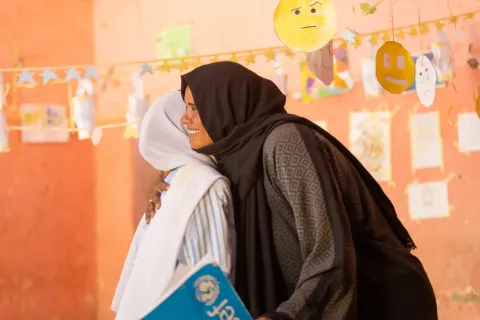
In October North, children listen attentively as displaced teacher Fatima, drawing from her firsthand war experience, simplifies the dangers of unexploded ordnance (UXO). Using flip charts interactive methods, she ensures comprehension among students, emphasizing the importance of avoiding suspicious objects and reporting them to adults.
Fatima and twelve other educators were trained, enabling them to deliver impactful sessions in UNICEF-supported spaces across Gedaref state. Mahmoud Issa Arbab underscores the sessions' importance, highlighting the tragic death of four children as a stark reminder.
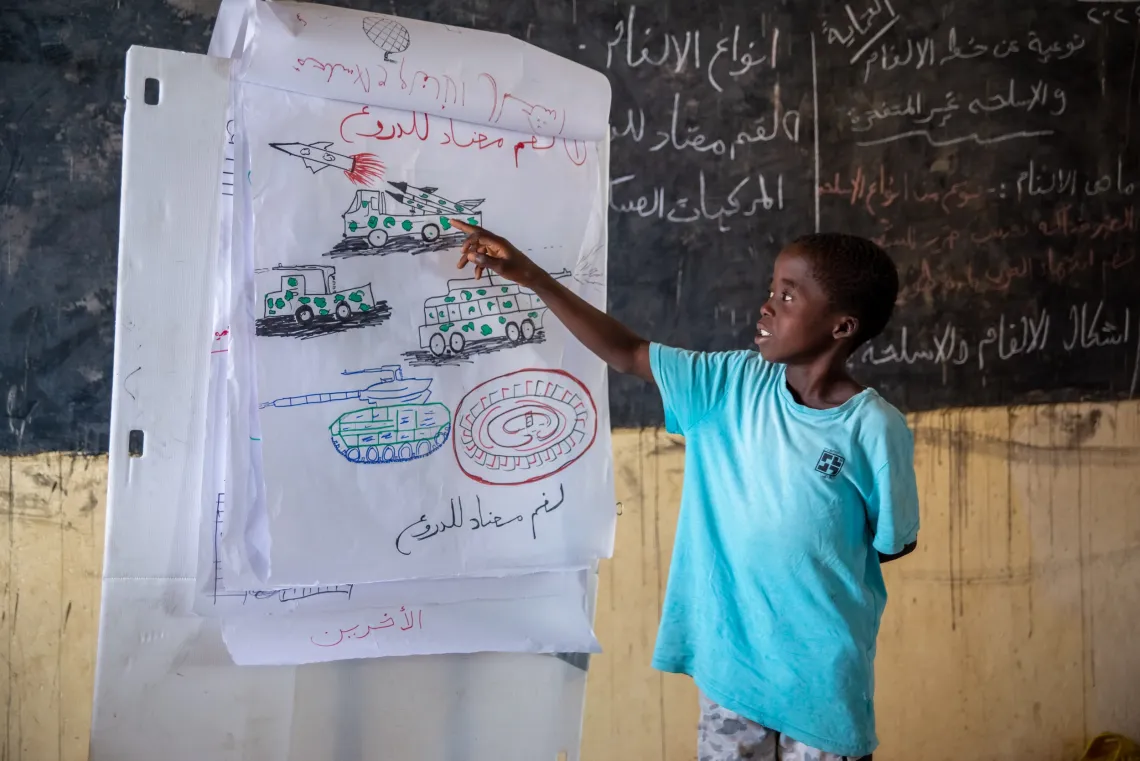
Ten-year-old Idris, displaced from Khartoum, shares his takeaway: "Before entering our home, we must ensure it’s safe, as some soldiers may have left explosives there.”
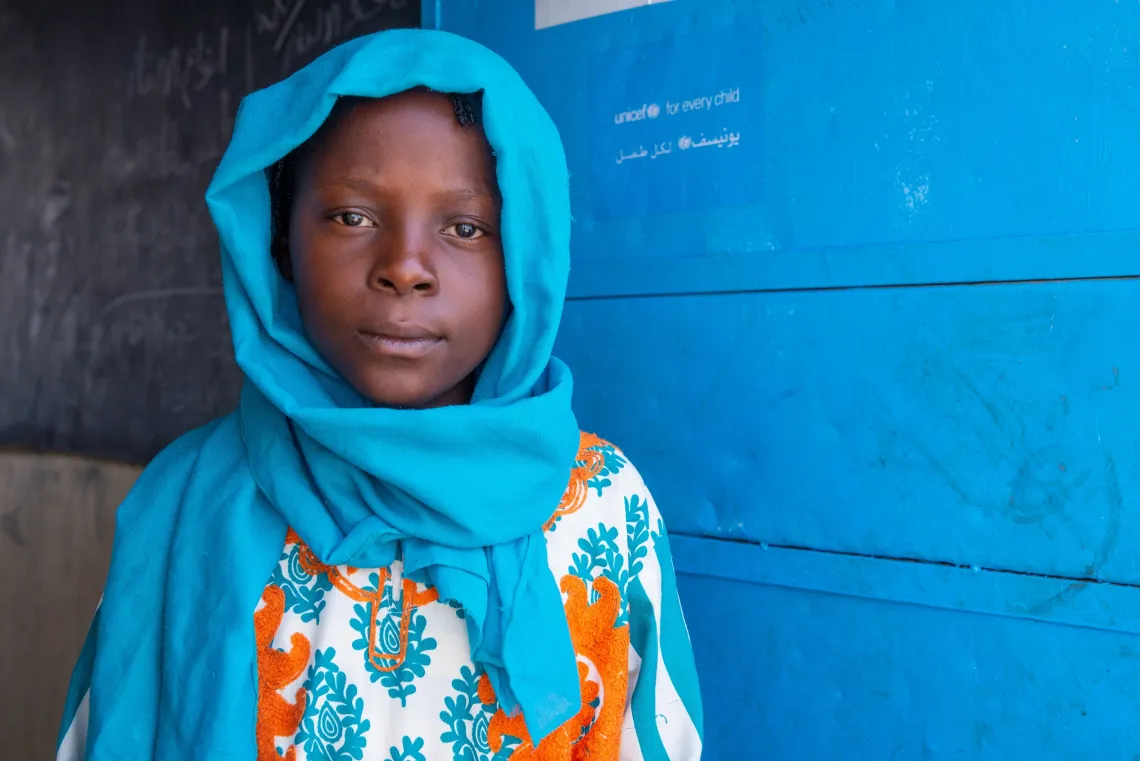
Baraa, 11, from the host community, emphasizes the long-lasting danger of hidden explosives and the need for caution.
“I thank teacher Fatima for the lessons that enlightened us about these dangerous objects.”
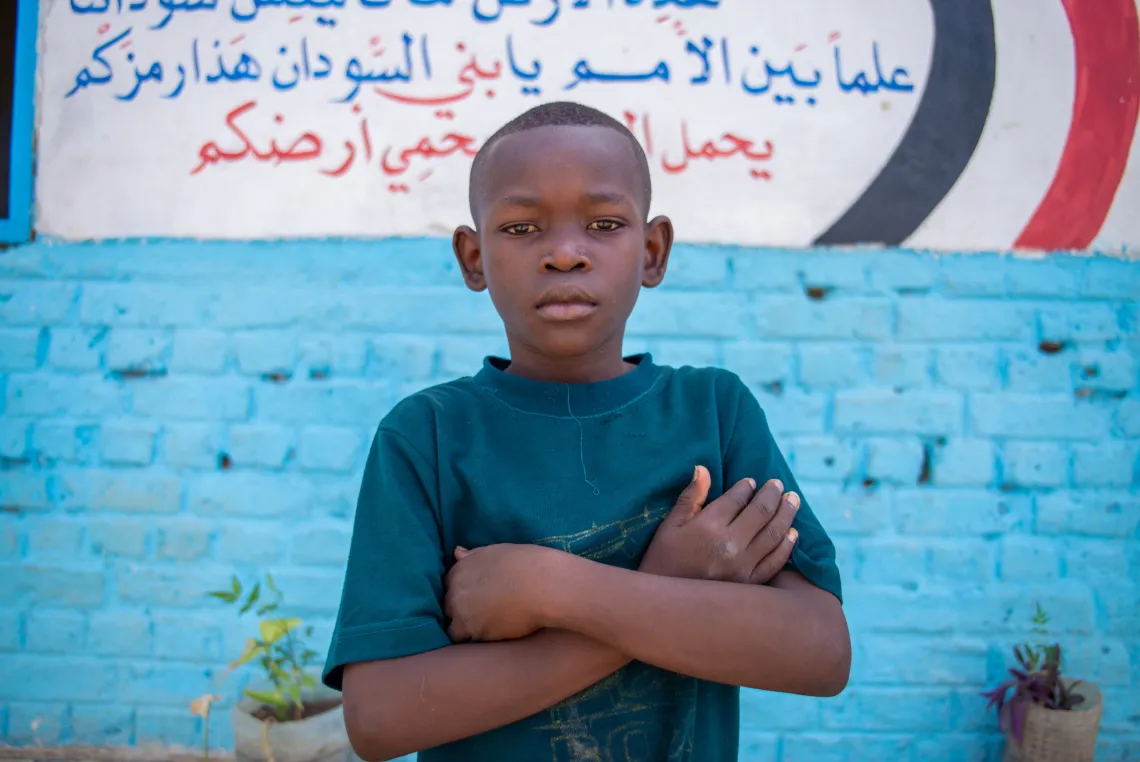
10-year-old Ahmad now knows there are two types of mines – those from cars and others thrown by people. “For us to keep safe when we return home, we should be careful not to touch anything strange.”
In closing, Fatima demonstrates safe movement in explosive-laden areas, preparing children for a safer future in Sudan’s uncertain post-war landscape.
Through these sessions, children like Latifa and Ahmad understand the deceptive appearance of explosives and the importance of vigilance. Thanks to the strategic partnership with USAID’s Bureau for Humanitarian Assistance (BHA), the Swedish International Cooperation Agency (SIDA), the Government of Norway and the German Cooperation through KfW Development Bank, regular sessions at safe learning spaces and community gathering points have reached 4,130 children and families, with plans to expand to 12,152 by 2024.