Education is my hope
Zuhair’s story of hope and resilience after injury

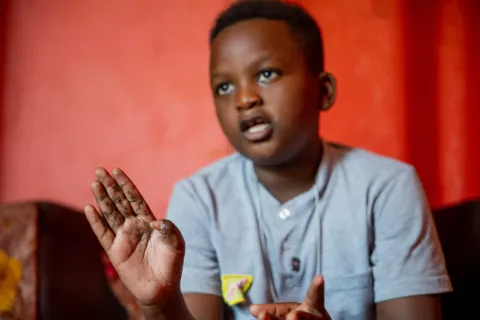
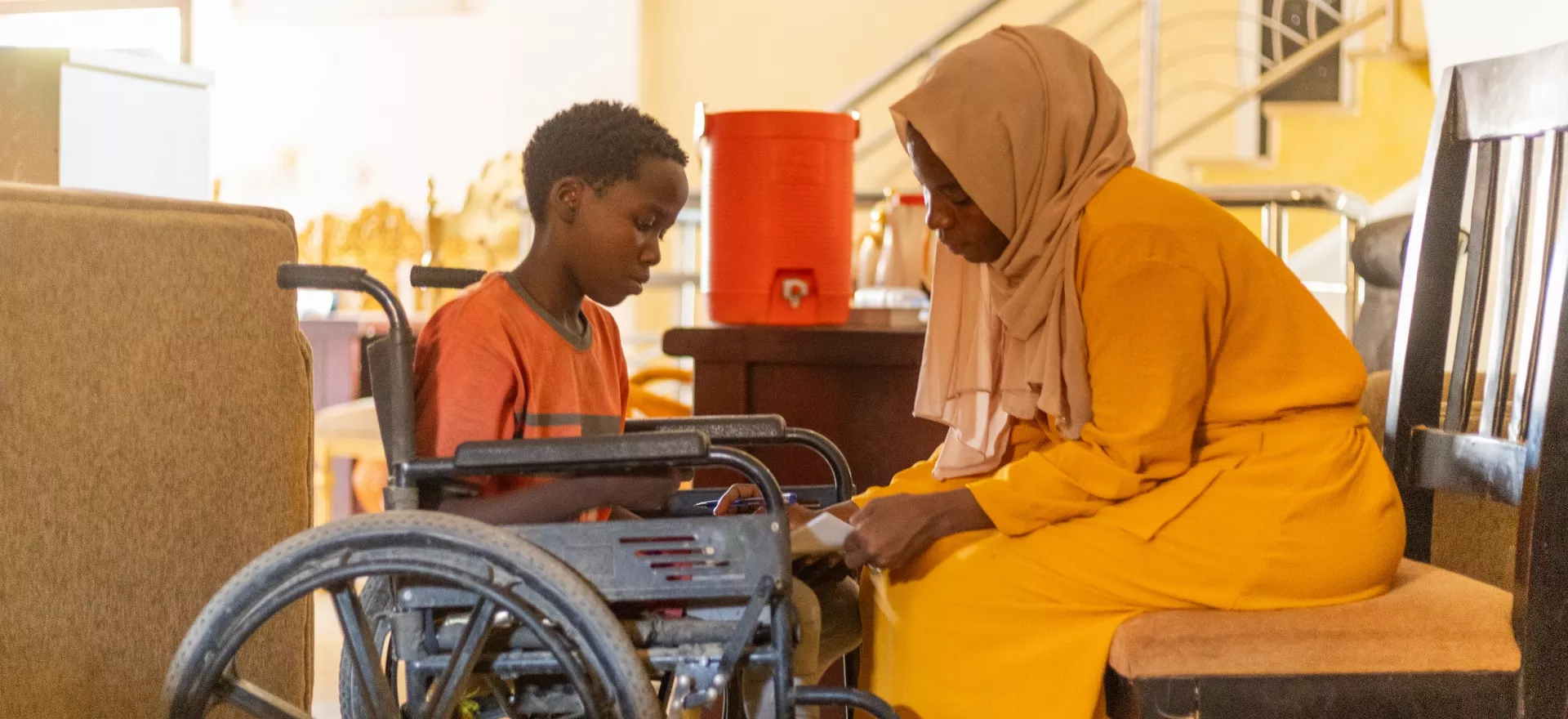
Twelve-year-old Zuhair sits in a wheelchair- which has now become a part of his life. Before the war reached his hometown of Khartoum, he was a vibrant, active young boy. He engaged in various sports activities and was able to do a lot while on his feet. He walked to school and ran around his home and in school.
But all that changed the day a bomb struck his home, and a piece of shrapnel tore through his body.
Now confined to a wheelchair, Zuhair depends on others for movement. When asked how it happened, he lowers his voice.
“I was injured by a bomb. I don’t like talking about it... It brings back memories I’m afraid to relive.”
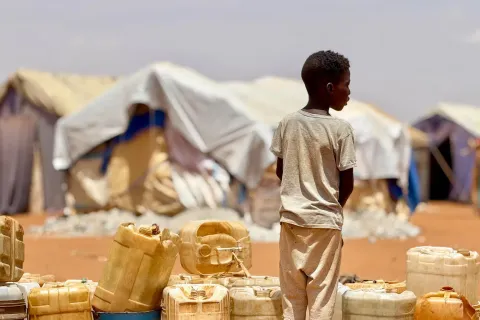
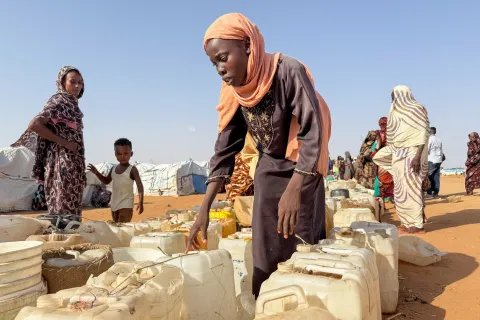
Since the war erupted in Sudan, millions of children have been forced to endure the unimaginable. Many have been displaced, killed and gravely injured-physically and emotionally. These are not just numbers but lives completely changed.
“At least forty children were reportedly killed over just three days, in three separate areas of the country. This is a stark illustration of the devastating – and growing – threats to children in Sudan,” Annmarie Swai, UNICEF Deputy Representative, reported in early 2025.
“Sadly, it is rare that more than a few short days go past without new reports of children being killed and injured.”
Zuhair was one of the many injured. Trapped in Khartoum during heavy fighting, he was unable to flee with his family until his condition stabilized. But the moment to escape safely never came.
UNICEF/UNI820863/Ahmed Mohamdeen Elfatih
“When I grow up, I want to be a doctor to treat patients, because doctors treated me.”
Education is my hope
Ever since he was younger, Zuhair dreamt of becoming a doctor one day. After his injury, seeing doctors work tirelessly to save his life further cemented his love for the profession.
“When I grow up, I want to be a doctor to treat patients, because doctors treated me.”
But how was he going to pursue his dream after all the schools were shut down in Sudan after the war?
That’s when he heard about Etra Abdulrahman, a volunteer teacher in his neighbourhood who opened her home to children, for catch-up lessons, whenever the situation allowed. Concerned about the prolonged closure of schools, she found hope in the UNICEF-supported learning passport – a digital platform providing access to Sudan’s national curriculum both online and offline.
Etra printed lessons, used interactive tools, and welcomed children of different ages for catch-up classes. Her sessions were not far from Zuhair’s home. Everyday whenever the situation allowed, Zuhair attended classes with the larger group but also had one-on-one sessions with her.
“We didn’t have internet, the schools were closed, children couldn’t learn but we had the Learning Passport. That is how the idea of opening a learning space came from,” Etra noted.
Launched in 2022 by the Ministry of Education, the Learning Passport, an innovative e-learning platform available both online and offline, is supporting continuous access to education and learning during the war. The platform was further updated with the latest versions of the Sudanese national curricula and features engaging and interactive tools developed by UNICEF that made learning fun.
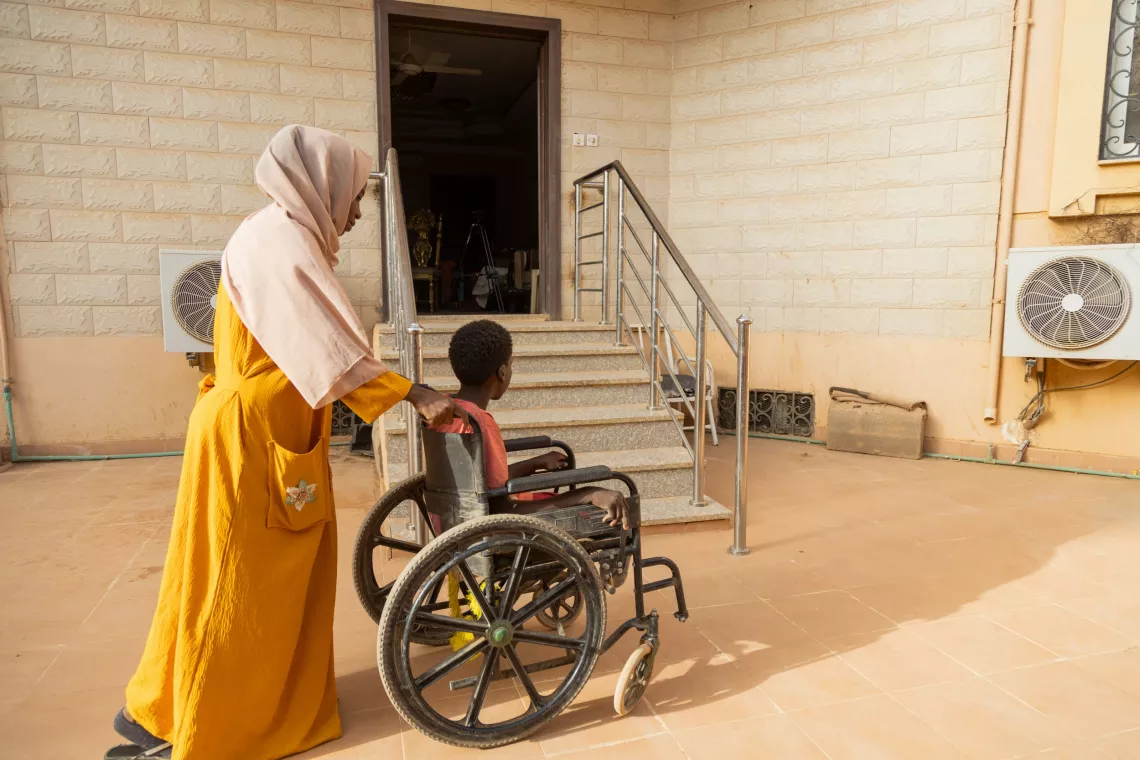
“I come to school every day. I love learning. Education is very important to me because I want to succeed, go to university, and travel,” he says with a hopeful smile.
These classes gave him more than knowledge; they gave him purpose, structure, and a reason to dream again.
Learning before, during and after conflict
To keep education going for children like Zuhair, UNICEF continues to support access to the Learning Passport—a digital, low-connectivity platform delivering Sudan’s national curriculum. Learners can download materials and update lessons with minimal internet, ensuring learning continues even in the most unstable environments.
As of March 2025, over 76,000 children (52 per cent girls) are enrolled in structured learning through the Learning Passport and the Let Us Learn initiative—an interactive, game-based, self-paced platform accessible via tablets in UNICEF-supported e-learning centres.
A dream that won’t be silenced
As the conflict in Khartoum gradually subsides, more schools are reopening. Zuhair is determined to return to his classroom - not only to build on what he learnt using the learning passport and catch-up lessons but also get closer to his dream.
With a pen, a notebook, and dedicated teachers like Etra, Zuhair believes nothing—not even war—can keep him from becoming the doctor he’s destined to be.