Report
North Darfur (Al Fasher) and Kordofan Crisis
Humanitarian Flash Update (8 January 2026)

Highlights
North Darfur State
- North Darfur remained a hotspot after hostilities expanded to Um Baru, Kornoi, and Tina. 107,300 people2 are now displaced from Al Fasher, including a new wave of 7,5003 moving to nearby areas and to Chad.
- Standardized Monitoring and Assessment of Relief and Transitions (SMART) surveys in Um Baru revealed Global Acute Malnutrition (GAM) at 57%, indicating critical malnutrition, compounded by poor water, sanitation, and hygiene (WASH), health, and vaccination coverage.
- In the past two weeks, UNICEF with its partners supported Tawila and areas surrounding Al Fasher through:
- Providing essential health services including consultations, reproductive care, immunization, and cholera control for internally displaced populations.
- Delivering community-based management of acute malnutrition (CMAM) services and supplies, with over 9,000 children screened.
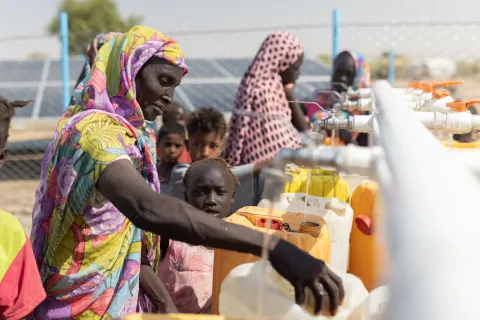
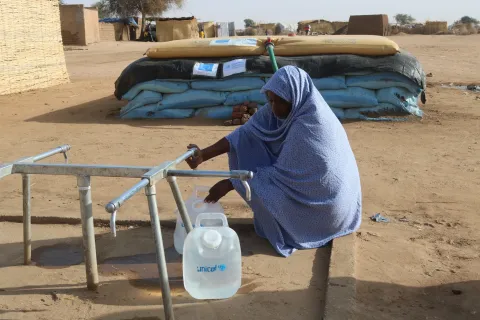
- Supporting safe water for provision for over 15,000 displaced people, expanding sanitation coverage and supporting hygiene promotion to reduce disease risks.
- Scaling up child protection, gender-based violence (GBV) response and psychosocial support (PSS) for displaced populations and provision of daily meals to 13,000 people through community kitchens.
Kordofan and White Nile States
- Kordofan faced intensified hostilities, El-Diling and Kadugli remained sieged, restricting movement and services and El Obeid remained contested, causing continuous population movements and complicating response.
- 64,890 people are now displaced4, with families facing urgent needs for food, health, WASH, and protection amid limited access and overstretched services.
- Over the past two weeks, UNICEF through its partners provided multi-sector life-saving response by:
- Supporting essential health services and immunization and effective cholera prevention and scaling up nutrition screening and treatment for thousands of children and caregivers.
- Maintaining safe water and sanitation for tens of thousands through trucking, chlorination, latrine construction, and hygiene kit distribution.
- Expanding child protection, GBV response, and PSS, strengthening birth registration and supporting education continuity despite insecurity.
Publication date
Languages
English