UNICEF, the Global Fund and the Federal Ministry of Health distribute 16 million bed nets to halt spread of malaria in Sudan
Mass campaign to benefit nearly 28 million people across 14 states

- English
- العربية
PORT SUDAN, 28 May 2025 – The Federal Ministry of Health, in partnership with UNICEF and the Global Fund, today launched a mass campaign to distribute nearly 15.6 million insecticide-treated bed nets to prevent the spread of malaria and safeguard the lives of the most vulnerable families and children in Sudan. An additional 500,000 nets will be distributed in facilities for antenatal care and immunization. The nets are designed to cover a bed, and each protects on average two people, in total, benefiting an estimated 28 million people in 14 states across the country.
As the conflict in Sudan continues, millions of people across the country have been displaced and many of them live in overcrowded settlements with limited or no access to clean and safe water, good sanitation, and basic healthcare including limited access to malaria prevention. With the imminent rainy season, the risk of contracting malaria is growing.
Across Sudan, thousands of returnees are making their way back home and facing dire conditions, especially in areas where the health infrastructure has been destroyed or damaged as a result of the conflict. With the collapse of local services and limited access to preventive tools, these communities are particularly vulnerable to malaria and the bed net campaign will be essential in keeping them safe and protected from the deadly disease.
“This bed net distribution campaign, in partnership with UNICEF and support of Global Fund, is one of the largest malaria prevention campaigns in Sudan’s history and an imperative step forward in our collective efforts to save lives and stop this deadly disease in its tracks. It is a very important step towards the elimination of malaria in Sudan. The approval of GAVI's Phase Two plan for the escalation of malaria vaccination in the country, coinciding with this distribution campaign, signifies a strong, scientifically backed approach that we are applying to save the people of Sudan and will ensure that Sudan will soon be free from malaria," said Dr Heitham M Awadalla, Sudan’s Minister of Health.
In 2023, more than 1.3 million cases of malaria were reported in Sudan, according to the 2024 World Malaria Report. Children represented 22 per cent of the cases and 16 per cent of the estimated deaths. Both the caseload and deaths were likely severely underreported due to the ongoing conflict, connectivity issues and challenges in reporting. In 2025, malaria continues to stalk the most vulnerable people across the country.
“Malaria is one of the deadliest diseases affecting children, and the ongoing conflict in Sudan has left many vulnerable. UNICEF is proud to partner with the Ministry of Health and Global Fund to roll out this campaign,” said Sheldon Yett, UNICEF Representative for Sudan.
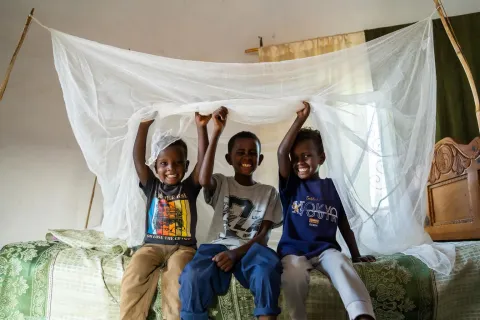
Consistently sleeping under these insecticide-treated bed nets is the most effective way to prevent malaria infection. The nets create a protective shield against mosquito bites, saving lives, especially among the most vulnerable to malaria: young children, pregnant women and families living in high-risk areas.
Bed net distribution will be carried out in phases across Sudan. It will be supported by campaigns to raise awareness of the risks of malaria, the ways of preventing and treating the disease. Local partners and frontline workers will be engaged in providing accurate information, dispelling myths, and promoting consistent use of the nets. Household visits, practical demonstrations, and follow-ups by community health workers will be conducted to encourage high utilization of the nets - turning access to the nets into protection against malaria.
In addition to bed nets distribution, the Federal Ministry of Health, in partnership with UNICEF and support from the Global Fund, has ensured the availability of anti-malarial medications, rapid diagnostic tests, and investments in strengthening the health system and community engagement to advance malaria prevention and response.
“At a time when conflict and displacement are compounding health risks in Sudan, this campaign is a vital intervention,” said Lyne Soucy, Regional Manager for the Middle East and North Africa Region at the Global Fund. “Insecticide-treated bed nets are among the most effective tools we have to prevent malaria. Working with the Sudanese health authorities and UNICEF, we are committed to reaching the most vulnerable with lifesaving protection and to strengthening the country’s fight against one of its deadliest diseases.”
#####
Notes for editors:
Approximately 87 per cent of malaria cases in Sudan are caused by Plasmodium falciparum, the deadliest malaria parasite, it accounts for nearly all malaria-related deaths and carries a higher case fatality rate than the other parasites.
In 2025, an estimated 3 million children, under the age of five, are at high risk of epidemic diseases in Sudan.
Media contacts
Additional resources

About UNICEF
UNICEF promotes the rights and wellbeing of every child and is committed to the children of Sudan. We never give up on finding solutions that provide immediate help to save the lives of children or provide durable support so that those children grow up with dignity, health and an education.
For more information about UNICEF and its work for children, visit https://www.unicef.org/sudan/