A reality check which ignites #ForEveryChild - Striving for universal access to water in Sudan
Opinion Editorial by Mandeep O’Brien, UNICEF Representative in Sudan
- English
- العربية
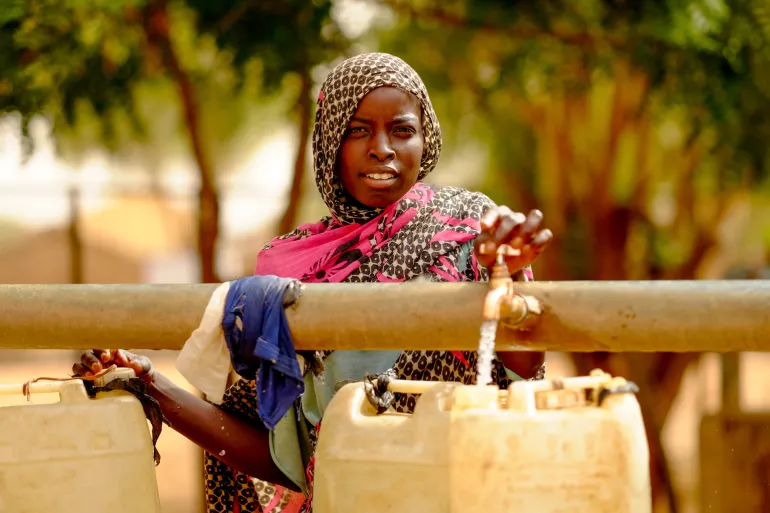
Imagine not being able to have a drop of safe drinking water. It’s a reality for millions of people in Sudan, many of who are children, too vulnerable. This is heart-breaking. We cannot accept this and need to strive #ForEveryChild.
I met 6-year-old Mohammed in a classroom in North Darfur. He was hiding a little bottle of muddy brown water in his pocket so no-one-could-see, I learned; he was told by his mother to not show or share as it was all the water that was there. It was not clean, not healthy, but all he could get. He held tightly onto it.
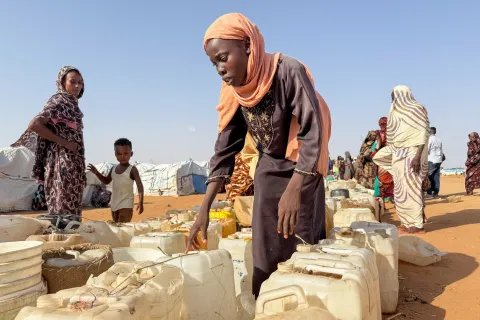
Like Mohammed, this is the reality of millions of people across Sudan whose health remains at risk due to inadequate clean and safe drinking water. Nationally, water supply coverage is at 60 per cent, leaving almost 40 per cent of the population with limited or unsafe drinking water. Equitable access to drinking water in Sudan remains a challenge with a wide disparity across the states of Gadaref, Blue Nile and Red Sea registering the lowest statistics. For many rural Sudanese, access to safe and reliable water supplies is a daily struggle. Only 53 per cent of rural households have improved drinking water sources within a 30-minute walk, and 28 per cent have even more limited access and must go further. The rest of the rural population access polluted water from shallow waterholes or unprotected sources. Across the country, 25 per cent of water sources are also not functioning (CLAC, 2022).
Climate change and water scarcity
Sudan is the world's fifth most vulnerable country to the impacts of climate change (GAI 2022). With 151 localities out of 189 classified as highly susceptible to natural hazards, particularly flooding and water scarcity (CLAC 2022), the children of Sudan live in ‘extremely high risk’ of exposure to climate and environmental shocks (CCRI 2021).
Longer dry seasons and drought periods will increase the demand for water and increase the pressure on sources for domestic water supply, such as groundwater, risking violence and conflict.
Heavy precipitation may cause flooding events, likely contaminating water sources and destroying the already limited and dilapidated infrastructure; whilst rising sea levels, will lead to saltwater intrusion (CLAC,2022).
Sadly, insufficient water supply services and high vulnerability to climate change shocks, mostly affect children, women, and people with disability. Yet, there is also a strong link between water scarcity and girls’ education. In 2022, about 46 per cent of schools reported that children had no access to drinking water in Sudan (HNO,2023).
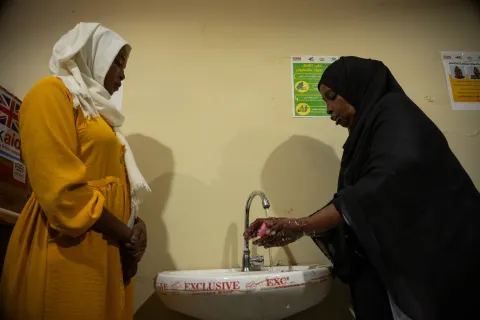
This, compounded with poor sanitation and low levels of hand hygiene practices, pose major hazards to children and communities, and have a significant impact on rising malnutrition rates among children, disease outbreaks, and preventable deaths. In 2022, over 3 million children under five years suffered from acute malnutrition, 50 per cent of which was associated with repeated diarrhea or worm infections related to poor water, sanitation, and hygiene (WASH) conditions (HNO,2023).
Together, we can be the change
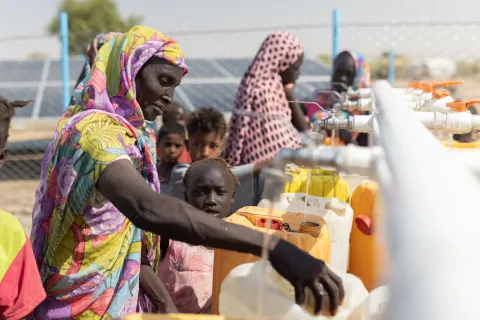
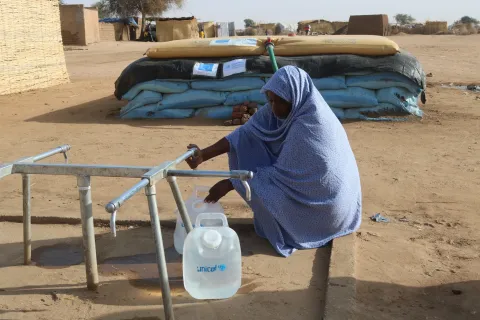
Progress has been made in providing improved water sources for communities in Sudan from the year 2000 onwards and there is hope. For example, in 2021 and 2022, UNICEF provided clean and safe water to more than 6.14 million people in humanitarian situations – 23 per cent of people in need. Also, through UNICEF direct support, more than 939,000 people gained access to durable basic drinking water services, with 76 per cent of the sector partners’ contribution.
Nevertheless, access to basic water is currently estimated at only 60 per cent (JMP 2022). As such, more support and concerted effort are required to reach the SDG 6.1 target of universal access to basic water supply by 2030 and break the vicious cycle of disease outbreaks as well as fighting over water pushing the country further into a state of crisis.
On World Water Day, UNICEF Sudan calls upon government, development partners, private sector, civil society, and communities to renew their commitment to achieve universal and equitable access to safe and affordable drinking water for all by 2023.
Media contacts
About UNICEF
UNICEF promotes the rights and wellbeing of every child and is committed to the children of Sudan. We never give up on finding solutions that provide immediate help to save the lives of children or provide durable support so that those children grow up with dignity, health and an education.
For more information about UNICEF and its work for children, visit https://www.unicef.org/sudan/