Al Fasher crisis: Thousands flee for safety
UNICEF providing a lifeline for children and families affected by the violence

Situation
The recent escalation of violence and fighting in Al Fasher, North Darfur, has uprooted thousands of families — with children and women bearing the brunt of the suffering.
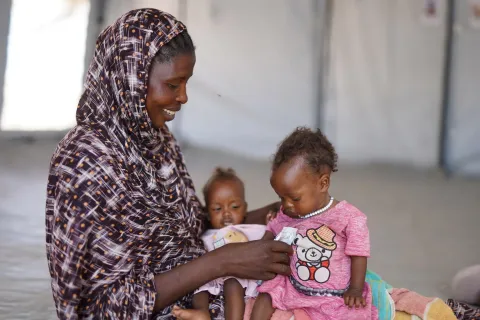
“The situation was very difficult. We left Al Fasher exhausted and weak. People were dying,” said Na’eem, a mother who fled with her children.
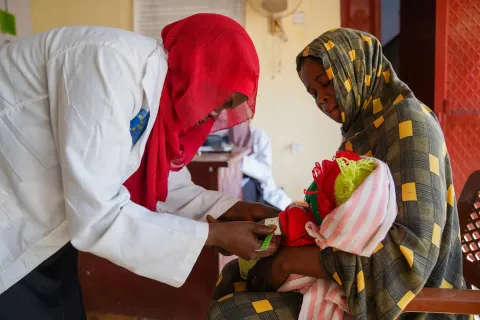
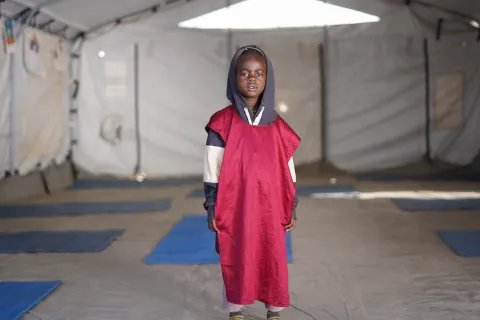
After months of siege and days on treacherous roads, families arrive in Tawila weak, exhausted, thirsty and hungry. Most come with nothing but the clothes on their backs. Children are visibly scared, traumatized, and malnourished.
The needs are staggering. Thousands who fled Al Fasher are sleeping under trees and along the roadsides, exposed to the elements. With the town now overflowing, there are not enough tents or makeshift shelters for the thousands seeking safety.
"No child is safe,” said UNICEF Executive Director Catherine Russell.
“While the full scale of the impact remains unclear due to widespread communications blackouts, the estimated 130,000 children in Al Fasher are at a high risk of grave rights violations, with reports of abduction, killing and maiming, and sexual violence.”

UNICEF 2025/Jamal
Thousands that have fled Al Fasher need shelter, medicines, food and water.
Tawila, once a small town, is now struggling to host yet another wave of displaced families — many of whom are fleeing for the second or even third time since the war in Sudan erupted in April 2023.
"The IDPs are still coming daily. They arrive in very bad condition because of the long journey — over 60 kilometres between Al Fasher and Tawila,”" Abubaker Ahmed, Nutrition Specialist.
Bringing hope and resilience for families
Despite access and insecurity challenges on the ground, UNICEF is responding fast and scaling up its response to address urgent and immediate needs of the displaced and affected families in Tawila, Kutum, Addaba and Melit. This is how:
UNICEF's emergency response
Health
- Deployment of integrated primary health clinic (PHC) mobile clinics for medical consultations and treatment.
- Pre-positioning and distributing emergency kits and reproductive health supplies.
- Activating cholera awareness drives to prevent diseases.
Nutrition
- Malnutrition screening for early detection and initiation of treatment for severely malnourished children.
- Treatment and care of children with severe acute malnutrition in outpatient therapeutic programmes.
- Distribution of nutrient supplements and vitamin A for children under the age of five.
- Prepositioning of lifesaving nutrition supplies (including Ready-to-Use-Therapeutic Food) to support the urgent treatment of children suffering from severe acute malnutrition.
- Deployment of mobile nutrition teams in accessible areas to deliver treatment services to children with severe acute malnutrition in more than 30 nutrition sites.
Child Protection
- Working through community-based protection networks to provide psychosocial support and deliver gender-based violence (GBV) interventions.
- Monitoring, documenting, and responding to grave child rights violations.
- Disseminating information on family racing and reunification to prevent family separation and support reporting.
Water, Sanitation and Hygiene (WASH)
Sustaining and scaling up WASH services through:
- Trucking clean water and constructing sanitation facilities.
- Activating hygiene promotion and cholera prevention campaigns.
- Providing essential WASH supplies like soap, water containers and dignity kits.


Muzdalifa’s Journey to Safety
What UNICEF needs to reach all those affected
- Immediate cessation of hostilities and protection of civilians, especially children.
- Unhindered humanitarian access to all affected populations, including a UN presence throughout North Darfur.
- Simplified procedures for aid delivery and staff movement.
- Urgent and flexible funding to scale up lifesaving interventions and ensure continuity of critical support for children and families in crisis.
UNICEF support more than aid – relief and hope
As the fighting continues, UNICEF and partners are working tirelessly to reach children and families affected. For thousands, the timely support is more than aid – it is hope and relief from the immense suffering of the war.

“When we arrived, they gave us a big box with soap, containers, toothpaste, buckets and more,” Na'eema.