One Year On: Malaria Vaccine brings relief and renewed hope to families
How a lifesaving Jab is easing medical costs and restoring confidence in health services across South Sudan

In a country where malaria claims thousands of lives each year, the introduction of the R21/Matrix-M malaria vaccine has brought a glimmer of hope especially for families living through South Sudan’s overlapping crises of poverty, displacement, and climate-driven disasters.
South Sudan bears one of the world’s highest malaria burdens. According to the 2024 World Bank report, nearly 80% of the population lives below the poverty line. Meanwhile, flooding, conflict, and limited access to health services have created ideal conditions for malaria to flourish.
In 2023, malaria prevalence among children aged 6 to 59 months reached 52.6%, up from 32% in 2017, according to the national Malaria Indicator Survey. Every day, an average of 7,630 new cases and 18 deaths are recorded mostly among children under five. In 2022 alone, South Sudan recorded 2.8 million cases and 6,680 deaths from malaria, making it one of the leading causes of illness and death nationwide.
Against this complex backdrop, a groundbreaking milestone was achieved in July 2024 when the Ministry of Health, with support from UNICEF, WHO, and Gavi, the Vaccine Alliance, launched the country’s first-ever malaria vaccination campaign using the R21/Matrix-M vaccine within two months of arrival of the first shipment of 645,000 doses in May.
The rollout began in 28 high-burden counties, targeting 265,000 children aged 5 to 23 months with the aim of providing an essential layer of protection for children most at risk, particularly those in overcrowded settlements with poor access to mosquito nets, medicines, or medical care.
But while the vaccine’s arrival marked an essential step, sustaining full immunization coverage has proved challenging. Between July 2024 and May 2025, only 148,878 children received the first dose. Of these, 83,668 returned for the second, 51,002 for the third, and just 11,370 completed all four doses representing only 7.6% of the original target.
These figures reflect systemic barriers to the provision of essential services including long distances to health facilities, poor follow-up mechanisms, and limited community awareness, exacerbated by ongoing floods and insecurity in many regions. Yet even amid these challenges, families who accessed the vaccine are already seeing a difference.
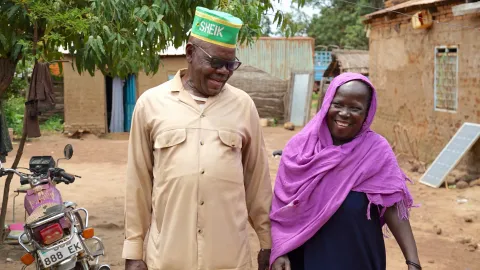
In Juba’s Kator Residential Area, 28-year-old Susan Gideon knows the toll malaria can take on both health and livelihood. She and her husband, Soiti Lufat, live with their two young children in a community where access to healthcare is limited. After learning about the malaria vaccine at Kator Primary Health Care Centre, she made a life-changing decision for her youngest son, David, who received his first dose in September 2024.

“Since David was injected, he has spent nearly eight months without getting malaria. When children are sick, I’m traumatized and can’t work. This has brought me peace of mind” Susan narrated.
Susan was initially hesitant but returned a week later after hearing about the vaccine again on the radio — a reminder of the critical role of trusted information and community outreach.

Her husband, Soiti, a 31-year-old construction worker, was fully supportive. “I have always believed in vaccines. I saw their benefits when I lived in Khartoum,” he said. “Since David got vaccinated, our medical bills have dropped, and I’ve been able to focus on work and other needs instead of buying malaria medicine.”

For families like theirs, each prevented illness means saved income, improved productivity, and a stronger sense of security. David received his vaccination at Kator Primary Health Care Center, a facility managed by Health Link South Sudan, one of UNICEF’s implementing partners.
Emmanuel Bido Laku, a 31-year-old vaccinator at Kator PHCC, remembers the day the program launched.

“We started on the 17th of July. Within days, mothers were lining up. Many said they heard about the vaccine on the radio,” Bido recalled. He vaccinates an average of 20 children daily and has personally witnessed a decline in malaria-related consultations at the facility.
“We Have seen a small but noticeable drop in malaria cases among children since the rollout. It’s encouraging.” Bido was also the one who administered David’s first dose.
As of August 2025, the Ministry of Health and partners have expanded the program to all 80 counties, aiming to reach an additional 324,571 children. Vaccine supplies have reached 91% (503 out of 551) of targeted health facilities, and more than 350 facilities have begun reporting vaccination data.
The R21/Matrix-M vaccine — one of only two WHO-recommended malaria vaccines is administered in four doses and works by helping the immune system build resistance to the Plasmodium parasite. When combined with other malaria prevention and control interventions such as insecticide-treated nets, indoor residual spraying (IRS), timely diagnosis, and quality treatment, the vaccine has the potential to significantly reduce malaria illness and death in high-burden regions.
As South Sudan marks one year since this historic vaccine campaign began, stories like that of Susan and Soiti’s family highlight what’s possible when health systems reach those who need them most and prevention reaches the frontlines and when children are protected before illness strikes.
With continued investment in community engagement, health infrastructure and systems improvement, and follow-up care, South Sudan is laying the groundwork for a future where malaria is no longer an inevitability but a preventable threat.