Friendship beyond words
How play brings hope to children at Bulukat Transit Centre
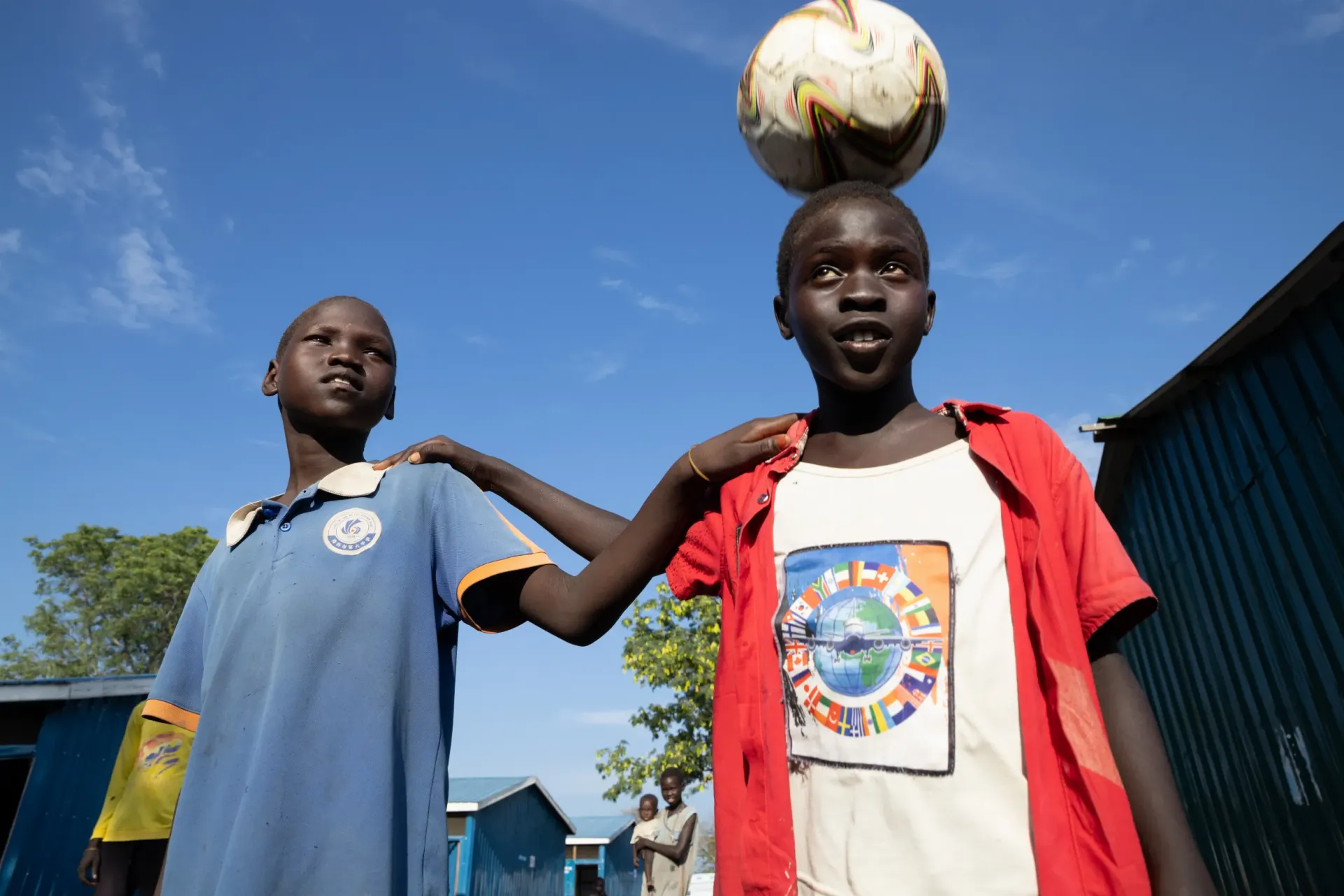
Amid the laughter and dust of Bulukat Transit Centre, two boys from different communities have formed a friendship that transcends language, tribe, and the hardships of displacement.
Late afternoon sunlight warms the banks of the White Nile, its surface shining gold as it moves north through Malakal. Along the shoreline, teenagers splash in the water, men cast fishing nets, and mothers scrub clothes before spreading them out to dry. Within the transit Centre, the air vibrates with children’s laughter as they chase one another, kick footballs, and spin rings around their waists.
Among them, two friends stand out, Joseph and Aweng.

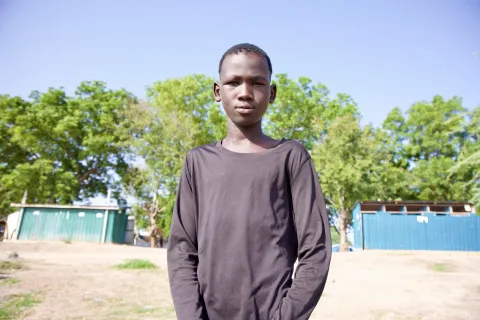
Joseph, 12, arrived at Bulukat just eleven days ago with his grandmother, Elizabeth, and two siblings after a long, exhausting journey from Sudan. Aweng, also 12, is from the nearby host community and visits the centre daily to play. They speak different languages and come from different tribes, yet the two boys have formed a friendship that needs no translation.

I like Aweng because he is kind and plays with me, It makes me happy. I am going to Juba tomorrow, but I hope I can come back and play with him again, inshallah, God willing.
Background: Conflict in Sudan and impact on South Sudan
On 15 April 2023, conflict erupted in Sudan’s capital, Khartoum, following a power struggle between the Sudanese Armed Forces (SAF) and the Rapid Support Forces (RSF). The fighting quickly spread across Sudan, displacing millions of people and disrupting essential services. South Sudanese families who had lived in Sudan for decades, as well as nationals of other countries, were forced to flee, seeking safety across the border.
Given the historic ties between Sudan and South Sudan, which gained independence through a referendum on 9 July 2011, and their geographical proximity, thousands of returnees and refugees have entered South Sudan through Wunthow in Renk County, Upper Nile State, which borders Sudan, and multiple informal routes such as Panakuach, Jua, Jamjang, and Kiir Adem.
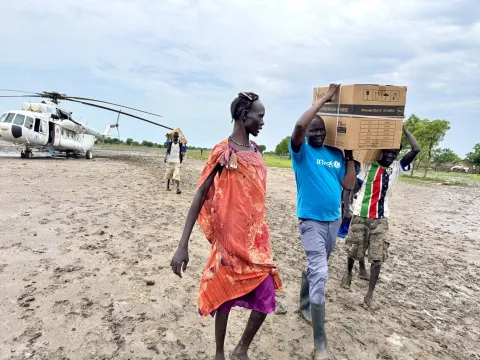
According to the combined Timely Data Tracker by South Sudan Relief and Rehabilitation Commission, UNHCR, and IOM, over 1.2 million individuals have crossed into South Sudan, including 283,590 of these are South Sudanese returnees as of 17 December 2025. Many first arrive at transit centre, Wunthow in Renk and Bulukat in Malakal, both in Upper Nile state where they receive temporary shelter, food, water, medical screening, and protection services before moving to settlement locations including Juba, Wau, Yambio, Aweil and Maban.

UNICEF Supports Returnees and Refugees Across Multiple Sectors
As refugees and returnees continue to arrive at multiple entry points, UNICEF, together with partners, is providing life-saving support at entry points, transit centres, and settlements. Child-friendly spaces offer children a safe environment to play, learn, and access psychosocial support, while unaccompanied and separated children receive case management and family tracing. Safety messages, including explosive ordnance risk education, are shared, and clear referral pathways connect children and families to specialized protection services.
UNICEF prioritizes the prevention and response to gender-based violence. Women- and girl-safe spaces provide psychosocial support and case management, complemented by community outreach and referral to health, legal, and protection services. Nutrition interventions include screening and treatment for acute malnutrition, infant and young child feeding counselling, micronutrient supplementation, and mother support groups, while health services, including immunization and emergency care, are strengthened for displaced families.
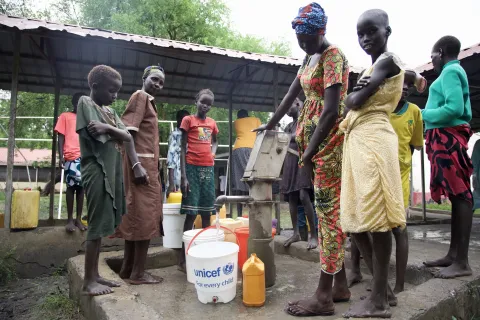
Access to safe water, sanitation, and hygiene facilities is supported through WASH programs, alongside temporary learning spaces that integrate psychosocial support and early childhood education. Strong coordination with partners ensures efficient referral pathways across protection, health, nutrition, and education, while rapid response and monitoring allow UNICEF to provide timely, life-saving support and help children and families recover with dignity.
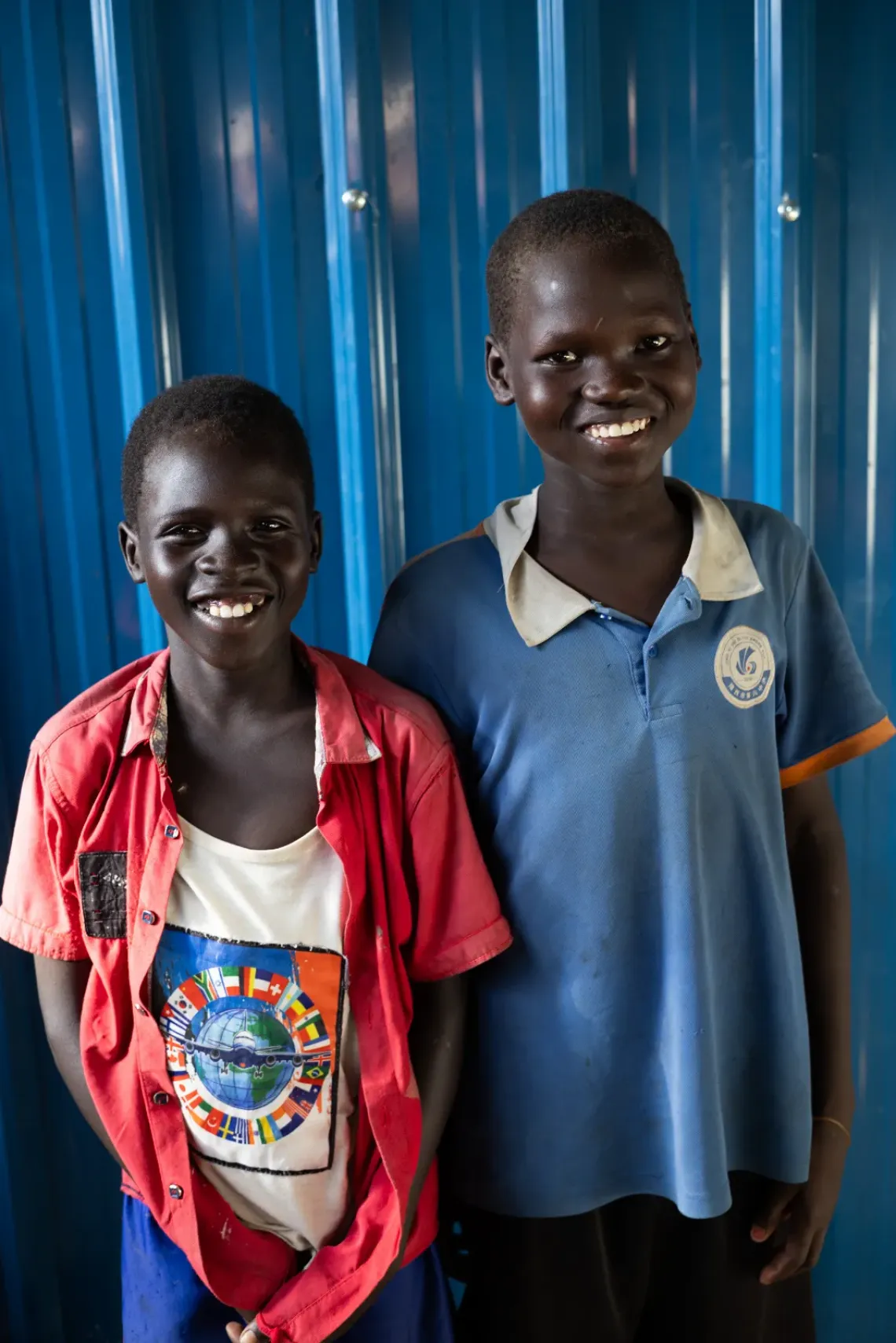
Aweng, wearing a faded blue T-shirt, smiles shyly. “I just want to play with other children. Even if I don’t understand their language, I understand when we play. I will miss Joseph, but I will keep coming here until he comes back someday.”
Around them, children run, dance, build with blocks, and rest in the shade of a tent set up by the Nile Institute for Development Organization (NIDO) with UNICEF support. The Child-Friendly Space provides a safe environment where children play, learn, and recover from the trauma of displacement. It is where Joseph and Aweng first met.
This space gives children a sense of normal life again. Many have seen or experienced difficult things on their journey from Sudan. Play helps them feel safe and hopeful again.
UNICEF protects conflict-affected children through child protection and GBV programs. Child-friendly spaces give children safe places to play, learn, and heal. Play is central to psychosocial support, helping children regain normalcy, build resilience, express emotions, and develop social skills. Caregivers also receive support, reinforcing family coping mechanisms.
Case management ensures vulnerable children and survivors receive tailored care. Trained child protection and GBV workers support unaccompanied and separated children, while women and girls access psychosocial support and case management through safe spaces and mobile teams. By integrating play into recovery, UNICEF helps children not only survive but thrive, rebuilding confidence, hope, and a sense of safety.
Finding Hope in Play
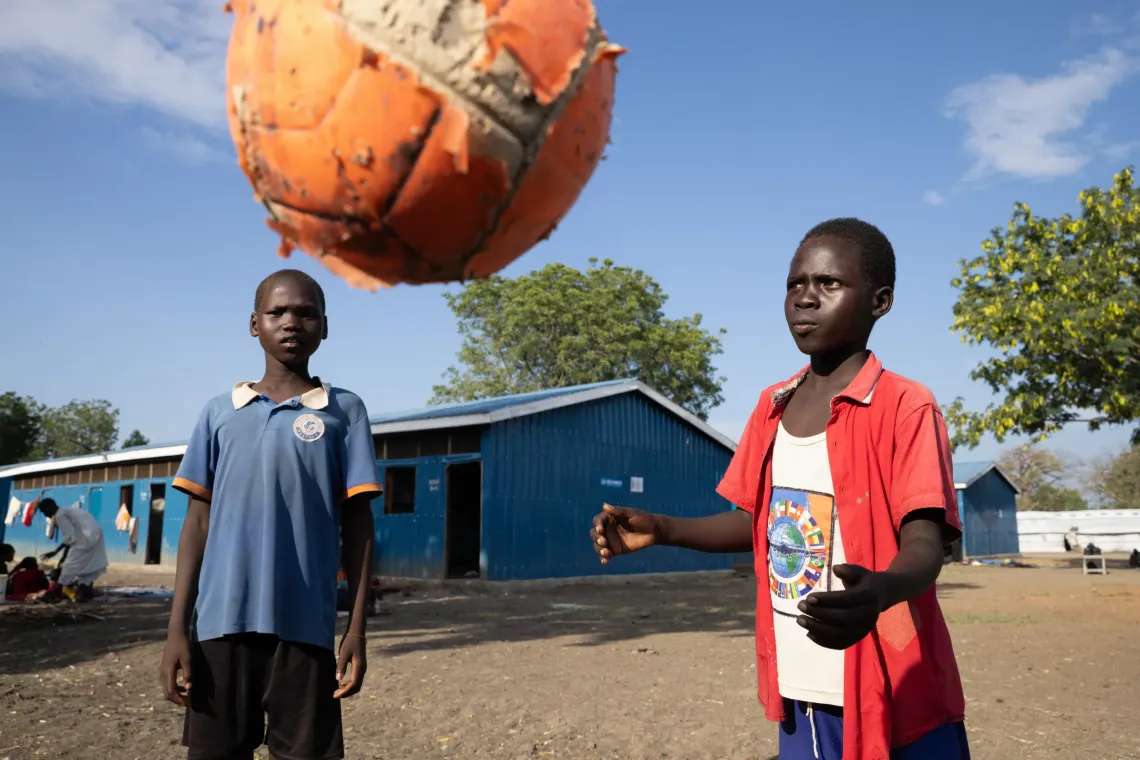
Back on the field, Joseph and Aweng chase a football, their laughter echoing across the dusty clearing. They do not share a language, but their joy bridges every gap.
Through play, children reclaim pieces of childhoods disrupted by conflict and displacement. With UNICEF’s support, partners like NIDO ensure that every child has a safe space to play, learn, and simply be a child, free from fear and free from the burden of loss.
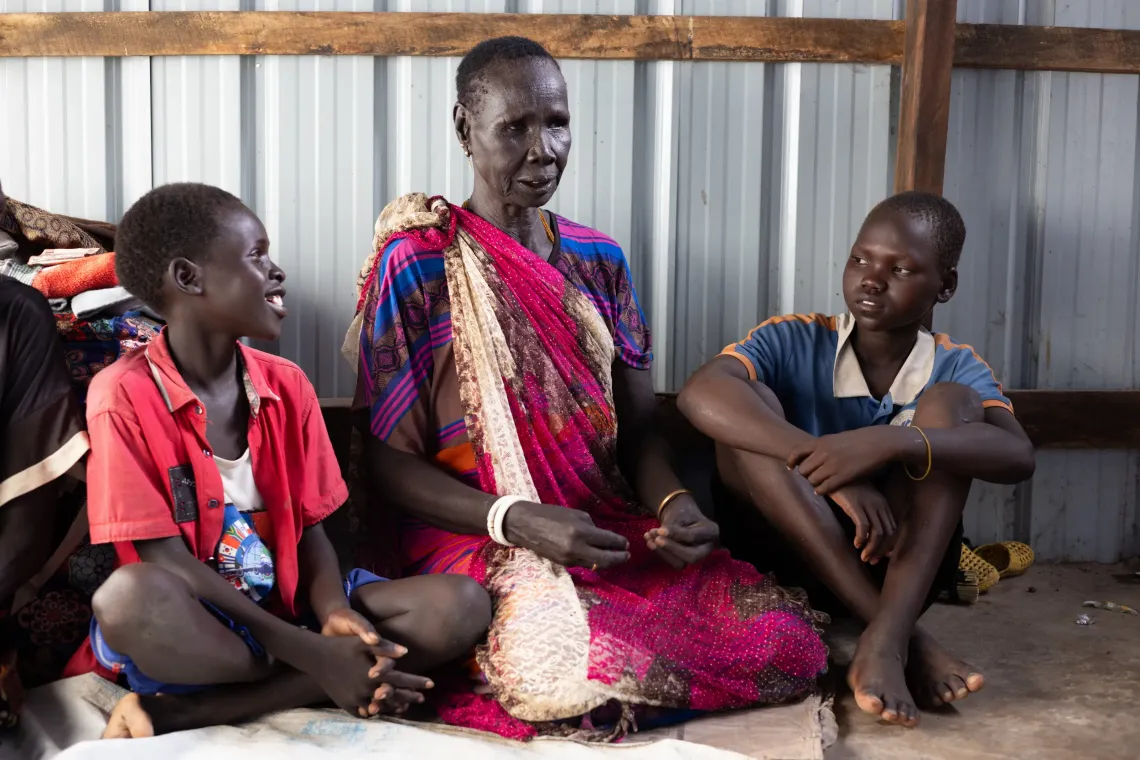
Since arriving in Bulukat and meeting Aweng, Joseph has become happier, I find joy seeing him smile and make friends again.
Their bond stands as a quiet but powerful reminder of what every child deserves: safety, belonging, and the simple joy of friendship.