Bentiu Town: A drowning village, The forgotten Paradise
Exploring the impact of floods in Unity State that has left 90% of the population homeless
As temperatures rise and weather patterns become increasingly erratic, children and young people find themselves on the front lines of a battle against a changing climate.
Over the past three years, widespread flooding has adversely affected children and young people in South Sudan. As a consequence, there is increased suffering, vulnerability, and humanitarian needs for children and young people in Unity State.
Marked by diverse ecosystems ranging from savannahs to swamps, South Sudan experiences unprecedented shifts in weather patterns. Erratic rainfall and prolonged droughts have become commonplace, disrupting traditional agricultural cycles and challenging the livelihoods of millions of people. Climate change is often misunderstood as being a change in weather patterns, but in reality, it is a change in the livelihood of all living things. In the city of Rubkona, Unity State is a forgotten paradise, a land once filled with life and green grass, but due to climate change, it is just a drowning village.

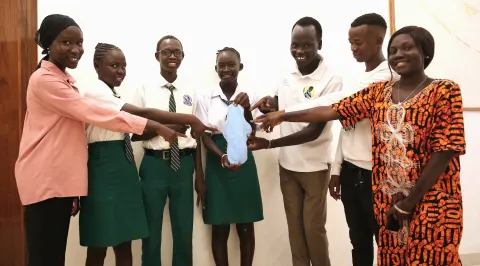
In Unity State, there are vibrant, young, and energetic new recruits for the UNICEF Young Reporters programme, girls and boys who are concerned about their coming years being robbed by increased flooding in the area due to the drastic changes in the climate. Climate change is a global crisis that is affecting about 400,000 people in Bentiu. The country has been experiencing heavy rainfall and flooding, which has had devastating effects on communities. Children are particularly vulnerable to the impact of flooding, as they are more likely to suffer from malnutrition, disease, and displacement.
In Bentiu, children forced into IDP camps are facing the brunt of climate change and its effects on flooding. Many of them have lost their homes, schools, and even their families due to the floods. The country is already facing a humanitarian crisis, with food shortages, conflict, and poverty. The floods have only exacerbated these problems, leaving children in an even more precarious situation.


Despite the challenges, UNICEF, the Danish Refugee Council, IOM, WFP, and other organizations are on the frontlines, working to provide relief to children affected by the floods in Bentiu, South Sudan. These organizations are providing emergency shelter, food, and medical supplies to those in need. They are also working to provide education and psychological support to children who have been traumatized by the floods.
We can ensure that children in Bentiu and beyond have a safe and secure future by raising awareness about climate change and promoting sustainable practices and policies that mitigate its effects," said Simon Chuat Matiek, a 21-year-old new young reporter from Bentiu.
Climate change is a real and urgent threat, not only to us but also to future generations. Collective responsibility is required to reverse the effects of climate change. We must take action to address this crisis and protect the most vulnerable among us.
Josephina, a UNICEF young reporter from Unity State, Bentiu, reports on the devastating floods in South Sudan, highlighting the loss of animals, property, and lives and expressing gratitude to the organizations and the president for helping with the current situation.
Where are the floods coming from? We cannot keep running from the waters; we must take charge and make the changes now.
Randa Wani, a UNICEF mentor for young reporters, says children bear the brunt and a structured derail in their future in various aspects.
“The climate crisis in Bentiu is real, and the situation is dire; many people have been displaced, and the only settling base is the IDP camp. Children in this situation remain vulnerable, as they suffer the most when it comes to malnutrition, early forced marriages, health issues, as well as being victims of illiteracy because of missing school.” She speaks.

As a UNICEF youth advocate for education in South Sudan, it was sad to discover the rate of dropouts from school has increased in Bentiu, Rubkona, and Unity State due to climate change. Schools in the area became inaccessible, and the schools that remained are not affordable to some parents who lost their jobs of collecting firewood from the bush and reselling it.
"We call for help from organizations and the South Sudanese government to address these issues caused by flooding," said Magdalena Nyachot, a 21-year-old girl who is grateful to be part of the UNICEF Young Reporter in Bentiu to amplify the voices of youth in her area, discuss with other young people and find solutions to the challenges faced by children, among which floods, displacement, and a lack of good health and sanitation facilities.
Through the lens of new young reporters in Bentiu, South Sudan, we witness both the vulnerabilities and strengths of young people who are not afraid to address the issues they might be facing.