Republic of Korea Commits US $5 Million to UNICEF for Child Resilience in South Sudan

JUBA, South Sudan – The Government of the Republic of Korea has announced a $5 million contribution to UNICEF to support vital resilience programmes for children and families in South Sudan. The funding will assist essential interventions in education, child protection, nutrition, and water, sanitation, and hygiene (WASH).
South Sudan is currently confronting overlapping crises: a complex humanitarian emergency caused by conflict, climate shocks, and economic instability.
This funding arrives at a crucial moment for South Sudan, where humanitarian needs are high with 10 million people, including 5.3 million children, in need of humanitarian assistance. The country faces a severe education crisis, with over 2.8 million school-age children out of school. At the same time, a worsening food and nutrition crisis threatens millions, with over 7 million people
expected to face acute food insecurity by mid-2026, and malnutrition impacting more than 2 million children under five.
The one-year funding will focus on building stronger systems and programmes that can withstand the volatility currently affecting the country, including extreme climate events.
School-based resilience and holistic programmes will support learners, including those out of school or over-age, to access safe, inclusive education and early childhood development, enhancing children's well-being and keeping them in school.
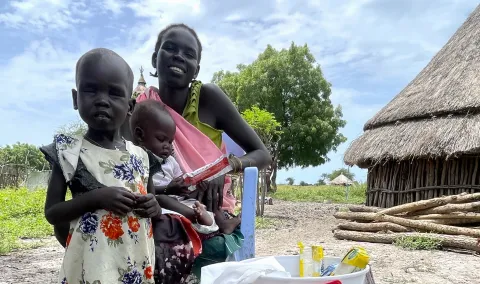
Lifesaving nutrition will target children under five suffering from severe malnutrition, who will receive essential treatment, while pregnant and breastfeeding mothers will be provided with nutritional counselling.
Resilient WASH programmes for children and women in crisis-affected areas will provide access to safe drinking water. Emergency sanitation facilities will be constructed and rehabilitated.
Comprehensive protection programmes for women and girls will permit them to have better access to gender-based violence response and prevention services. Young people will receive mental health and psychosocial support, reintegration services, and livelihood opportunities.
"This significant contribution from the Republic of Korea is vital to help UNICEF meet the large humanitarian needs of women and children and strengthen resilience. This funding demonstrates a strong commitment to the children of South Sudan. It will enable UNICEF to provide not only immediate relief but also to invest in sustainable programmes for health, protection, and education. Investing in the well-being and potential of South Sudan's children is an investment in the nation's future peace and stability," said Noala Skinner, UNICEF Representative in South Sudan. “We call on all stakeholders to facilitate unhindered access to every child in order to implement our lifesaving and resilience-focused programmes.”
"We are proud to partner with UNICEF in delivering life-saving services to the most vulnerable children in South Sudan," said Mr. Kyoo-ho Lee, Director-General, Development Cooperation Bureau, Ministry of Foreign Affairs of the Republic of Korea. "This contribution reflects the Republic of Korea's enduring solidarity with the people of South Sudan and our commitment to
ensuring children's survival, safety, and access to education, protection, nutrition, and clean water in times of crisis."
Media contacts
About the Republic of Korea's Humanitarian Assistance
The Republic of Korea is an active contributor to international humanitarian efforts, providing
targeted assistance to countries in crisis.
About UNICEF
UNICEF promotes the rights and wellbeing of every child, in everything we do. Together with our partners, we work in 190 countries and territories to translate that commitment into practical action, focusing special effort on reaching the most vulnerable and excluded children, to the benefit of all children, everywhere.
For more information about UNICEF and its work in South Sudan visit: www.unicef.org/southsudan
Follow UNICEF South Sudan on Twitter, Facebook, Instagram and YouTube