Flood safety information
What you need to know before, during and after the storm.

Experiencing a flood is difficult and devastating for anyone, but especially so for children and their families. If you live in an area at risk of flooding, follow these expert tips to keep yourself and your family safe.
Facts about floods
Facts about floods
Floods are an overflow of water onto land that is usually dry. Inundation floods develop slowly over a period of hours or days while flash floods occur suddenly and often without warning. River floods are caused when consistent rain or snow melting forces a river to exceed capacity. Coastal floods are caused by storm surges associated with tropical cyclones and tsunamis. Floods are predicted to become more frequent and severe due to climate change.
Floods can occur during periods of intense rainfall, when snow melts quickly or when dams break.
Flash floods are the most dangerous type of flood because they happen quickly and often without enough time for local governments and authorities to warn the community. Flash floods happen when rainfall happens too quickly for the ground to absorb, causing the water levels to rise rapidly.
How to prepare for a flood

Talk to your family about floods
Spend time together talking about floods and why they occur.
Practice your safety plan
Find a safe evacuation route to take in the event of a flood and practice it with your family. Talk together about having a meeting point in case you get separated. Create an “emergency kit” that includes non-perishable foods, medicines, a first aid kit, flashlight and batteries and water for several days in case you need to leave your area or services are cut off. Check with your child’s school and learn what the school’s plan is in case of a flood.
Know your risk
Learn about the kind of flooding that can take place in your community and your local emergency contacts and provincial Disaster Risk Management Centre numbers to reach out to for help if one occurs. For general emergencies including flooding, dial 112. Keep an eye on the forecast to be informed of any potential flooding. It is also important to know your home’s risk level.
Teach children to swim
The majority of deaths that occur during floods are due to drowning.
Keep documents safe
Store any important papers like ID papers high up or in something that can protect against water damage (like a sealable plastic bag) to minimize the risk of damage.
What to do during a flood

Listen to local authorities
Tune in to your local news or radio station for weather updates and official advice. If you are advised to evacuate, grab your emergency kit and ID papers and do so immediately. If first responders have set up barricades, do not try to pass them – they have been set up to safely direct people around dangerous areas.
Secure your home
If you have the time and are able to do so safely, unplug appliances and turn off any utilities like electricity, gas and water before evacuating.
Get to high ground
To avoid standing, flowing or rising water, move to higher ground. Never try to walk, swim or drive through fast-moving flood water. If you are in your vehicle and it is filling with water, get onto the roof. If you are trapped in a building, get to the highest level and only go onto the roof if necessary. Do not go into an enclosed space at the highest level of your home, such as a loft or attic, as this could result in being trapped by rising floodwater.
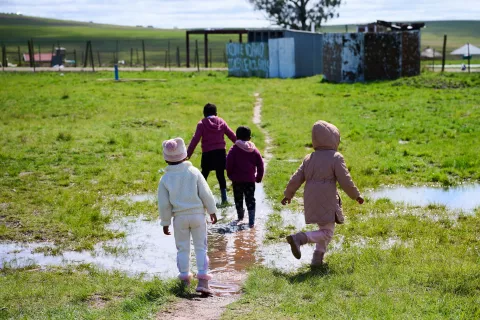
Do not allow children to go into moving or stagnant flood waters
Even if it is a small amount of water in a basement, this can pose risks to your child’s health. Caution teens who are able to drive to never drive during a flood.
Update your loved ones
As soon as you are somewhere safe and communication channels are available, make sure to inform your other family members or those close to you.
What to do after a flood

Listen for updates
Monitor updates from local authorities and only return home when it is declared safe.
Look after your family’s health
The contaminated water created by flooding poses many health risks to you and your family, such as water-borne illnesses like cholera and typhoid. Keep your children away from floodwater as much as possible – it is likely dirty and contaminated by germs. If your child was exposed to flood waters, make sure to bathe them as soon as you are able and have them wash their hands frequently. If you or anyone in your family is feeling ill, seek medical attention as soon as you are able.
Keep food and water safe
Keep food and water covered to protect from contamination and boil water collected from untreated water sources for at least three minutes before use. You can also add one teaspoon (5 ml) of bleach to 20 - 25 litres of untreated water, mix well and wait for at least 30 minutes before drinking. Filtering water through a cloth will not kill germs, it only catches other objects. Use boiled water or water treated with bleach to cook and wash food as well as pots, pans and spoons or other things you use for eating. Never drink contaminated water or eat food that has gotten wet.
Clean up safely
Be careful if you pump water from your home. Do it slowly and keep an eye out for hazards such as debris and electrical wires. If you can, dry as much as you can within 24 to 48 hours, keep wet areas well-ventilated and throw away anything that can’t be dried or fixed.
As much as possible, limit your children’s participation in cleaning up. Before children and teens can safely return, toys, clothing and living spaces should be cleaned and disinfected. Belongings that have been badly contaminated by floodwater should be discarded.
Comforting your children after a flood

Start the conversation and keep it open
- Make sure you provide your child with opportunities to talk about how the flood made them feel and encourage them to share any worries or feelings of fear or anxiety.
- Show them that you are listening carefully and care deeply about how they are feeling.
Provide reassurance
- Let them know that the flood and its aftermath are not permanent and explain to them that they are natural events, and not anyone’s fault.
- Give your children reassuring affection by spending time together and providing lots of extra hugs.
Watch for signs of emotional distress
While many children will seem okay for a month or so following a disaster, the numbness can wear off and they can begin showing symptoms of trauma. Some ongoing anxiety is to be expected, but if it does not stop after a few months or if your child is experiencing more extreme symptoms, such as panic attacks or wanting to harm themselves or others, reach out to a medical centre or mental health professional immediately.
Practice calming exercises together
Deep belly breathing is very helpful and is something you can do together with your older children. If you have a younger child, you could make it into a game: Every hour on the hour, see how you can calm your mind and body down by slowing down your breath.
Try to maintain some kind of routine
Though it may be incredibly difficult, going to bed or eating at the same time will help your child to feel a bit more connected to their life before the flood.
>> Read: A guide for staying healthy and safe after a flood English and IsiZulu