Solarized boreholes installed in Adaroosh village
Communities receive sustained access to clean drinking water
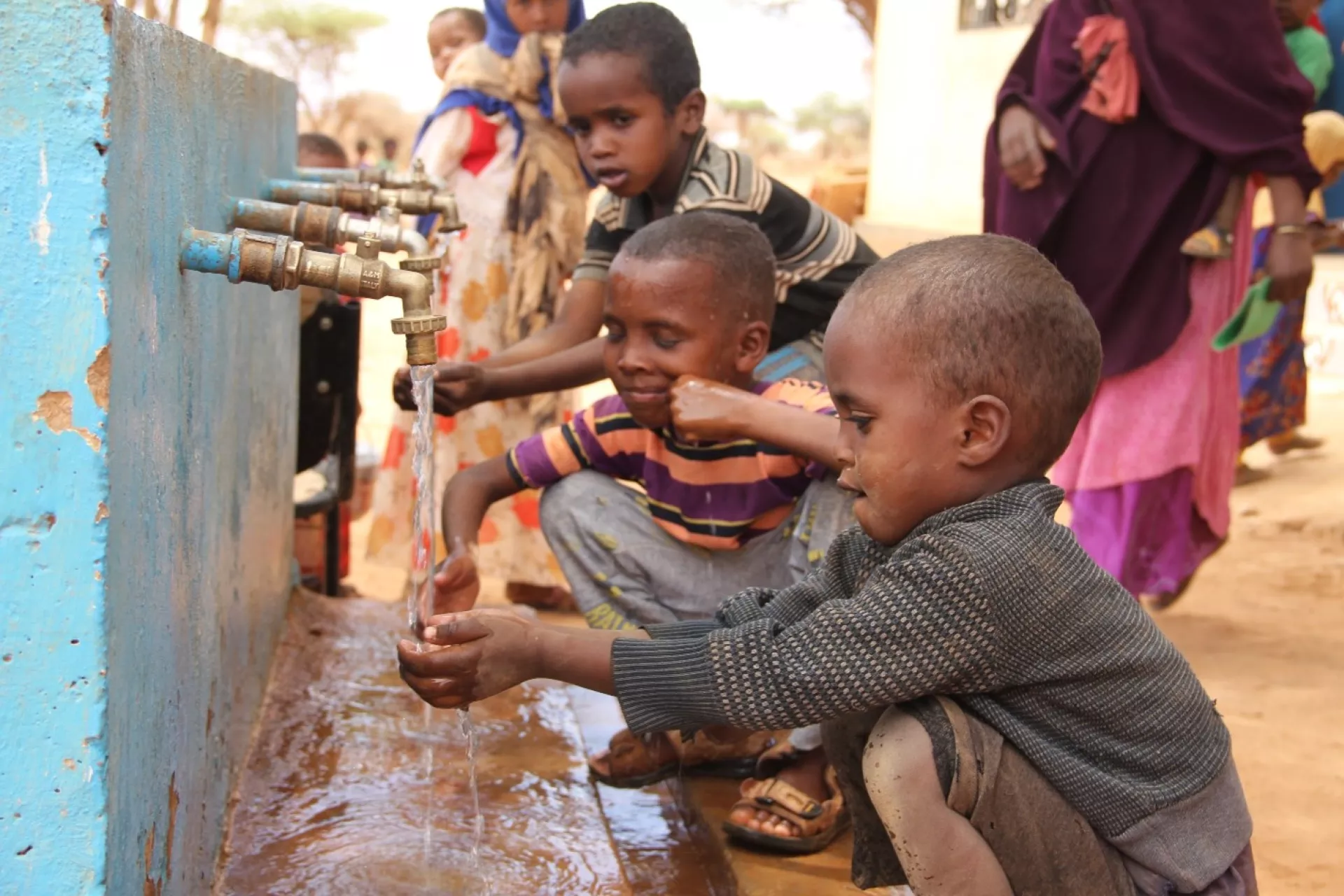
Adaroosh is a village in southern Somaliland that has suffered from a perpetual water shortage over the years. People have been relying on unclean water fetched from far-flung seasonal rivers as well as from unprotected and unreliable communal water catchments, locally known as Berkads.
Today, the lives of people in this community are now better as a solarized borehole, that is capable of availing water to both the locals and their animals for a long period of time without requiring electricity, has been commissioned.
“Previously, this village was affected by drought and although there are several rainwater catchment systems, most of them were dry. It became a challenge for the local communities to get safe drinking water for themselves and for their livestock. To address this challenge, UNICEF together with the Ministry of Water have jointly developed a proposal that led to drilling and commissioning of this borehole,” stated Basilius Kris Cahyanto, a UNICEF WASH Specialist in Hargeisa.
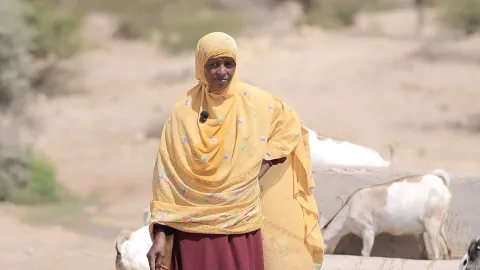
Cahaynto sentiments were echoed by the local community members and water users who have been contending with chronic water shortage for a long time. Mariam Abdillahi, a mother of three and a resident of Adaroosh said, “I’m happy that for the first time in my life I have access to safe and clean water - it’s on my doorstep. I will never again wake up early morning each day to leave my children behind and walk for five to ten kilometers in search of water.”
The borehole construction included a water trough for livestock that were equally affected by the drought. Livestock health is extremely important as they serve as the only source of livelihood for the local communities.

“I lost more than half of my herd at the height of the severe drought. We trekked for hundreds of kilometers in search of water and pasture and witnessed our animals to become weaker and die. Thanks to the completion of the borehole, water for our animals is available close by in the water troughs,” said local resident Abdillahi Mohamed.
Only 52 per cent of the population in Somaliland have access to a basic water supply. Limited regulation of private water suppliers often leads to expensive prices, forcing families to fetch water from far away and from unsafe wells. Also, open defecation is a common practice with 28 per cent of the population.
The disparity between urban and rural areas is significant. In rural areas, only 28 per cent of households can access an improved water source. For many Somaliland communities, their struggle to get clean water is compounded by poor infrastructure and intensifies in periods of crisis, such as the prolonged drought from 2021 to 2023.
Thanks to the generous support USAID Bureau of Humanitarian Assistance (BHA) innovative solar technology systems that provide renewable energy to boreholes were installed in Adaroosh and several other villages and towns in Somaliland. The solar energy reduced or eliminated the costs of extracting and pumping water.
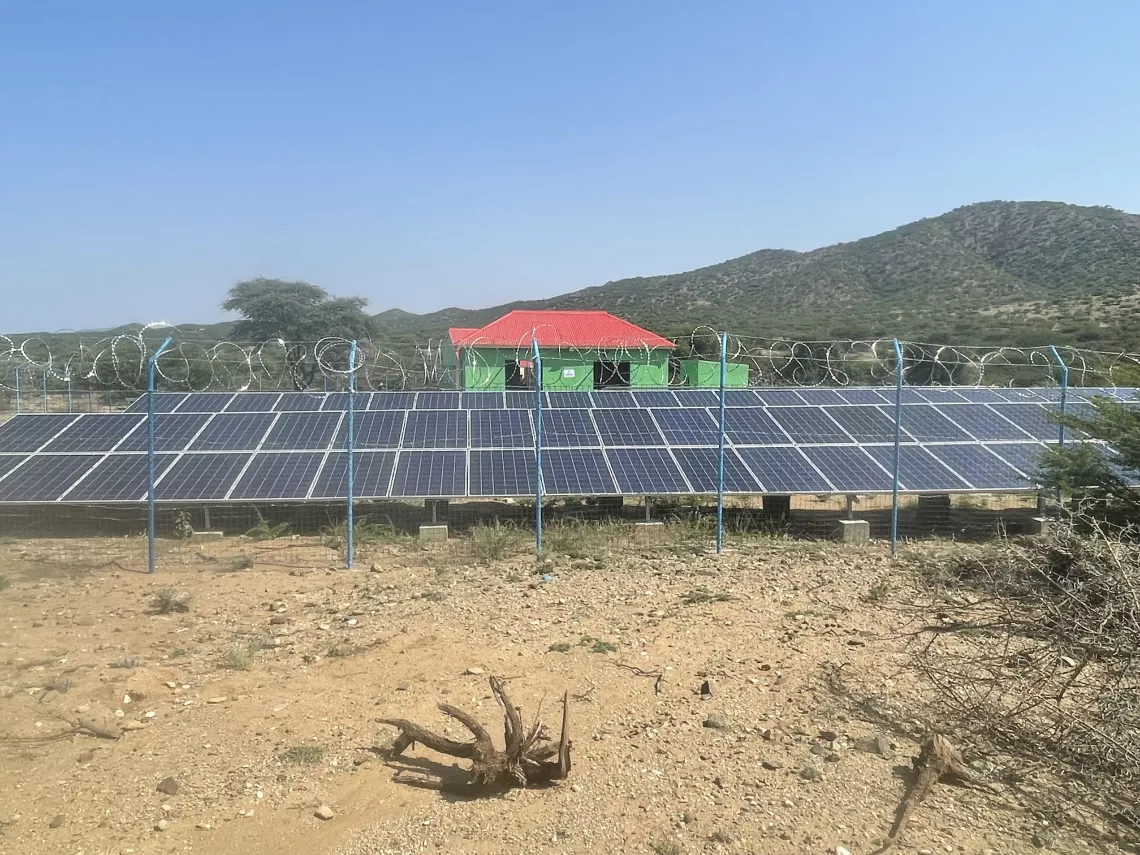
UNICEF has been prioritizing the procurement and installation of solar-powered water pump systems over systems that run on diesel. Solar-powered solutions are also cheaper to operate and a cleaner alternative as they do not emit greenhouse gases. Another advantage is that communities become free from the financial and time burden to buy and transport diesel.
A similar venture was supported by BHA in Bali Matan village, located about ten kilometers from Adaroosh, as well as Borama town with around twenty thousand households living there.
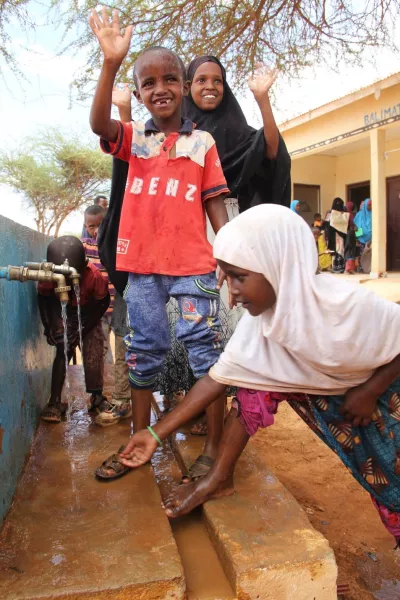
Borama town water system is premised on an Urban Water Service Delivery model that brought together government, private water companies and communities through a Public-Private Partnership (PPP) to address Borama district’s growing water need.
Abdirahman Ali of Shaba Water Company, a private company that manages Borama water supply says, “We run all our boreholes through diesel generators and every year there is an increase in fuel prices while our income remains the same. This then becomes expensive to operate. The population has also grown, and we need to pump more water. We also have challenges with maintenance because the spare parts are expensive and sometimes not locally available.”
Ali continues optimistically, “The water agency for Borama town, would like to thank UNICEF for its continued support that enables us provided the local communities with increased access to clean water. We are also grateful for the installation of a solar-powered system in one of our main boreholes. Going forward, this support will contribute to cost reduction in our fuel expenses. We are solarizing of a second borehole through UNICEF, and this will further enhance our operations and sustainability."