Coping with drought in Luglow: Fatuma’s story of resilience and hope
How safe water access in Luglow is restoring dignity and health for displaced families.

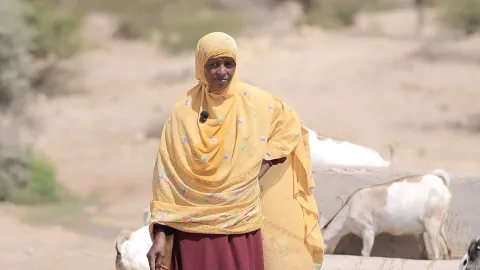
Three years ago, Fatuma Anab Zakaria was forced to leave her home in Jamame after a long drought had dried up the river and left the land bare. There was no water, no food, and no way to survive. With her six children, Fatuma made the difficult decision to leave the only home she had ever known in search of a better life.
They arrived in Luglow, a sprawling settlement on the outskirts of Kismayo in Somalia’s Jubaland state, hoping to find help and relief. But displacement brought with it new hardships. The only source of water came from a nearby river, contaminated and crawling with all manner of risks. “Every day, we used to walk long distances just to fetch water,” Fatuma recalls. “The water was not clean, but we had no other choice. We drank it, cooked with it, bathed in it, hoping it wouldn’t make us sick.”
Fatuma’s eldest son, Mohamed, still a teenager, became the pillar of the family overnight, taking on the responsibility of providing for his siblings by working as a casual laborer on nearby farms. Day after day, under the scorching sun, he toiled for hours, earning barely enough to afford food and essentials for the family.
“We left our home with nothing but each other,” says Fatuma. “But as long as we are alive, we can rebuild. We just need support, clean water, food, and a chance to start again.”

In partnership with the Jubaland Ministry of Energy and Water Resources, UNICEF, with funding from the European Union, supported the construction of the Luglow Water System, a lifeline for over 47,000 people, including Fatuma’s family. The project, launched in June last year, responded directly to the urgent water needs of the Internally Displaced Persons (IDPs) living in Luglow.
Now, instead of walking for hours under the scorching sun or navigating dangerous paths during the flood season, Fatuma collects clean water from a kiosk just a few steps from her home. What was once a daily, backbreaking task filled with risks and uncertainties has been replaced with safety, dignity, and ease.
The project includes 10 motorized shallow wells, 26 water kiosks, and an extensive pipeline network that stretches across the settlement. For families like Fatuma’s, it means more than just water; it has brought peace of mind.
“It has changed everything,” Fatuma says. “Now, my children are healthier. We can wash, cook, and drink without fear of getting sick.” Her voice softens as she describes the small but meaningful moments that the new water supply system has made possible, like bathing her youngest child without hassle, or preparing meals assured that the water is safe.

With clean water readily available, mothers no longer have to choose between sending their daughters to school or having them help carry heavy jerrycans of water. Children have more time to play, learn, and grow. Women can focus on rebuilding their livelihoods, caring for their families, and participating more actively in the community.