R-WASH: Sourcing new ways to sustainable and equitable water
Climate extremes in Somalia force displacement and safe water availability

The East and Horn of Africa and Great Lakes region currently hosts 4.6 million refugees and asylum seekers, the majority (over 4 million) from South Sudan, Somalia, Sudan, and Burundi. A further 8.1 million people are internally displaced in the region, as a result of conflict and natural disasters.
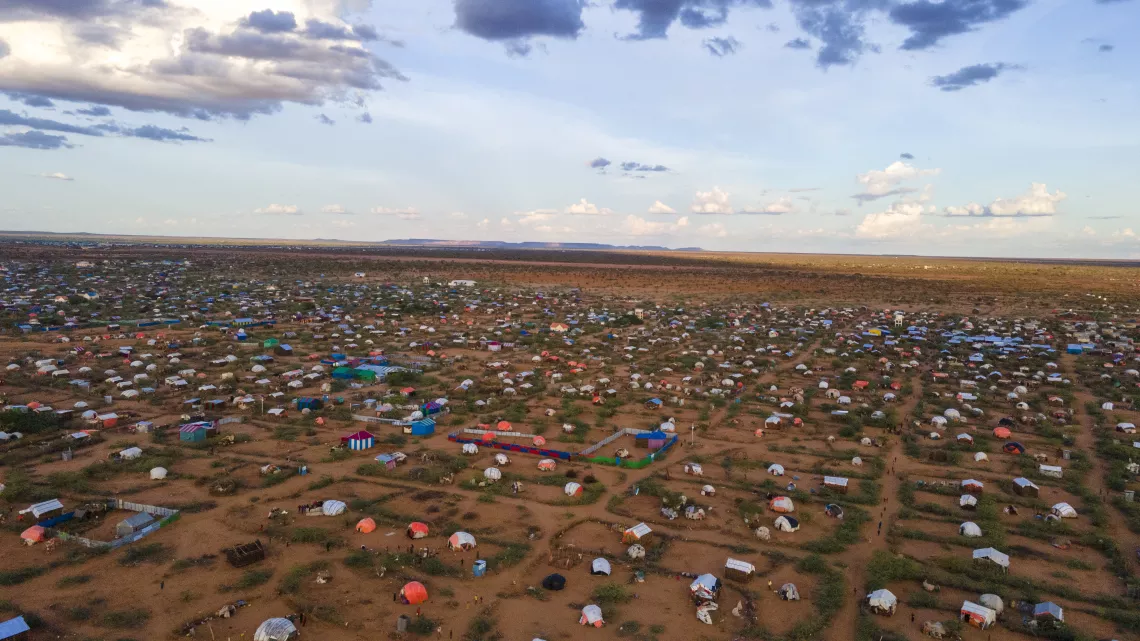
While Somalia holds just 36,000 refugees and asylum seekers, there are 3.9 million internally displaced people (IDPs) of which, more than 3.1 million Somalis are long-term displaced. Protracted displacement is largely the result of climate change induced drought and floods, widespread insecurity and increasing economic pressures in Somalia, which results in 58 per cent of all IDPs being dependent on humanitarian assistance.
Most IDPs, refugees and asylum seekers are located in the most marginalised locations, including densely populated urban or peri-urban environments, and face multiple economic and social induced challenges. The influx of displaced people into urban centres and existing IDP sites puts extreme pressure on already limited existing systems and basic services.
Access to safe water is a basic service that is a challenge for Somalia to manage. Eighty per cent of the domestic water supply in Somali is from groundwater and these resources are being severely depleted due to drought and rising populations. The resulting increased demand and pressure on existing water resources means that water prices have almost tripled, especially in drought locations, rising by 38 per cent from US$8 to US$11 for 200 litres, while the annual average income is just US$470. Sixty-five per cent of household income on average is now spent on water and only 39 per cent of the 6.2 million non-displaced population have access to water in their homes.
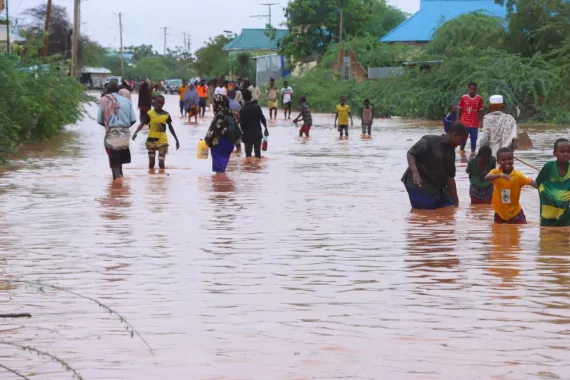
At the same time the increasing frequency of flooding and drought due to climate change are projected to result in a 50 per cent reduction in water availability per person in the coming years, exacerbating the vulnerability of huge swathes of the population.
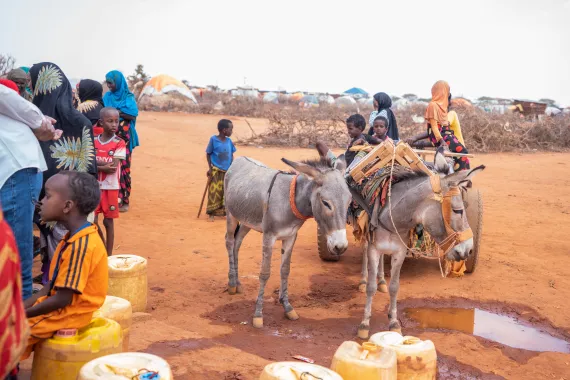
As a result, humanitarian assistance is increasingly required to provide emergency water through either temporary water trucking or through emergency water systems, particularly for displaced populations, providing them with water services which are often superior when compared to the existing host community, leading to friction, social tensions and conflict. Despite this, 1.8 million newly arrived and protracted IDP still have limited access to improved WASH services.
The lack of services and high cost of water means that many IDPs and host communities resort to using water from unsafe sources which is the main cause of spread of acute diarrhoeal diseases (ADD) such as cholera, which has already seen 12,902 confirmed cases in 2023 thus far.
Durable solutions are needed to break the recurring cycle of humanitarian assistance for IDPs, refugees and host communities, which continues to blight development initiatives. The regional water, sanitation and hygiene (RWASH) programme is providing one such model for durable solutions for 80,000 IDPs and 86,000 host community residents in Dollow, Somalia.
RWASH builds upon existing WASH infrastructure and water utilities within displacement affected communities, aiming to deliver professional, equitable and sustainable water in accordance with government standards and norms. In doing so, it provides support for the population’s immediate and long-term needs and empowers the utility and government to meet the community’s needs more effectively.
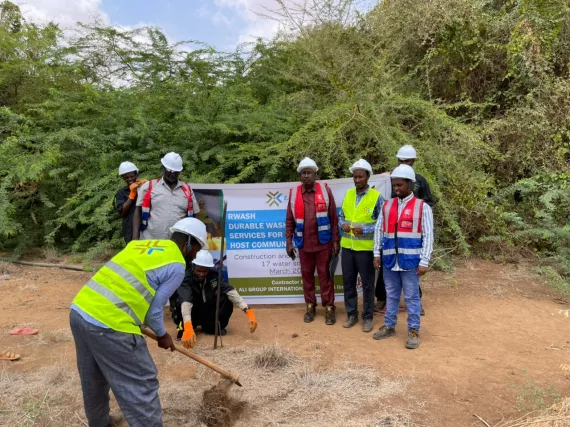
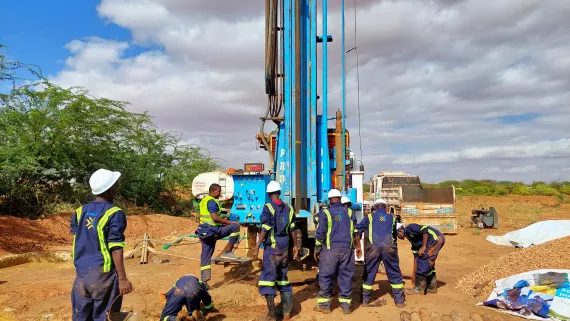
At the same time, the self-reliance of displacement affected communities is enhanced by building the capacity of water utilities and the government to effectively manage the provision of safe and equitable water services. With long-term, equal access to sufficient water for both IDPs and host communities, the RWASH model has the potential to significantly enhance social cohesion and delivery on the Humanitarian-Development- Peace (HDP) nexus approach.
Federal, State and Local Governments have received the programme with strong political goodwill due to the development benefits for Somalia as well as the contribution RWASH makes to the governments commitments under the Global Compact on Refugees (GCR) and the Comprehensive Refugee Response Framework (CRRF).
Meanwhile the RWASH model has attracted the attention of international donors like German Government through BMZ and KFW and agencies like UNICEF and UNHCR, and partners, under commitments to the Global Compact on Refugees and Comprehensive Refugee Response Framework which has created a favourable environment for sustained funding beyond the immediate emergency response activities and the short-term needs.