One mother, ten children and a little more room to plan
In Jalalaqsi, predictable cash support is helping Jamaad meet her children’s needs and stay connected to essential health services.

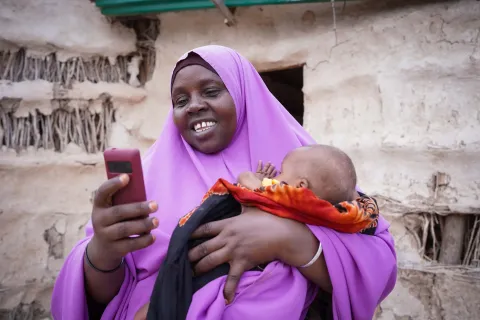
Jalalaqsi, Somalia – Every day, Jamaad Qaliif Mohamed makes choices that begin with one question: what does her family need most today? At 35, Jamaad is the mother of 10 children in Jalalaqsi. Feeding such a large family while meeting their health needs can be difficult, particularly when even the cost of getting to a health facility can become a barrier.
Through UNICEF’s Child-Sensitive Social Protection Programme (CSSP-II), Jamaad has been receiving cash assistance for 10 months. She received USD 20 per month for 10 months, along with a USD 40 top-up for three months in response to the drought.
For Jamaad, the support has meant more than cash in her hands. It has helped her make decisions that directly affect the health and well-being of her children. She used part of the assistance to improve their nutrition and bought two goats, which now provide milk for the family. And when her children need healthcare, the assistance has helped her pay for transport.
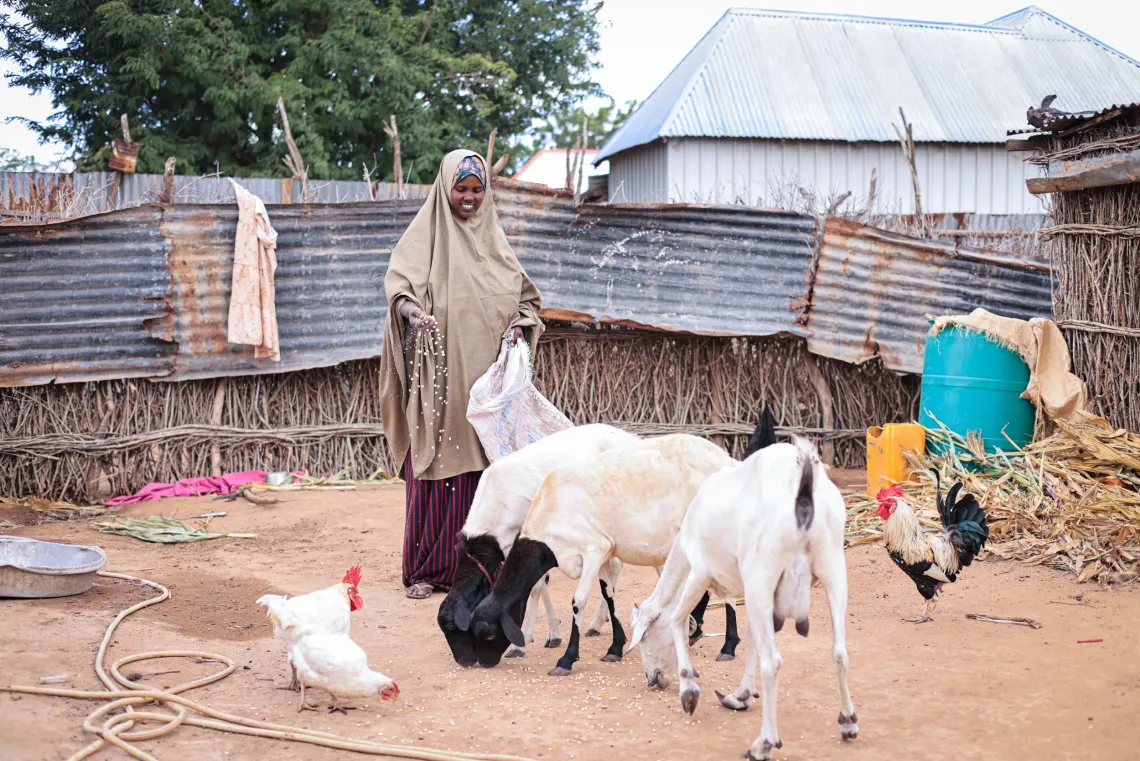
“Before, getting to the health facility could be difficult because of the transport costs,” Jamaad says. “Now, when we need to go, I can take a bajaj (auto rickshaw).” That journey to the health centre is an important part of how the different forms of support come together. At the facility, Jamaad can access services for herself and her children, while health workers help families understand and make use of the services available to them.
One of those health workers is Deka, who works directly with mothers and children. Through conversations during health-centre visits, she helps families understand available services and encourages them to access support that can have a lasting impact on their children’s lives.
One such service is birth notification and registration. Birth registration helps establish a child’s identity and can connect children to systems that support their protection and access to essential services.
For Jamaad, these connections make the health centre more than a place to seek treatment when a child is sick. It is also a place where she can find information, care and support for her children’s wider needs.
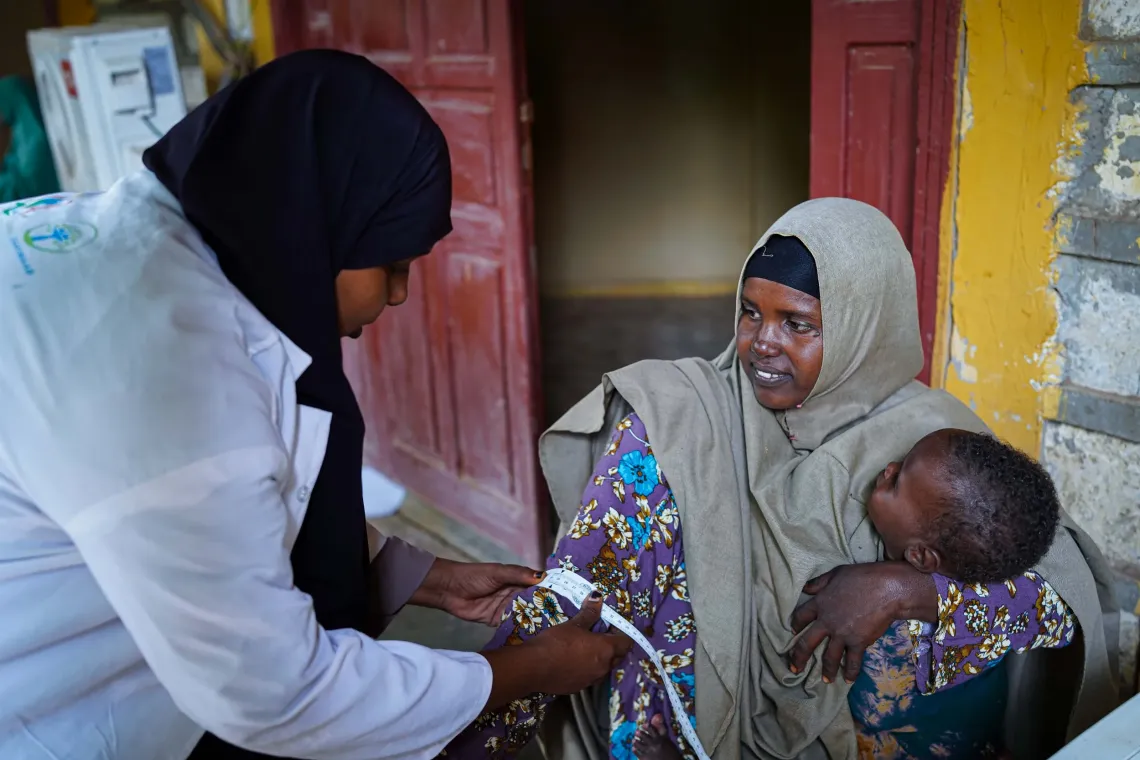
The CSSP-II cash assistance has helped make that connection possible. By easing some of the pressure on the household budget, Jamaad has been able to spend more on food, invest in goats that provide milk and, importantly, afford transport when healthcare is needed.
CSSP-II, with generous funding from the German Government, is designed to link predictable cash assistance with essential services, helping vulnerable families not only meet immediate needs but also stay connected to health, nutrition and other services.
For Jamaad, the impact can be seen in everyday decisions: a child receiving care, food being prepared at home, milk from the family’s goats, or a bajaj taking her to the health facility when she needs it.
Her story shows what social protection can mean beyond financial assistance: a little more room to plan, respond to her children’s needs and keep them connected to essential services.