Community Outreach Bringing Nutrition and Hope to Children in Moyamba
Local health workers and mother support groups are transforming the fight against child malnutrition in Sierra Leone
Moyamba, 24 April 2026 – With a megaphone in one hand raised to his mouth, Mohamed Kamara, a Community Health Worker (CHW), walked the length and breadth of Njagbahun, a small and serene village in Moyamba District, Southern Sierra Leone.
The rising sun was shining across the village that morning and some of its inhabitants – mainly young men and boys – were seen heading out to their farms. The women stayed behind to take care of the children and do household chores.
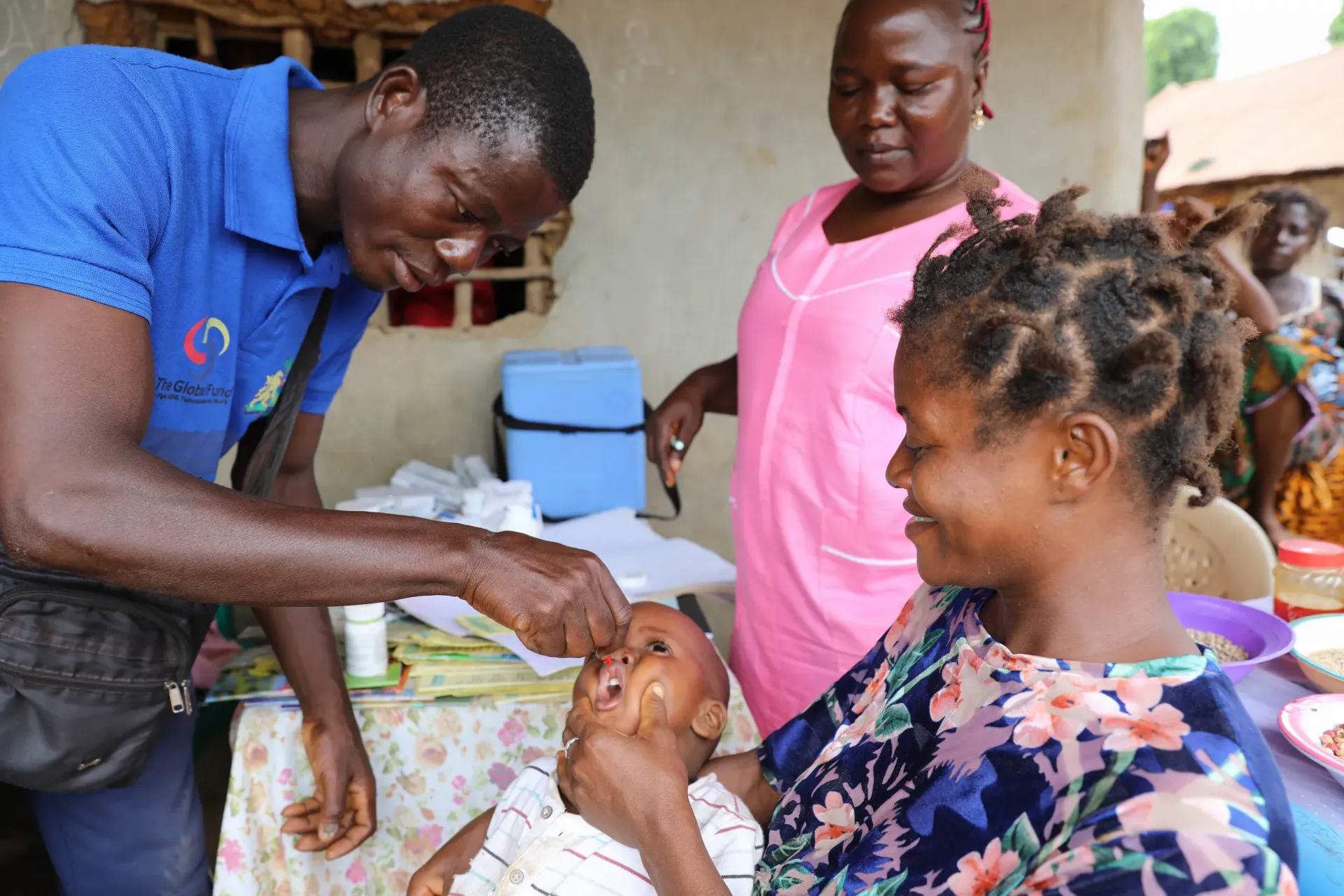
“All mothers with children under five years, please converge now at the centre of this village so that your babies can be screened for malnutrition and other illnesses, get vaccines from health workers, who will also advise you on how to feed and take good care of them,” Mohamed’s voice consistently echoed through the megaphone as he summoned mothers and caregivers to the village centre. Mothers quickly lowered the fires underneath their uncooked meals and dashed out with their babies.
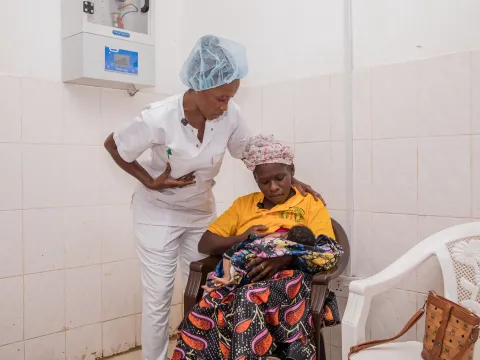
Mohamed, who is a trained CHW, has been in this role for over 10 years, serving as the first point of contact for community health support. He refers cases to higher levels of health care if he deems the situation is beyond his level of support. He also prepared the village for the team of health care workers who were on their way to the village from a Community Health Centre that is about 5 kilometers away. The team was going on a routine community outreach to deliver life-saving health services to under-five children, especially those who are malnourished and defaulting on scheduled appointments for immunization, growth monitoring, follow up treatments and other services.
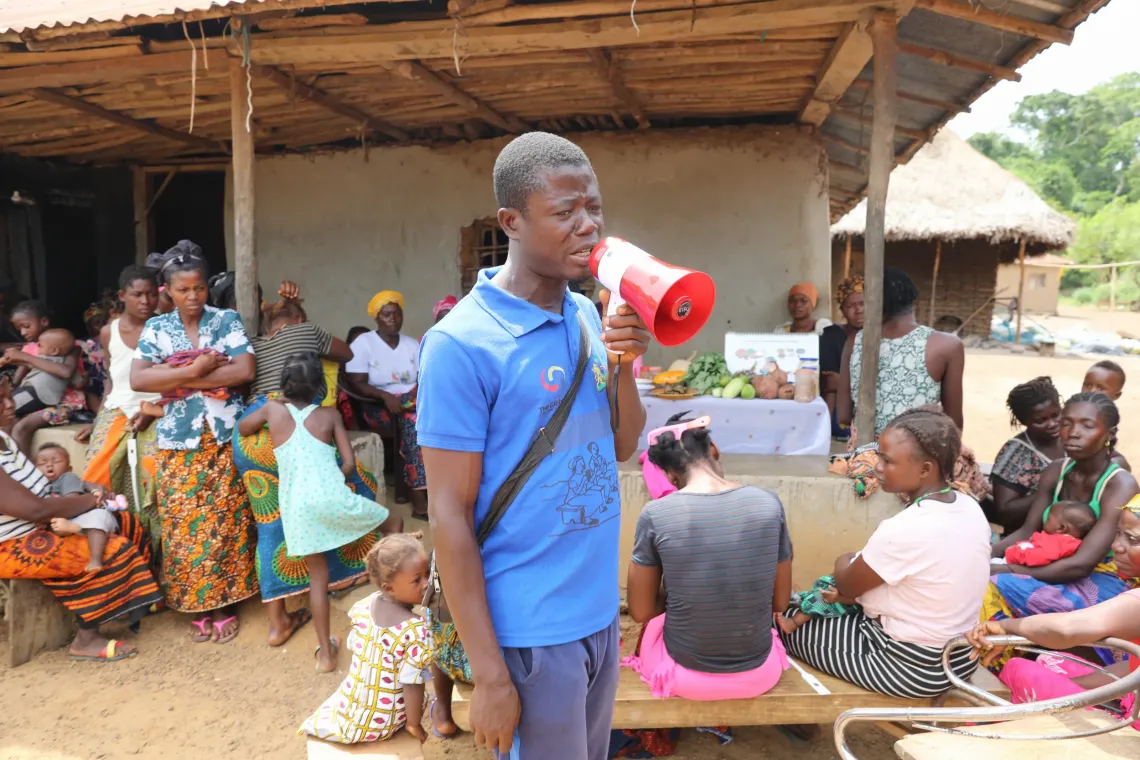
“I usually prepare the ground by mobilizing nursing mothers, fathers and caregivers of under-five children so that they could receive health talks, get children screened for malnutrition, vaccinated and receive treatments for worms. I also refer them to the health facility for further assessment and treatment if I deem the situation is above my scope of work and level of understanding,” he said with a broad smile.
In Sierra Leone, malnutrition is one of the leading causes of under-five mortality with more than 2 in 10 children affected. There is widespread dietary inadequacy among children between 6 and 23 months old mainly due to lack of regular and diverse diets, unhealthy care practices such as access to clean drinking water, inadequate sanitation and hygiene practices.
While acute malnutrition (wasting) has seen some improvement, chronic malnutrition (stunting) remains widespread in Moyamba, with 26.2 per cent of children affected - the ninth-highest stunting rate in the country at 26.2 per cent and wasting at 3.5 per cent (lowest rate in the country) according to the National Nutrition Survey, 2021. Additionally, according to the Food Security Monitoring System report (July 2025), 94 per cent of households spend more than 75% of their total household expenditure on food. Moyamba is in the top three districts showing this pattern alongside Bonthe and Pujehun. This highlights the immense vulnerability of the district and its neighbors. Similarly, dietary diversity is critically low, with most families consuming the same kind of food daily. The combination of limited access and no variety means that children are not getting the necessary nutrition required for healthy growth and development.
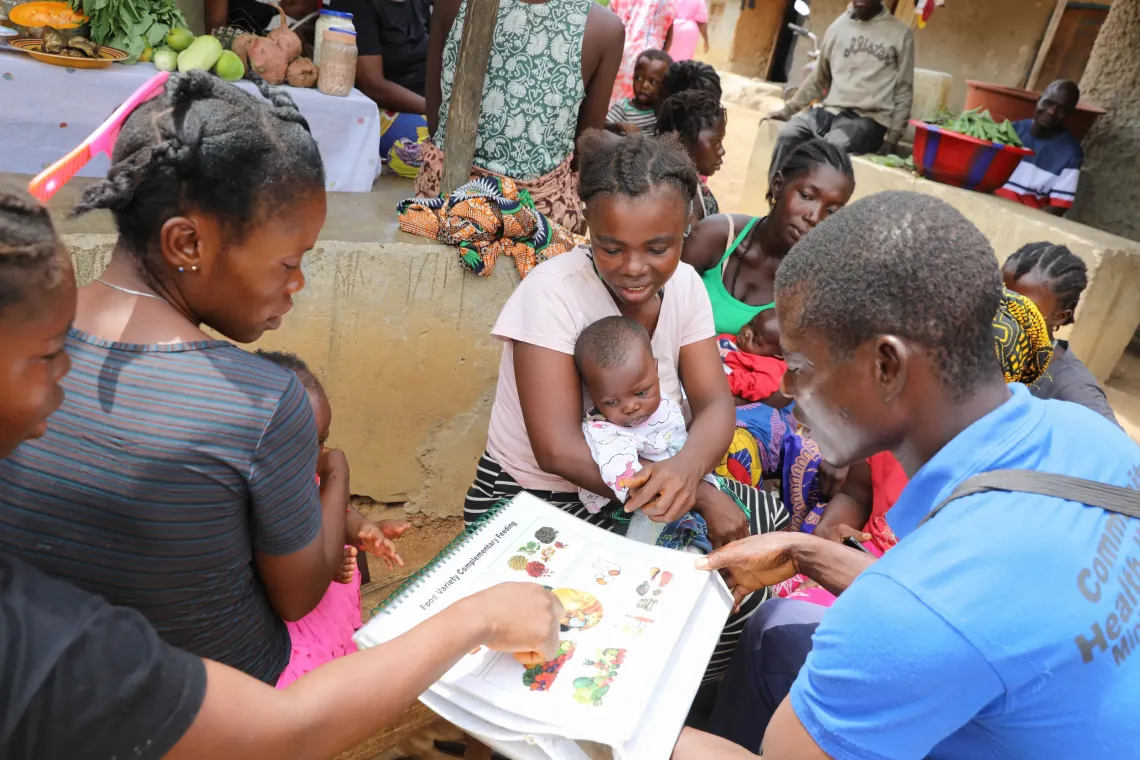
However, to address this challenge, UNICEF Sierra Leone, with support from the Church of Jesus Christ of Latter-Day Saints through the US Fund for UNICEF and in partnership with the Ministry of Health, is supporting nutrition interventions in Moyamba District to prevent and manage malnutrition and its impacts on under-five children in the district. More than 2,500 children suffering from severe acute malnutrition have been treated with F 100 and F 75 special therapeutic mill formula and almost 10,000 children suffering from moderate acute malnutrition have been treated with Ready-to Use Therapeutic Food (RUTF). Community outreach sessions, including cooking demonstrations, have been integral activities to strengthen both the prevention and sustainability aspects of the nutrition interventions.
“I speak at community health sessions to create awareness on maternal and child health issues, especially on the prevention of malnutrition among under-five children to reduce the high rates of child mortality,” Mohamed continued.
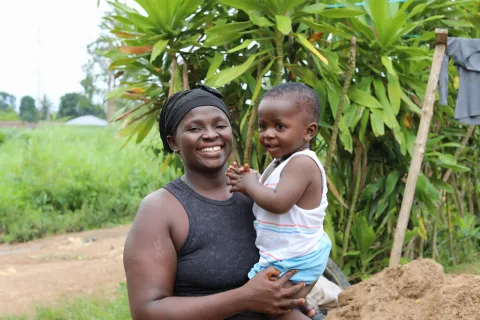
Mohamed’s efforts in community outreach sessions are complemented by a Mothers Support Group (MSG) in the community that offers peer support and critical lifesaving advice to pregnant and nursing mothers.
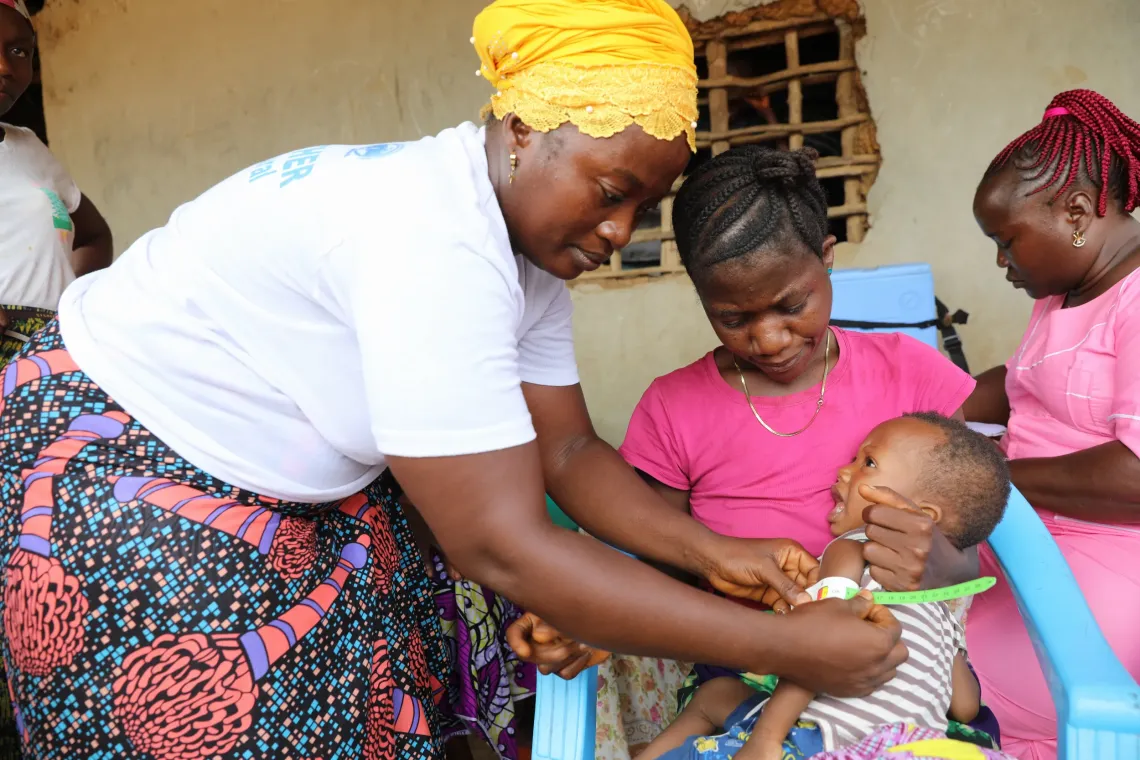
“I do house-to-house visits, screen children for malnutrition using the Mid Upper Arm Circumference (MUAC) tape, advise mothers on how to breastfeed their babies, guide and advise them on food preparation and appropriate times to start complementary feeding,” added Isatu Fullah, one of the leaders of the MSG. “Mothers listen to other mothers.”
“If the colour coded portion of the MUAC tape indicates, red, when I screen a baby, it means the baby is severely malnourished and I accompany the mother and her baby to the CHW for immediate referral to a health facility”, she continued. “However, if it is yellow, it means the baby is moderately malnourished, so I counsel the mother on good nutrition practices backed by regular home visits. I congratulate mothers of babies with the green indication and encourage them to continue the good practice.”
The community outreach sessions have had positive impacts on Mohamed and his colleagues CHWs in Moyamba District and other communities in Sierra Leone.
“There have been marked changes in the behaviour and attitudes of mothers with under-five children since the community outreach programmes started. I can see that their knowledge and understanding of the causes of malnutrition and methods of prevention have now increased,” Mohamed added.
Brenda Kaijuka Muwaga, UNICEF Sierra Leone Nutrition Specialist, agrees with Mohamed’s assessment and adds that: “The community outreach support has been a valuable contribution not only to the nutrition programme but to the overall health systems strengthening approach. The increased awareness of the causes and prevention of malnutrition is the foundation for a bright and healthier future of Sierra Leone.”