Rising heat across Europe and Central Asia kills nearly 400 children a year - UNICEF
New policy brief outlines six policy recommendations for governments to protect young children, particularly vulnerable to the health effects of heat stress
- Srpski
- English
GENEVA, 24 July 2024 – Rising temperatures across Europe and Central Asia killed an estimated 377 children in 2021 – according to a new analysis of data from 23 countries published today by UNICEF.
Beat the heat: child health amid heatwaves in Europe and Central Asia finds that half of these children died from heat-related illnesses in their first year of life. Most children died during the summer months.
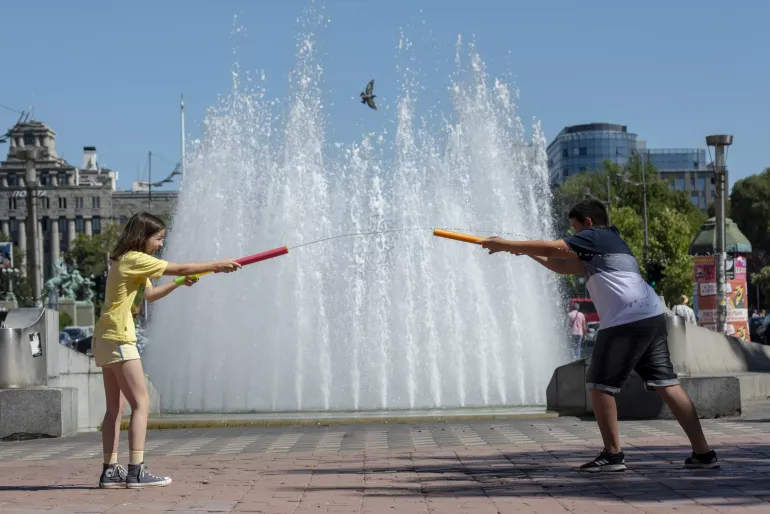
"Around half of children across Europe and Central Asia – or 92 million children - are already exposed to frequent heatwaves in a region where temperatures are rising at the fastest rate globally. The increasingly high temperatures can have serious health complications for children, especially the youngest children, even in a short space of time. Without care, these complications can be life-threatening,” said Regina De Dominicis UNICEF Regional Director for Europe and Central Asia.
Heat exposure has acute effects on children, even before they are born, and can result in pre-term births, low birth weight, stillbirth, and congenital anomalies. Heat stress is a direct cause of infant mortality, can affect infant growth and cause a range of paediatric diseases. The report also notes that extreme heat caused the loss of more than 32,000 years of healthy life among children and teenagers in the region.
As the temperatures continue to rise, UNICEF urges governments across Europe and Central Asia to:
- Integrate strategies to reduce the impact of heatwaves including through National Determined Contributions (NDC), National Adaptation Plans (NAP), and disaster risk reduction and disaster management policies with children at the centre of these plans
- Invest in heat health action plans and primary health care to more adequately support heat related illness among children
- Invest in early warning systems, including heat alert systems
- Adapt education facilities to reduce the temperatures in the areas children play in and equip teachers with skills to respond to heat stress
- Adapt urban design and infrastructure including ensuring buildings, particularly those housing the most vulnerable communities are equipped to minimize heat exposure
- Secure the provision of safe water, particularly in countries with deteriorating water quality and availability.
UNICEF works with governments, partners and communities across the region to build resilience against heatwaves. This includes equipping teachers, community health workers and families with the skills and knowledge to respond to heat stress.
Challenges of Climate Change in Serbia: Impact on Children's Health
Serbia is facing significant changes in climate patterns, with projections indicating rising temperatures, increased precipitation, and more frequent extreme weather events. The recent heatwave in July highlighted these changes, affecting nearly all regions of Serbia, including mountainous areas.
Serbia experienced its hottest June on record, with a record number of tropical days and nights across the country. According to the Republic Hydrometeorological Service of Serbia (RHMZS), during the period from July 8th to 14th, 2024, daily maximum temperatures significantly exceeded average values. Compared to the reference period from 1991 to 2020, temperatures were 7 to almost 10º C higher.
Impact on Children's Health
Heatwaves pose a serious threat to children, especially the youngest. High temperatures can cause serious health problems such as premature births, low birth weight, and an increased risk of congenital anomalies. Newborns are particularly vulnerable, facing a higher risk of heat stress, which can cause severe complications and negatively affect their growth and development.
Pregnant women exposed to heatwaves also face a higher risk of complications during pregnancy and childbirth.
Media contacts
O UNICEF-u
Prisutni smo u više od 190 zemalja i teritorija, a kroz sve što radimo promovišemo prava i dobrobit dece, posebno one koja su najugroženija i isključena. U potpunosti se finansiramo od dobrovoljnih priloga pojedinaca, država i vlada, fondacija i kompanija.
Pratite UNICEF Srbija na: Facebook-u, Twitter-u, YouTube-u, Instagram-u i LinkedIn-u.