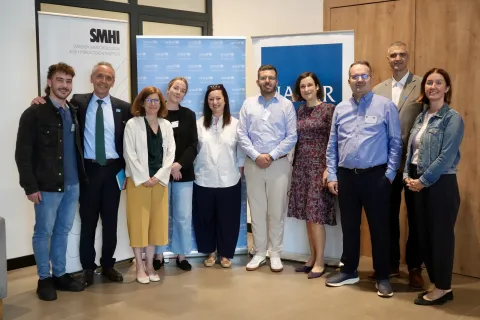
Young People from Kikinda and Grundfos Volunteers Mapped Public Drinking Fountains to Strengthen Community Resilience to Climate Change
The collected data will support improved access to safe drinking water

- Srpski
- English
Kikinda/Belgrade, 11 May 2026 – Young volunteers from Kikinda, together with volunteers from the company Grundfos, participated in mapping public drinking fountains across the city of Kikinda and surrounding villages to assess their functionality, accessibility, and infrastructure improvement needs in the context of changing climate conditions.
The activity was carried out as part of the partnership between UNICEF and Grundfos, focused on reducing the negative impacts of climate change on children, young people, local communities, and the most vulnerable populations in Serbia.
During the fieldwork, teams made up of young volunteers and Grundfos employees visited public drinking fountains in Kikinda, Mokrin, Nakovo, Banatsko Veliko Selo, Rusko Selo, Basaid, Idjos, Sajan, Vincaid, and Banatska Topola. Volunteers recorded the condition of existing fountains, their accessibility and safety for use, as well as potential locations for installing new fountains.
This activity is particularly important during the summer months and increasingly frequent heatwaves, when access to safe drinking water becomes a critical issue for the health and wellbeing of citizens, especially children, young people, and other vulnerable groups. The collected data will support the local government in planning future investments and developing local climate adaptation policies.
“Climate change is already directly affecting the daily lives of children and young people, including their access to safe and free drinking water during periods of extreme heat. That is why it is important for communities to strengthen infrastructure that can respond to these challenges. It is especially important to us that young people were actively involved in this initiative and had the opportunity to contribute to addressing issues that matter for the quality of life in their community. Private sector support in initiatives like this is extremely valuable, because partnerships such as this one with Grundfos help channel knowledge, resources, and shared responsibility toward building more resilient communities for every child,” said Lidija Kesar from UNICEF.
The UNICEF and Grundfos partnership focuses on integrating climate-resilient practices into local policies, improving access to safe water, and strengthening youth participation in decision-making processes.
“We believe that sustainable solutions are created when companies, local communities, and young people work together. This initiative is important because it provides concrete data that can help further improve access to safe drinking water and strengthen community resilience to climate change. We are especially pleased that our employees participated alongside young people in an activity that has long-term importance for the local community. UNICEF plays an important role in bringing together different partners and ensuring that the needs of children and young people remain at the centre of initiatives like this,” said Milan Udicki, Grundfos Plant Director.
One of the important goals of the UNICEF and Grundfos cooperation is also to empower young people to actively participate in solving challenges in their communities and contribute to decision-making processes that affect citizens’ quality of life.