Using art to bring early learning to life
Local artist Timothy paints educational murals for young children in Rwanda’s early childhood development centres
- English
- Kinyarwanda
RWANDA – Can you remember your first classroom? Perhaps there were animals on the wall, or colourful posters depicting the alphabet and how to count. Your teacher might have displayed bright decoration or hung photos on the wall. But for many of Rwanda’s children, the walls of their early learning institutions are bare.
Having an environment where children can interact with wall stories, word displays, labelled murals and more is important for developing language skills. Through these materials, children discover that there is another way to communicate – through print.
These environments also help foster reading skills, because children discover cues to learn words which they can see. Creative environments also inspire imagination and can model positive behaviours like healthy eating and proper hygiene.
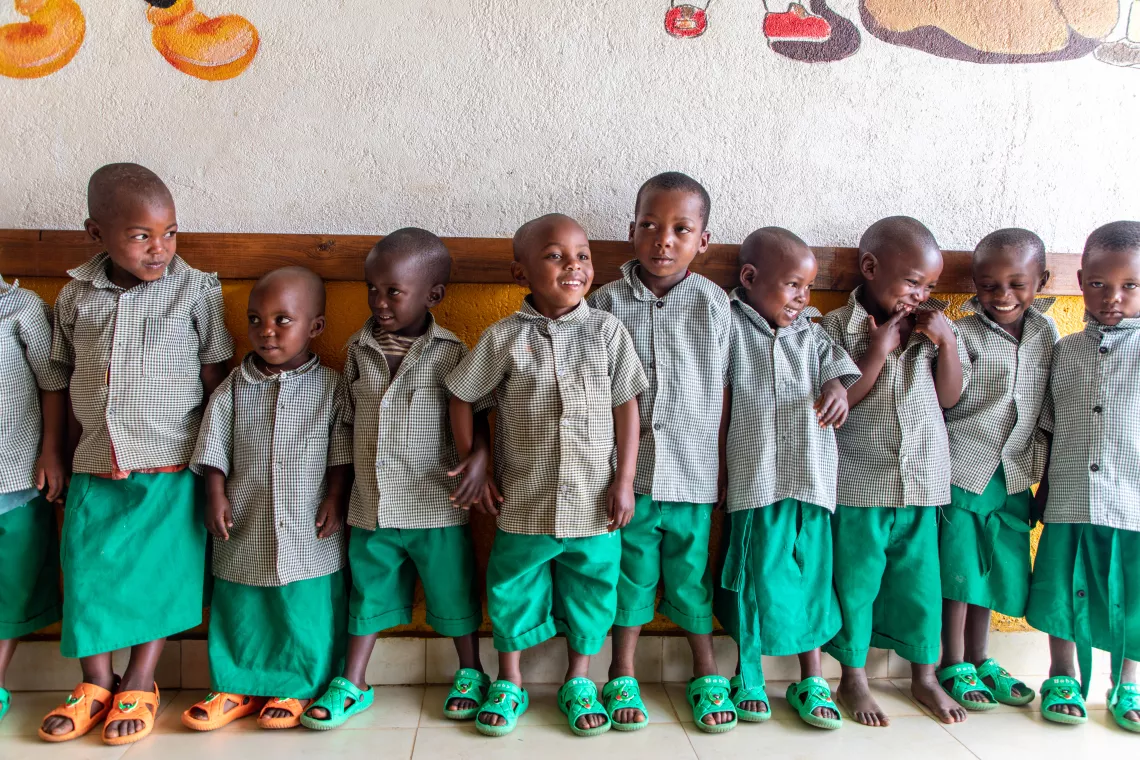
Since 2012, UNICEF has supported the Government of Rwanda to build early childhood development and care centres for children up to age 6.
These centres provide a strong developmental and learning foundation before children transition to primary school. UNICEF also helps train caregivers for these centres to ensure children are safe, stimulated and healthy.
But sometimes just building is not enough. Meet Timothy Wandulu, a local artist and founder of Concepts Arts Studio in Kigali.
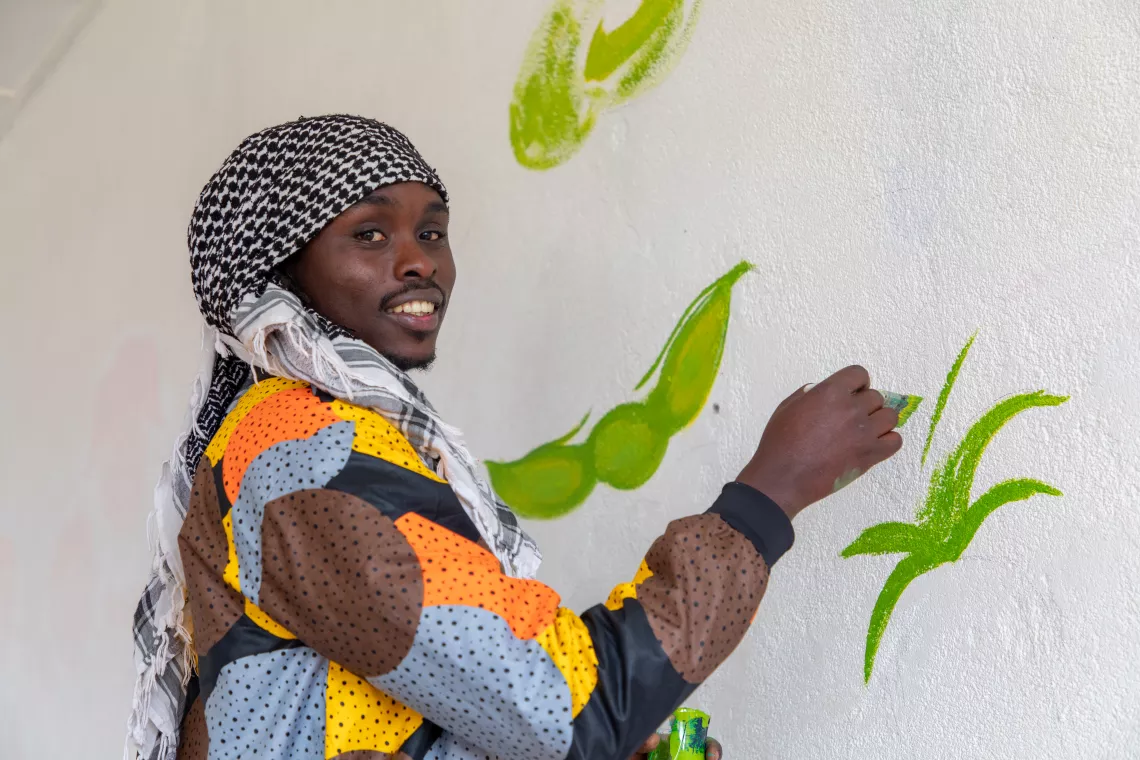
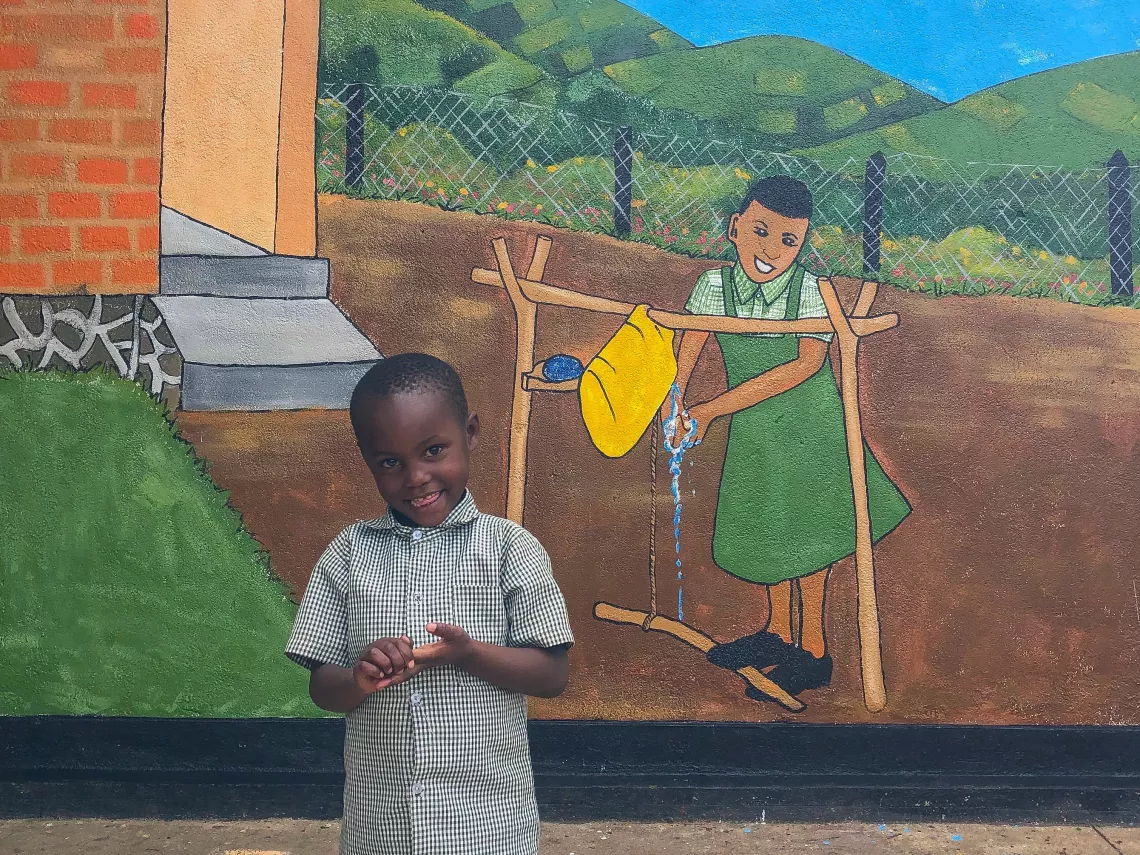
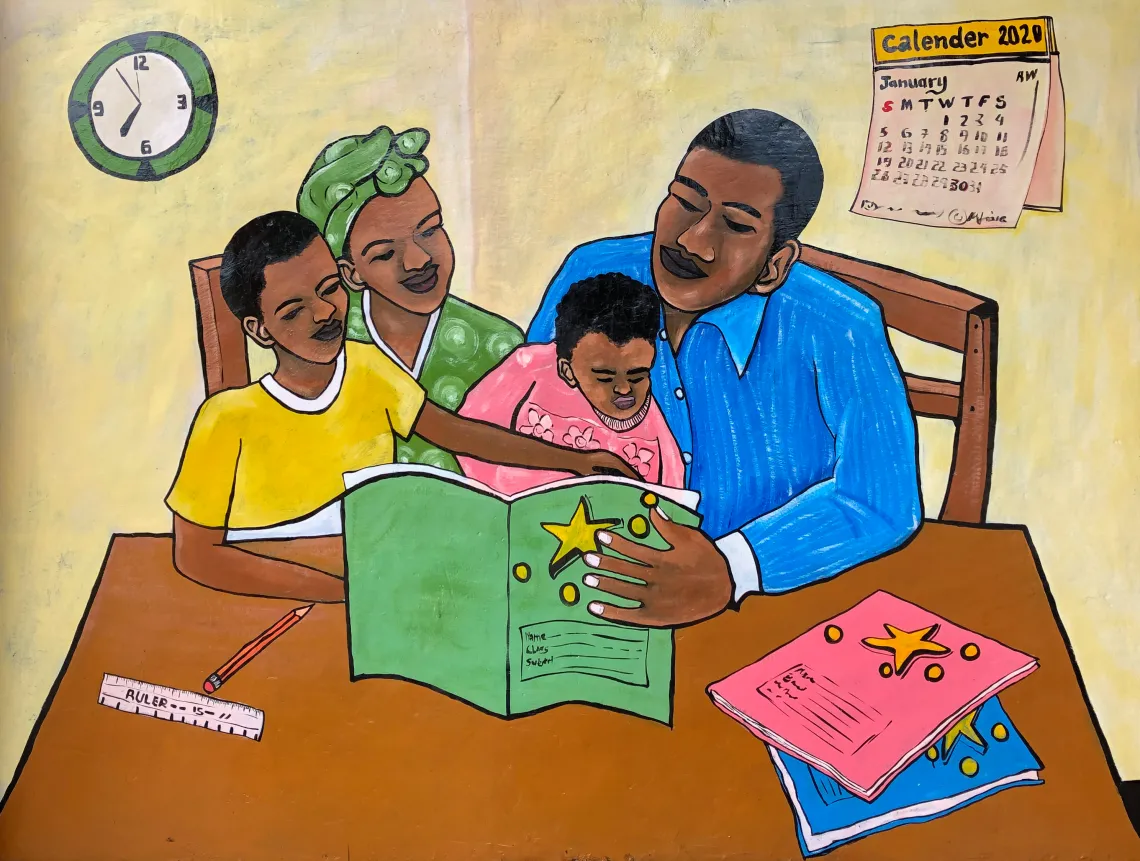
Timothy designed sketches to transform into illustrative, educational murals to cover the walls of Rwanda’s day care and early learning centres. Working with UNICEF, Timothy and his crew painted around 15 new murals.
Each day care or learning centre hosts up to 200 children. In some centres, children are grouped in different classrooms according to age. In others, they learn together in one room. Timothy worked together with staff and administrators at each centre to understand which messages they wanted displayed.
Timothy believes that art is critical for young children as they are very visual in their learning.
“Age appropriate and well-designed art helps children recognise and remember what they have learnt,” says Timothy, “especially if the art depicts their environment so it’s relatable.”
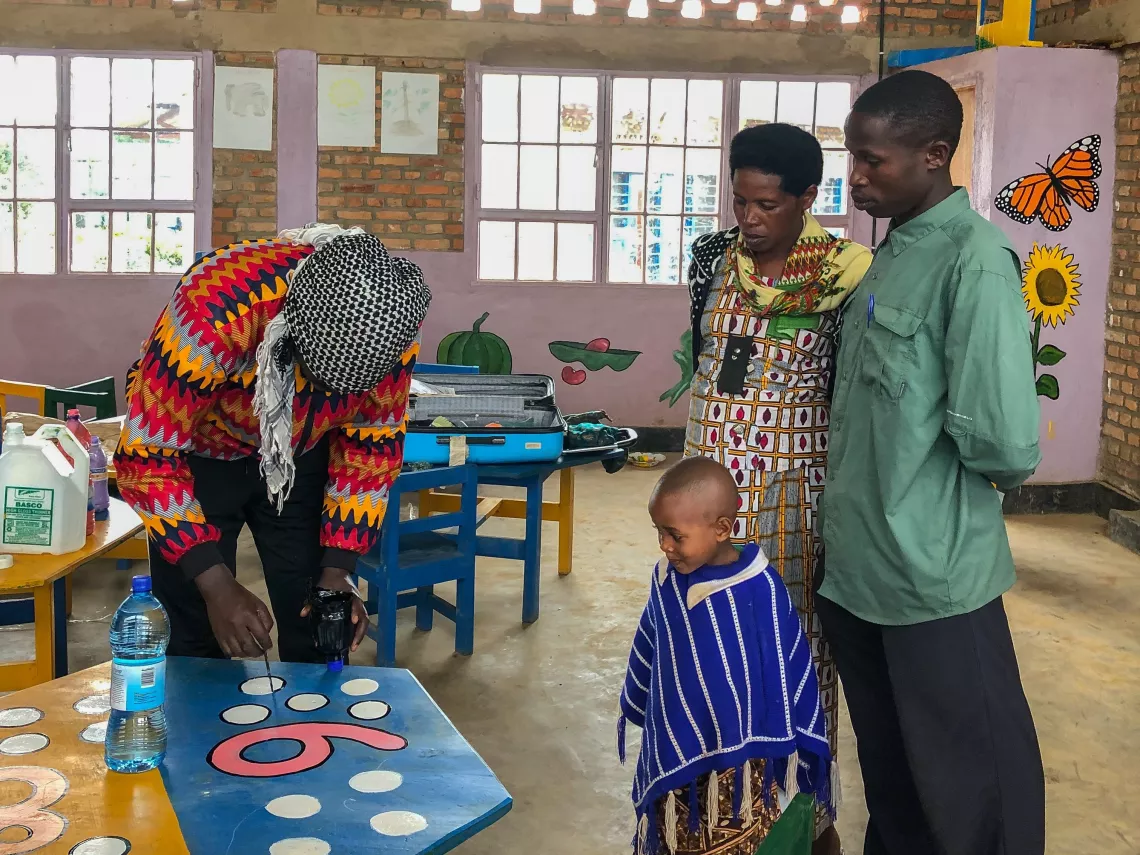
Participatory art
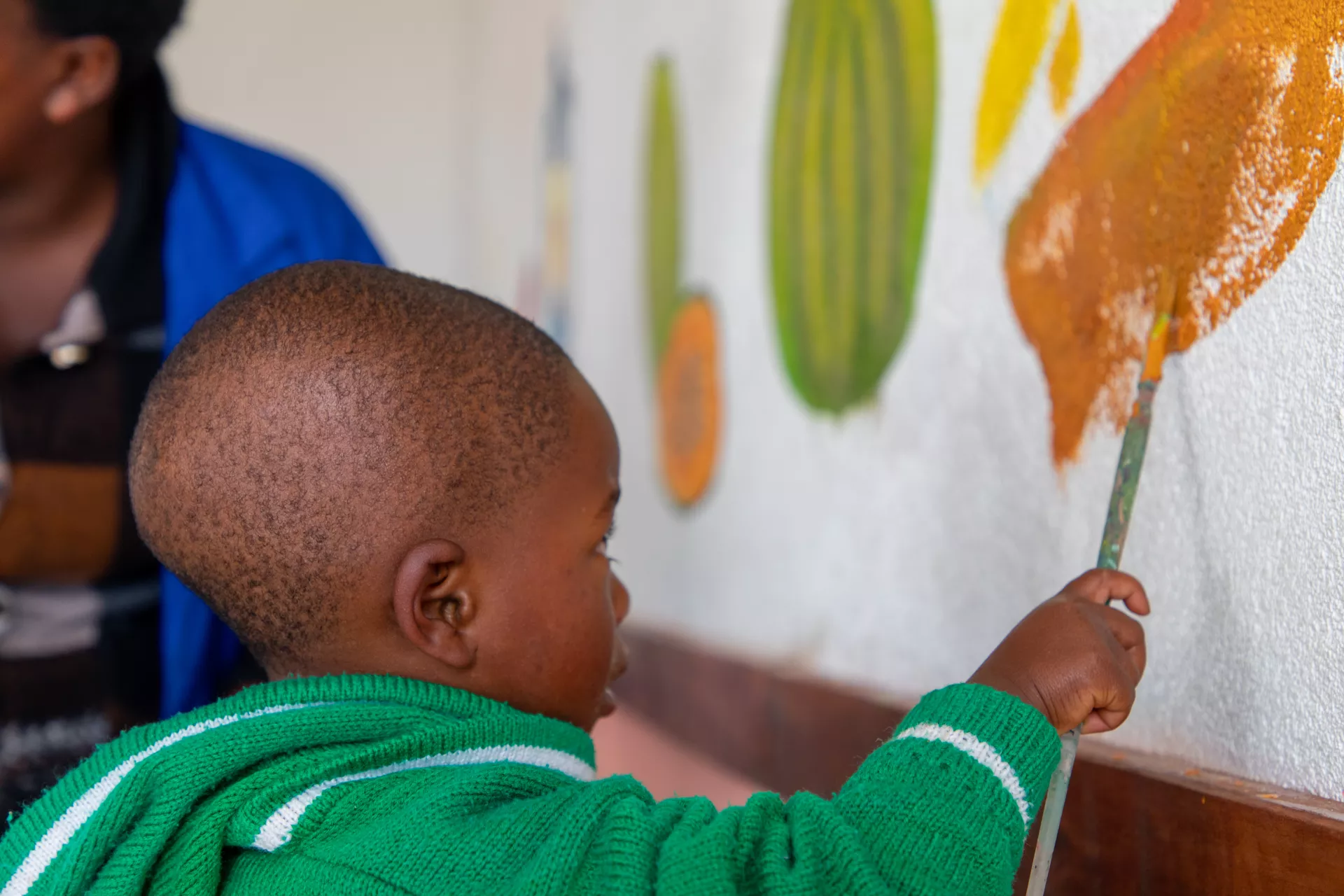
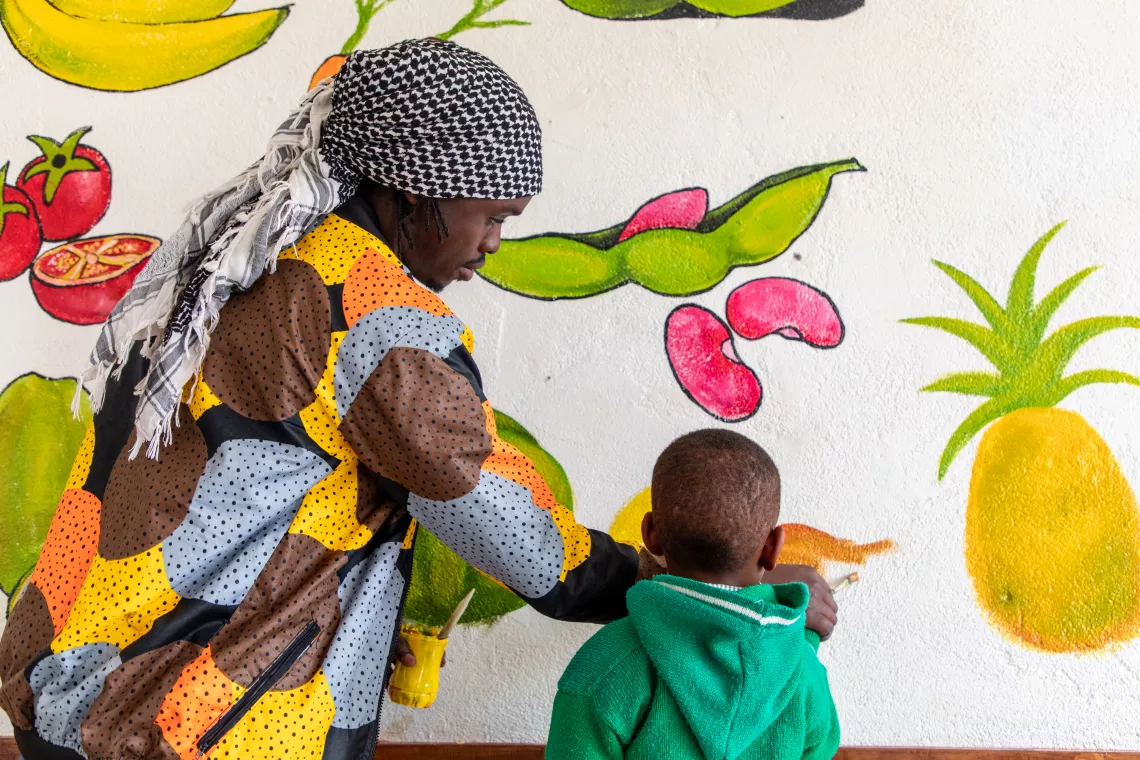
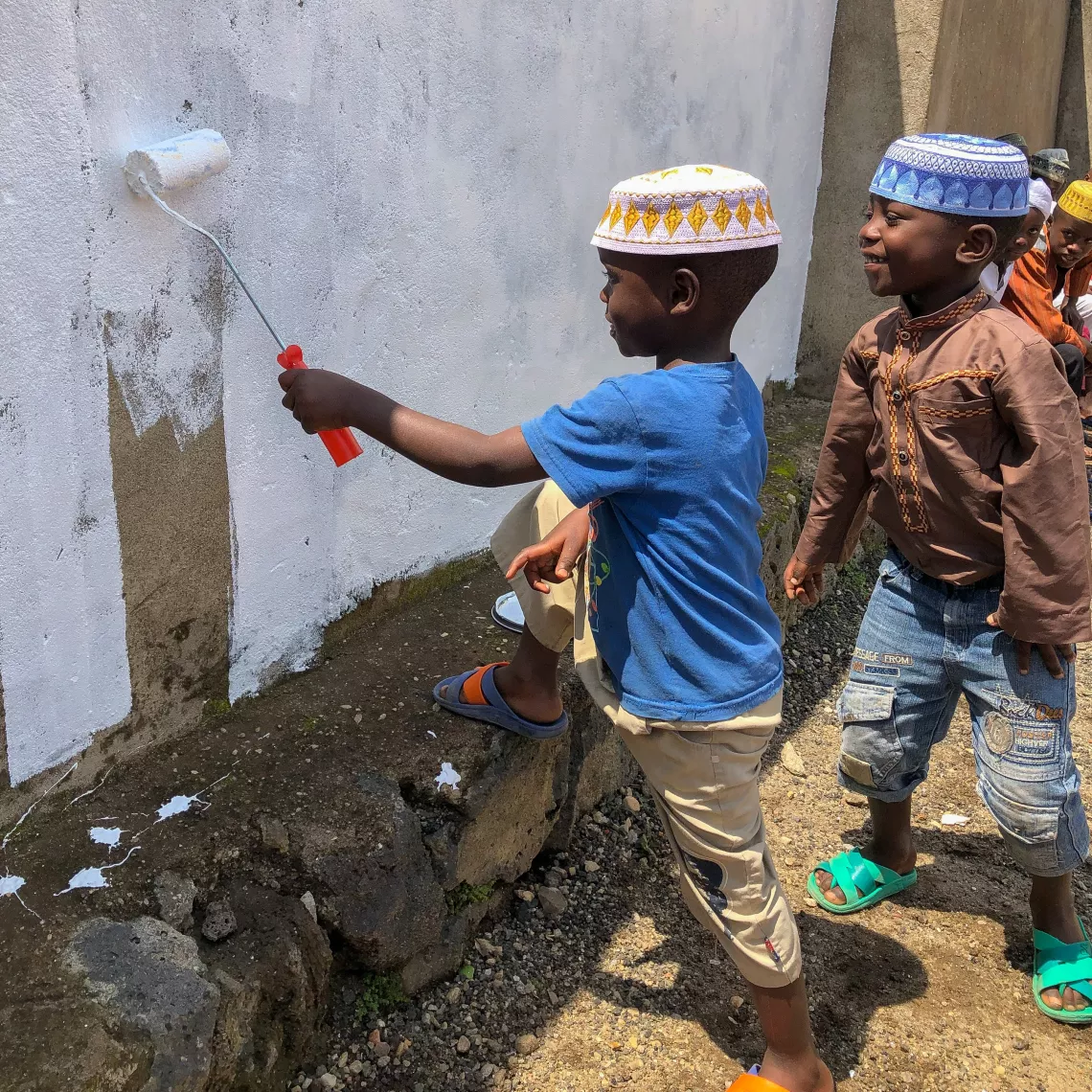
While Timothy paints, the children continue to play. Growing more curious as each mural unfolds on the wall, they approach to watch and ask, “What are you drawing?” A few even grab a paintbrush to help.
Timothy guides their hands, encouraging them to choose the correct colours for each design. “As they play and touch the designs, they learn from one another,” says Timothy. “Some kids might know more than others, and they have these designs to interact with. They can learn to draw from these designs or show the other children what they know.”
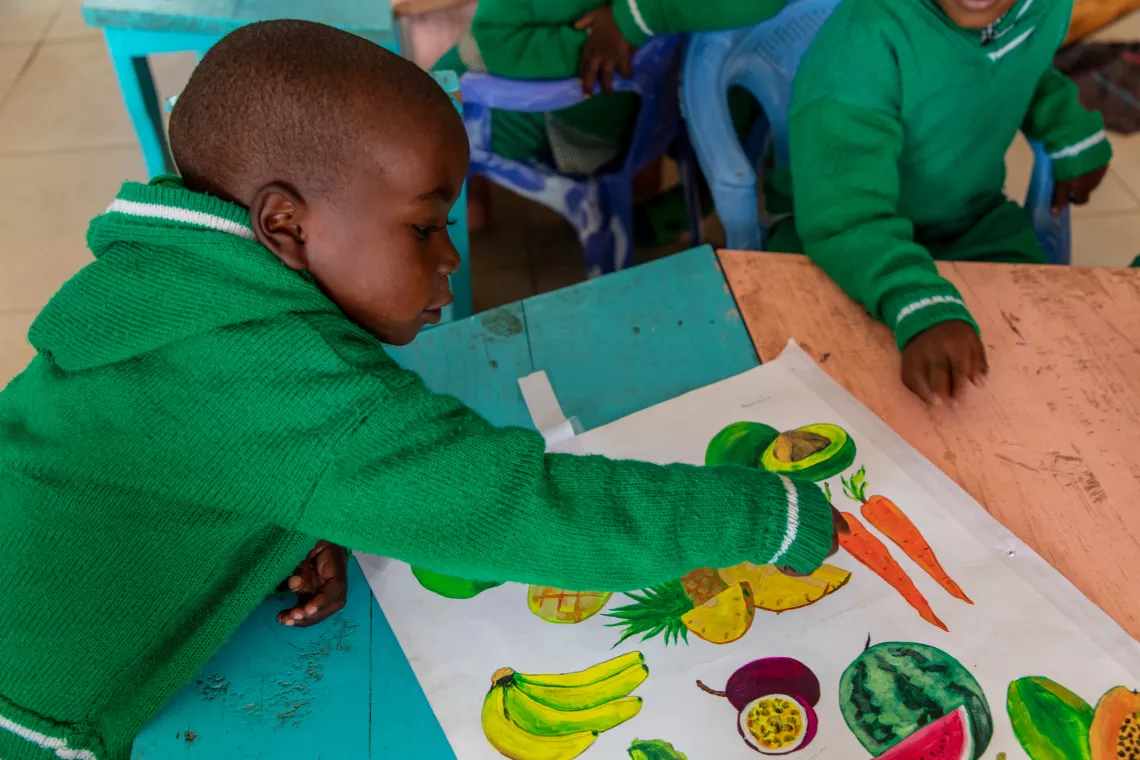
Timothy spreads a painted poster of fruits and vegetables on one of the tabletops.
“What is this?” he asks, pointing to one of the pictures.
“Apple!” says one little boy, pointing to a mango.
“No, this is an apple,” says another, pointing to a small painting of a green apple.
But Timothy was not the only one creating each mural. Encouraging participation at each centre, both children and caregivers were overjoyed to grab a brush and help transform their environment.
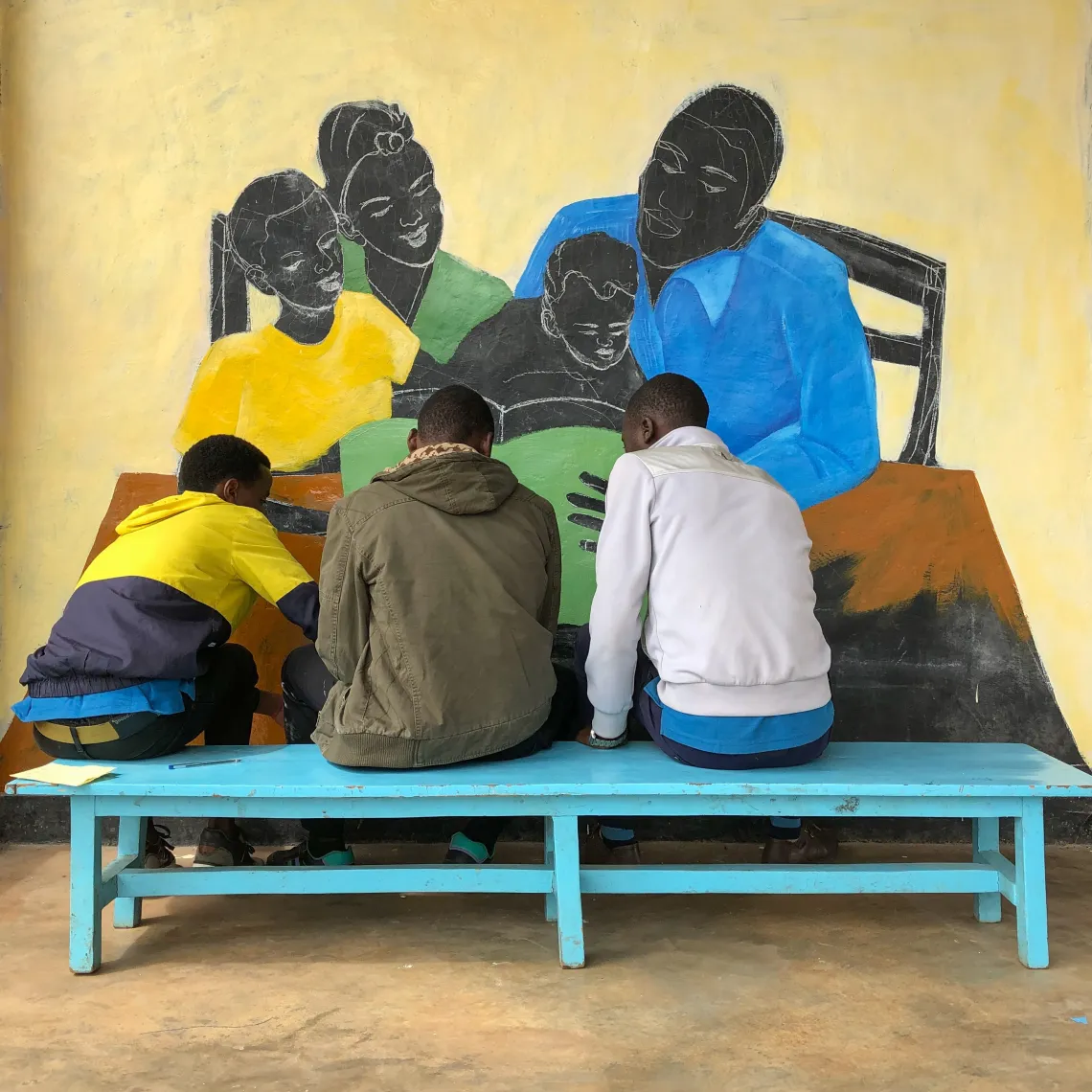
In Nyabihu District, staff at the early childhood development centre were especially excited. Crowding together on a small bench, they took over painting while Timothy supervised.
Timothy also worked with local artists in each district to help him paint. “By doing this, I hope these young artists will carry this project forward, and that it will also help develop their own skills.” These artists will also be able to check on the murals periodically, touching them up or making adjustments if they become weathered or worn.
Upon completion of each mural, UNICEF holds learning and engagement sessions with parents who bring their child to that centre.
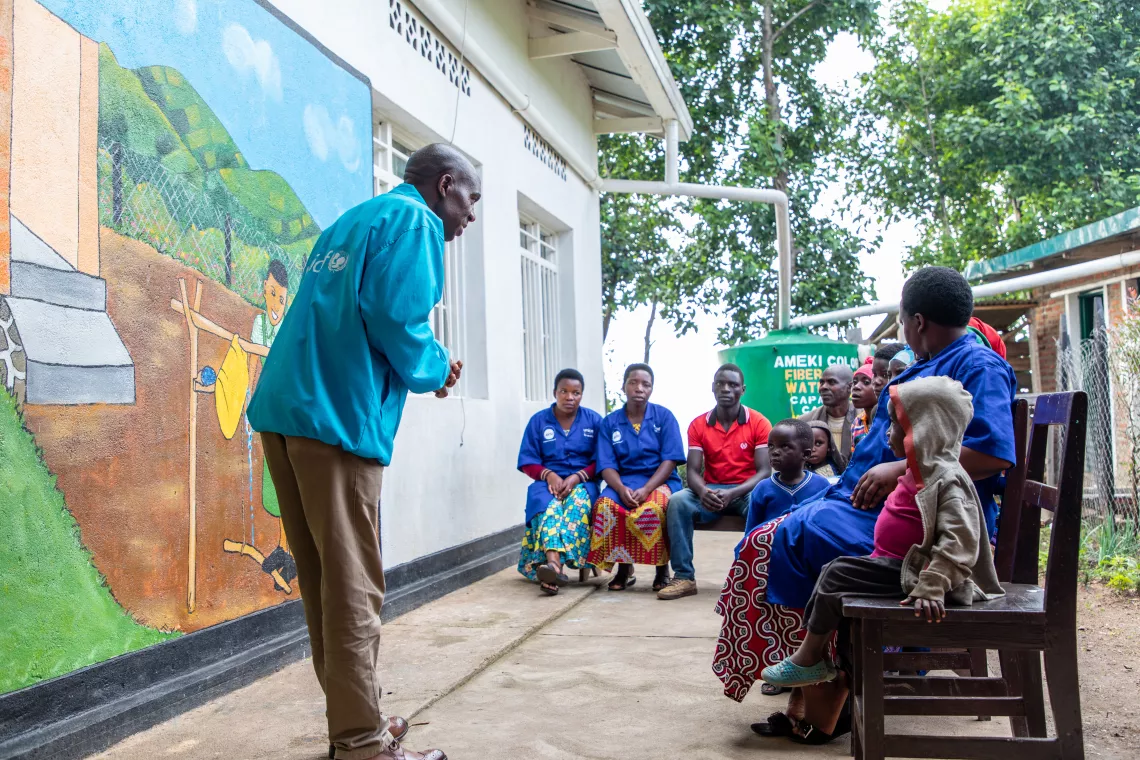
During these sessions, UNICEF’s Jean Claude Hagumimana asks the parents their interpretation of each painting and the lesson it is trying to communicate. The parents lead discussions and ask questions, and Jean Claude is there to guide them.
“When you come to pick up your children from the day care centre, you are coming from a long day of picking tea,” says Jean Claude to parents at the Rutsiro Tea Plantation centre. “Your hands are probably dirty, so this is an important time to wash your hands before holding your child, and to remind them to do the same.”
UNICEF partners also organise regular engagement sessions with parents on early childhood development topics such as non-violent discipline, preparing healthy diets, and supporting education and early learning at home.
“This project is also teaching me to be a more socially responsive artist,” says Timothy. “It is not only about painting something and moving on, assuming everyone understood the purpose. It is about engaging in dialogue.”
Many caregivers working in centres with new murals have reported that children are more engaged, interested in learning more about what is painted on the walls and copying the illustrations for themselves.
“When I hear that,” Timothy recollects, “I feel very satisfied with my work.”
In Rwanda, only 20% of children up to age 6 are enrolled in formal early childhood development programmes. By 2024, the Government of Rwanda aims to raise enrolment to 45%. UNICEF is working with the Government to model low-cost solutions to early childhood care, such as home-based centres and remodeling existing structures. UNICEF also helps train caregivers and worked with the Government to create standard guidelines for construction. Art and murals like these will accompany implementation of these guidelines and will soon become an essential component of designing an early childhood development centre.