Playgrounds and Progress – A Teacher’s Journey with Learning Through Play in Kinyababa
Discover how the integration of Learning Through Play (LtP) at GS Kinyababa in Burera, Rwanda, is transforming early childhood education, supported by innovative partnerships and community engagement.

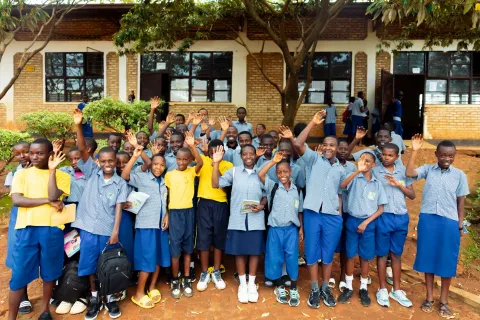
At Groupe Scolaire Kinyababa, a school located in Burera, the Nothern Province of Rwanda, vibrant playgrounds filled with laughter and energetic play are a testament to the impact of Learning Through Play (LtP) initiative. The school, which serves Early Childhood Development (ECD), Primary, Secondary, and Technical Vocational Education and Training (TVET) students, has become a model for integrating play into the learning process. For Francois Nsengiyumva, the Director of Studies, these playgrounds represent more than just spaces for fun—they are crucial foundations for quality early childhood education.
“Children who attend ECD are now ready to learn as they enter primary school,” explains Francois. “They are more confident, social, and eager to engage with both their teachers and classmates. Previously, many children who skipped ECD struggled with shyness, fear, and poor learning outcomes.”
Over the past year, thanks to the generous support of the LEGO Foundation and UNICEF Denmark, 10 new playgrounds have been renovated across Burera District, benefiting over 3,000 children in community-based and school-based ECD centers. These playgrounds provide a safe space for children to develop cognitive, motor, and social skills through games, physical activities, and storytelling.

The learning environment in Kinyababa sector has significantly improved due to the provision of ECD kits, including play materials that help foster creativity and early learning. Teachers have also received training on creating teaching aids by using local resources and making LtP approaches more pragmatic and applicable to daily lessons. This has equipped educators to incorporate engaging activities that align with the development needs of young children, enhancing their learning experiences and ensuring they are school-ready.
For teachers like Celestin Nayihiki, one of the few male ECD teachers in the district, LtP has reshaped teaching. “Play isn’t just for fun—it’s a powerful learning tool,” he says as he observes children climbing and jumping on the playground equipment. “Through LtP, we can identify children’s strengths and challenges early, whether it's a speech delay or a need for additional support. This approach has reduced dropout rates because children now love coming to school.”
Celestin also encourages more men to join the ECD profession, challenging societal norms about male involvement in early childhood education. “It’s rewarding to see the positive impact we have on children’s lives,” he adds.

LtP is steadily gaining traction across Rwanda, with initiative in Burera serving as a model for other regions. Across the country, there is growing commitment to integrating play-based learning into the national education system, promoting cognitive and social development from a young age. This shift is gradually transforming ECD, making it more inclusive and child centered.
The LtP programme also encourages community ownership. In Kaganda sector, where the Anglican Church donated land for a community-based ECD center, parents actively contribute by cleaning classrooms, preparing meals, and fundraising for caregivers’ stipends. Jerome Habanabakize, the President of the Parents' Committee, shares: “Parents now understand the importance of early education and learning for children. We’ve seen our children become healthier and more prepared for primary school.” We are pleased to see the contribution of this project as it inspires and strengthens community involvement in ECD.”

In Rwanda, 28 per cent of children under five are left unsupervised or under the care of another child under ten for over an hour weekly, highlighting significant gaps in caregiver capacity (UNICEF Data). These challenges are further compounded by a lack of child-friendly toilets, comfortable seating, and adequate learning materials in some ECD centers. To address these issues, UNICEF has been advocating for policy changes that prioritize early childhood education, providing training for teachers on child-friendly practices, and working closely with local authorities to improve infrastructure. These efforts have led to the successful implementation of inclusive ECD policies and an increase in community awareness about the importance of early education. Through sustained advocacy and partnerships, UNICEF continues to drive improvements in the quality and accessibility of ECD services, ensuring every child has the opportunity to thrive in a nurturing learning environment.
The success of LtP in Burera demonstrates the potential for nationwide adoption. By incorporating LtP into Rwanda’ education system, UNICEF and its partners are laying the groundwork for a brighter future, one where every child, regardless of background, can thrive.