Nurturing hope and building a brighter future for Rwanda’s next generation…one child at a time
UNICEF is supporting the Government of Rwanda in the fight to reduce stunting rates among children in the country to ensure that the next generation grows and thrives into healthy, productive and accomplished citizens

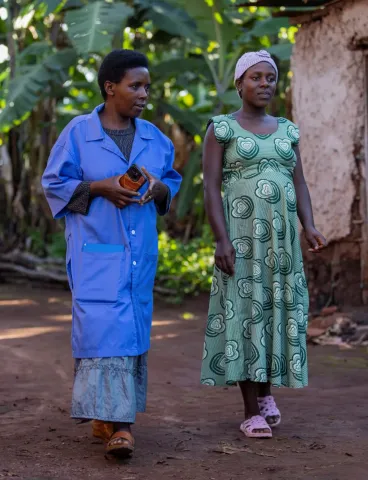
The mid-morning sun is casting its golden rays over Marie Rose Nyirahabimana’s vibrant home in Ngororero District, located in the western part of Rwanda. She tells us her story, carefully tending to her patch of spinach, tomatoes, carrots, cabbages, in her kitchen garden (popularly known as akarima k’igikoni in Kinyarwanda). Her maternal eye lingers on her two-and-a-half-year-old baby boy, while her husband tends to their cow in the shed lining the backyard of their house. Their three other children are at school.
“We couldn’t comprehend how our children could be malnourished despite us regularly feeding them from our gardens. We were unaware that cooking large quantities of just potatoes and beans was insufficient,” the mother of four explained.
She continued, “Now, I understand that a balanced diet should be a mix of carbohydrates, protein, fat, vitamins, minerals, fibre and so on. This applies to all of us” she affirms nodding her head.
Marie Rose, is delighted to have been selected among the beneficiaries of the UNICEF aided Developing Human Capital in Rwanda (DHCR) project: Harnessing the Power of Integrated Programming for Nutrition and Early Childhood Development, aimed at combating the debilitating effects of stunting, which continues to plague such communities of Ngororero, among many other parts of the country.
She joined the project when her youngest child was two years old and weighed only 9 kilograms – below the standard, universally accepted weight for an infant >2 years (source: World Health Organisation). The DHCR intervention helped Marie in correcting this imbalance and now her baby weighs a healthier 12 kilogrammes.
This may not sound significant in numbers but the additional kilos were gained in the span of just six months and is a clear indicative that her child is on track to a healthier life.
Marie Rose had never seen such progress in any of her children’s growth. She attributed this positive trend to the knowledge she gained from the DHCR project’s emphasis on comprehensive nutrition and early childhood development.
This project aims at nurturing human capital development in Rwanda by establishing optimal conditions for children aged between 0–6 years to achieve their full potential. This will help build a strong foundation for them to develop into adolescents with key problem-solving and socio-emotional competencies.
This ambitious goal required a series of combined approaches, because the needs of young children – breastfeeding and nutritious food, access to medical facilities, a clean, nurturing and stimulating home environment aided with preschool education – are interconnected.
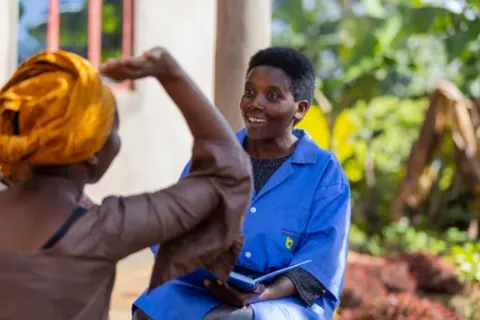
At the heart of the project were comprehensive strategies like, organizing cooking demonstrations for balanced diets.
Regular growth monitoring of children to ensure they are meeting the benchmark parameters such as weight in kilograms, height in meters and head and chest circumferences.
Strengthened institutional capacity was also identified as crucial to effectively delivering services for the twin pillars of nutrition and ECD. Government social protection systems were also adjusted to consider the nutrition needs of poor families.
With generous financial support from the Embassy of the Kingdom of the Netherlands, UNICEF, and its implementing partners such as World Relief Rwanda and Gardens for Health, the project to combat stunting among children aged 0-6 years was initially implemented in 14 districts across the country – including Ngororero and Gicumbi – over a five-year period from 2017 – 2021.

Owing to the success of this project and its significant contribution to the reduction of stunting rates (which dropped from 38 per cent in 2014-2015 to 33 per cent in 2019-2020) and an uptick in the proportion of children aged between 3-5, who are developmentally on track in the same time frame, an extension of the project was commissioned from July 2022 – June 2023.
The extension of the project aimed to strengthen the provision of Early Childhood Development (ECD) services provided through community-based, home-based, and market-based ECD facilities in 5 districts (Ngororero, Gicumbi, Rubavu, Rutsiro, and Burera) with healthy and diverse food access. These districts have recorded the highest stunting rates in the country.
The extension also sought to strengthen effective multisectoral nutrition interventions and caregivers’ economic status through kitchen gardens and community VLSAs to mitigate the negative impact of the COVID-19 pandemic and increase resilience for other possible future shocks.
In Ngororero and Gicumbi alone, 1,715 children and parents – mostly identified to be vulnerable and socio-economically inept – were reached with interventions aiming to empower particularly parents and caregivers to create optimal conditions for children to reach their full potential by achieving physical and cognitive growth and developing key problem-solving and socio-emotional competencies.

Despite the success of this project, challenges persist countrywide as well as in the communities in which it was implemented. Poverty remains the catalyzing factor that exacerbates issues such as lack of access to quality education for children, rampant spread of preventable diseases borne from poor sanitation and hygiene practices (which led to children missing school or dropping out altogether) and added expenses for healthcare to treat said diseases – coming out of an already overstretched local budget.
Despite the challenges, the DHCR project is restoring hope to families such as that of Marie Rose, who now can see a “a healthier way out”, a way to a better nurtured, nourished and new future for her family.