Lessons on Ebola for caregivers and their young charges
In some of Rwanda's most remote communities, UNICEF supported training for 300 parents and caregivers from 50 early childhood development centres.
- English
- Kinyarwanda
NDERA, Rwanda – About 15 kilometres outside urban Kigali, the team from Global Humanitarian and Development Foundation (GHDF) drives into the heart of Ndera and up a dirt road, climbing a hill so high it feels like a mountain. Destination: Gikomero – a small village at the edge of Kigali City.
Gikomero is just one of the areas selected as part of UNICEF's Ebola Virus Disease awareness campaign. The campaign is being conducted in 15 of Rwanda’s 30 high-risk districts. This village is in Kigali’s Gasabo District, home to about 18,000 residents. It is also home to an early childhood development (ECD) centre established by UNICEF, the Government of Rwanda, and Imbuto Foundation.
Since the 2018 outbreak of Ebola in bordering DR Congo, GHDF, with funding from UNICEF, has trained 300 parents and caregivers on Ebola prevention in 50 ECD centres throughout Rwanda. Nearly 15,000 community health workers were also trained in 15 high-risk districts due to shared borders and air links to DR Congo.
As more and more people get the right information about symptoms of Ebola, ways to avoid it, and proper action to take if there is a suspected case, the districts in which they live are fortified against the spread of Ebola in case of an outbreak.
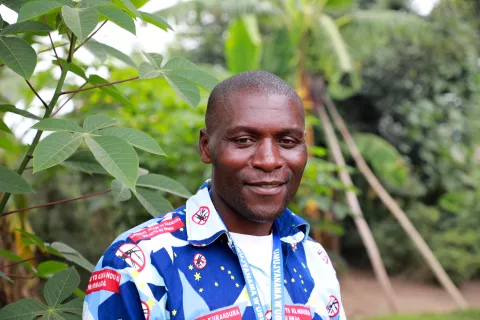
Today, Claire Umuhoza, GHDF’s field officer for Gasabo District, is visiting the Gikomero ECD centre to meet with Olive Dukudimana, one of the caregivers.
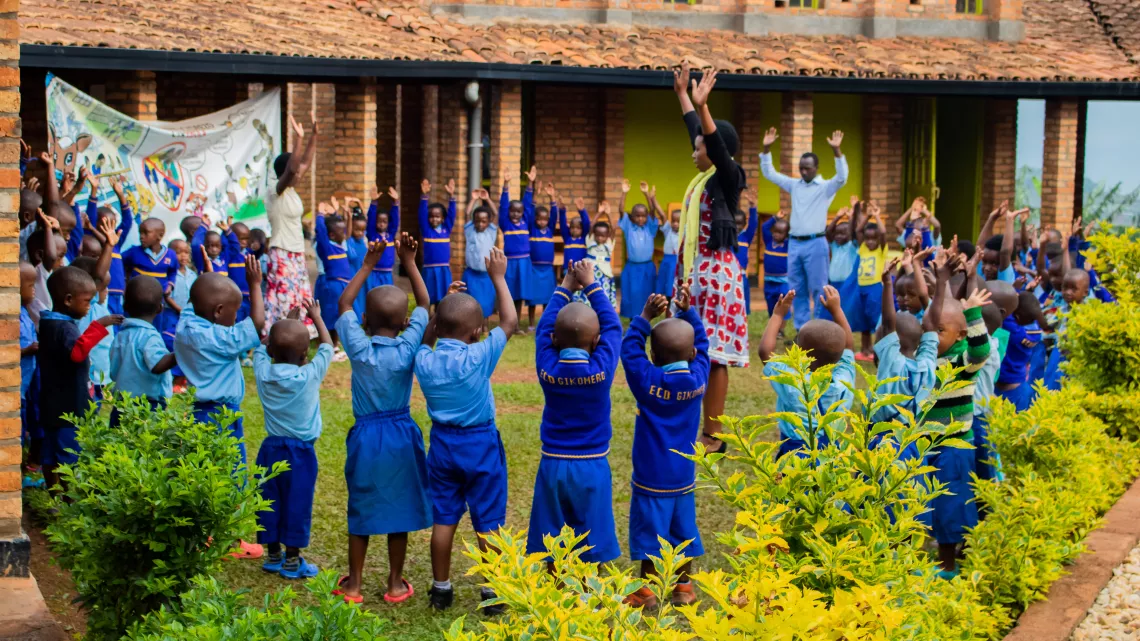
It is still early enough to see mist in the valley below, and the children and their caregivers are standing in a big circle on the grass outside in the school’s courtyard, going through their morning routine of greetings and songs. In the backdrop is a large banner with child-friendly words and pictures encouraging proper handwashing, and discouraging touching someone who is sick and bleeding.
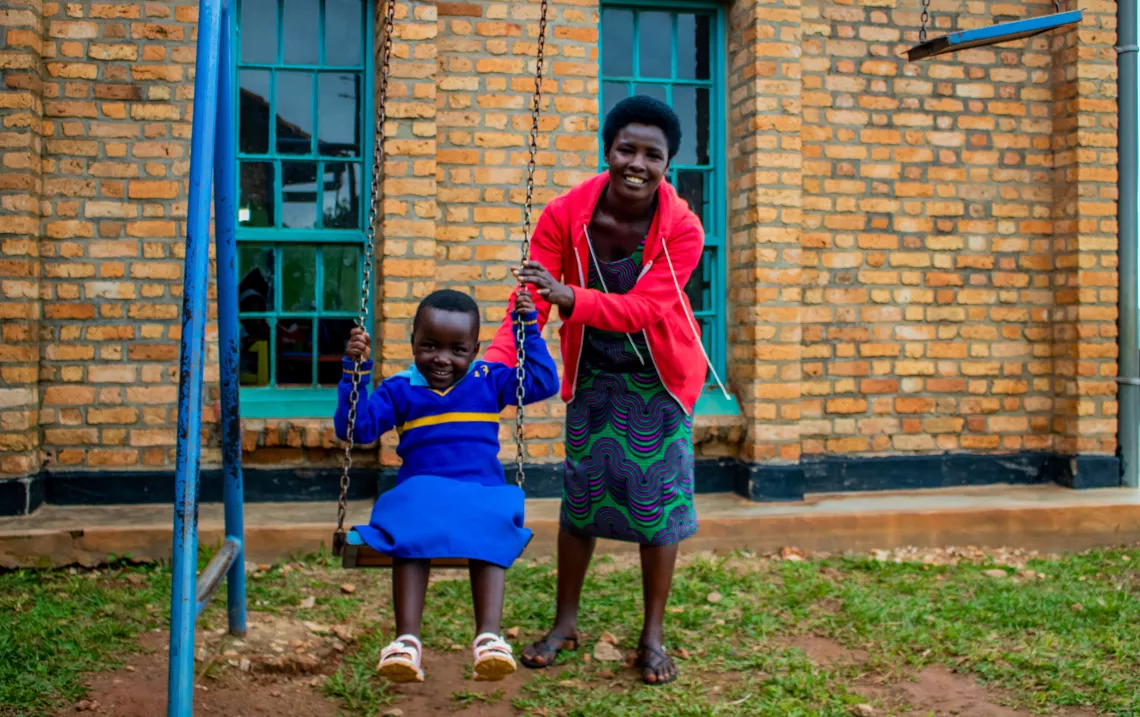
Olive Dukudimana was still pregnant with her first child when caregivers from the Gikomero ECD centre began visiting her at home. They encouraged her and her husband, who is a soldier with the Rwanda Defence Force, to begin thinking about their child’s development even before the birth.
After Olive’s daughter, Ikaze, was born, caregivers from the ECD centre continued their visits for the first three years of her life, always bringing toys and books to help stimulate her mind and develop her coordination. Olive, who studied at Rukara College of Education, enjoyed the interaction as much as her baby did.
Today, Ikaze is a thriving 4-year-old at the Gikomero EDC centre, and Olive is now providing the same service that was offered to her family. She is an early childhood development caregiver who visits homes in the community to teach young children under the age of 3, and provide information and support to their parents and guardians. Just recently, she was trained by GHDF to also deliver messages about Ebola.
Olive and two others are each responsible for reaching out to 50 households in Gikomero. “The community was very curious about Ebola,” Olive says. “There are many, like my husband, who travel a lot and want to stay healthy and safe. We know now that we need to start from our own homes, and that handwashing is key.”
One advantage of equipping parents and caregivers with knowledge about the symptoms of Ebola and the practices that can help prevent it, is that the children in their care develop high standards of hygiene that will benefit them throughout their lives and help them avoid many diseases.
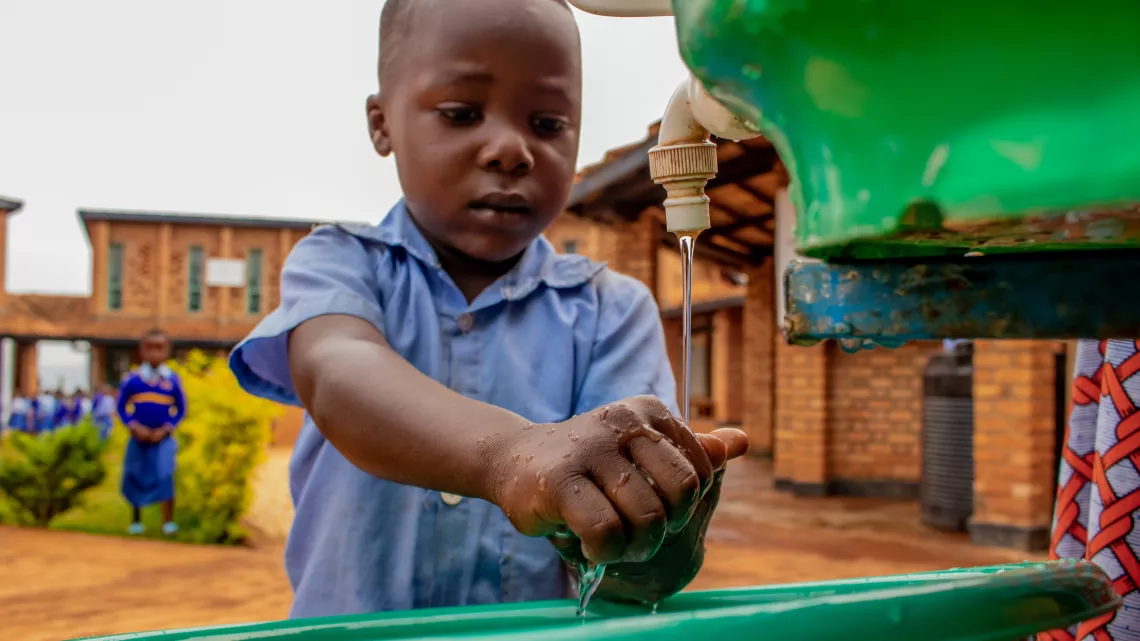
“My daughter Ikaze doesn’t even have to be told to wash her hands. Handwashing has become a culture in our home and in our community."
"Ikaze washes her hands when she is supposed to, and even makes sure that everyone who comes to visit or play also washes their hands. Even the local leaders in our community now encourage everyone to have proper hand hygiene," says Olive.
Emmanuel Dusabinema, Coordinator of the Gikomero ECD centre, emphasizes that "handwashing at school and at home has already impacted our children in a positive way. Many children used to come to school with skin rashes, but we see don’t see that anymore.”
“Hygiene and sanitation are part of five pillars we uphold at the centre and teach about on our home visits,” Olive says. “The others are education, security, well-being, and a balanced diet. I am happy that my child is able to learn and benefit in all these areas.”