U-Report Survey: What is the impact of climate change on children and young people
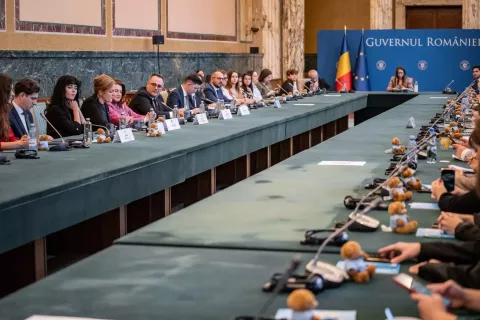
The Children’s Board reviewed the U-Report Survey on the climate change impact

- English
- Română
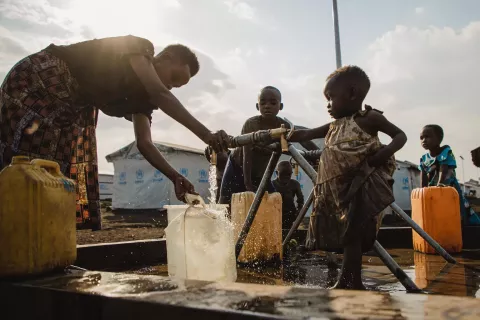
In the last years, we all experienced unusually high temperatures and extreme weather events, such as heat waves, storms, floods, all caused by climate changes. Supported by UNICEF in Romania, The Children’s Board put out on U-Report a questionnaire on the impact of climate changes on the lives of Romanian children and young people.
More than 1500 children and young people, most aged 15 to 19 (71%) responded to the questionnaire. Two members of the Children’s Board contributed to this survey: Alex (18 years old, Caracal) and Horia (16 years old, Brasov).
Most respondents (80%) are concerned about climate changes whilst only 11% think that climate changes are not an issue of sufficient consequence. The remaining 9% are yet to form an opinion on this topic.
88% of the children and teenagers believe that climate changes and effects thereof impact their lives. More than half of them (63%) deem that their lifestyle is impacted upon “to a great extent” by the climate crisis, whilst only 7% of the respondents do not believe that climate changes may influence their lives.
When asked if they believe that climate changes will impact their lives in the future, 86% of the respondents said yes, whilst only 5% responded no. 9% of the questioned youngsters are not sure about this.
“Climate changes are no longer a scenario for the future because these changes are happening now in our country and around the world. They are no longer harmless statistics by scientists, but a real threat to our lives and health! We must act now.” says Alex (18 years, Caracal).
In this context, Romanian children and young people clearly wish to involve the most important stakeholders in the process of defining and implementing governmental decisions and of shaping public opinion, from citizens and government to the mass-media. Hence, 70% of the respondents identified the government, citizens, local authorities, NGOs, and mass-media as the most important stakeholders in fighting climate changes.
The main courses of action identified by 70% of the children and youth that answered the questionnaire were: nature-based solutions, use of renewable energy, reduced use of hydrocarbons, educate children, teenagers and adults, recycling, and sustainable investment in new technologies.
It is important that these identified potential solutions to be put into practice. The majority (53%) of the U-Report respondents believe that it is important that all children and young people should act to limit climate changes. Only 8% think that action is of little importance and 2% that it is unimportant.
We have the initiative, but how prepared are we to act? 58% of the responders believe that they are prepared to do something to limit climate changes, of whom 18% feel very prepared. Nevertheless, 30% of the respondents feel poorly prepared and 6% unprepared.
In the same context, when asked in what types of activities they would participate in to limit climate changes, 50% of the respondents indicated: activities with friends (29%), school activities (13%), and activities with parents (3%). 4% of the responders would not choose any of the above-mentioned activities, and 10% are not clear about this.
Being informed is important, and today we have at hand all the tools required for this. Asked where they heard about climate changes so far, the respondents indicated the following sources: social networks (40%), radio/TV (20%), home (16%), school (12%), meetings with friends (6%), other (7%).
The young generations are increasingly interested to learn more about climate change. A major share of the responders (75%) wants to learn more about the causes and impacts of climate changes and solutions that would help to limit their impact.
“I wish more and more teenagers would learn about climate changes, because they are no longer a concept but a fact that threatens our world, a world where we should be growing, living and eventually making our dreams come true”, says Horia (16 years old, Brașov).
Also, the children were asked which should be the sources of information on existing solutions to limit climate changes - the most frequent answer was school (32%) followed by radio/TV (30%). Social networks (23%), home (6%) or meetings with friends (3%) were also among the answers.
We are happy to see children and young people participating in such large numbers in the U-Report Survey, in particular on such a critical topic as climate change. It is important that we keep ourselves informed as best as we can, on occurring changes and on any initiatives that we can participate in to slow down these changes. Thus, we ensure that our world remains a healthy place, where we can continue to grow up.