Appreciative parenting reduces parental stress and promotes a positive approach to parenting
How Ukrainian refugees in Romania learn to become more child-attentive parents with UNICEF support
- English
- Română
In the first five years of life, a child's brain creates a million new neural connections every second. It's a massive, rapid development that has lifelong consequences, and parents and caregivers play a critical role in their children's development, as they are the main architects of their child's environment. But parents need all the support they can get in these early years of their children's lives, which can be stressful and difficult. And when parents and children become war refugees, things get even more complicated.
UNICEF comes to the support of parents in Romania and refugee parents in Ukraine through the program How We Train Appreciative Parenting implemented together with its partner, HoltIS Associates, and with support from the LEGO Foundation. The program helps to reduce the stress that families experience and gives parents the opportunity to increase communication and develop the skills needed to raise, care for and educate their children.
The program has already trained 650 parent educators from among the teaching staff working in nurseries and kindergartens in Romania, as well as Ukrainian staff from the Ukrainian Play, Learning and Parenting Hubs. After going through a parenting education curriculum consisting of 10 online modules and one face-to-face meeting, the educators organize a parenting education course (10 meetings) with parents (at least 12 parents who have children enrolled in the educational establishment where the professionals work).
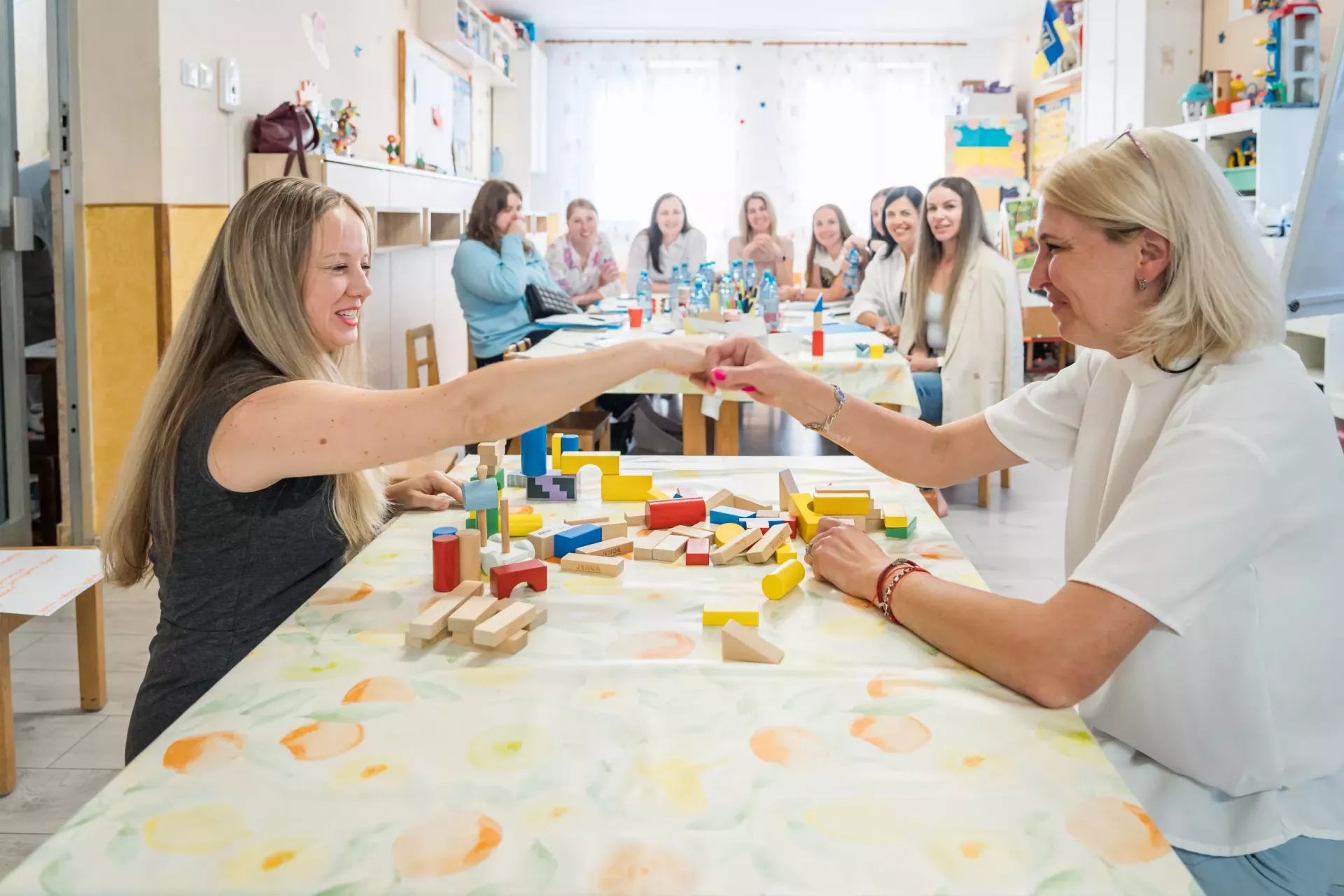
At the PrimoHub Play, Learning and Parenting Center in Sibiu, parents of Ukrainian refugee children participate in parenting classes led by the children's educator Olga. A refugee from Kharkiv, Olga has pedagogical experience and worked to set up the group where there are now over 30 children. She then convinced the parents to take part in the parenting classes by explaining that they would attend meetings where they would share their experience with the other participants on different topics related to raising and caring for children.

After the first meetings, the results began to show, not only in the parents' reactions, but also in the children's behavior. "When in the group, a child in whose family everything is done for him gets lost, loses self-confidence and starts crying. We have a girl whose parents attend the course and she had no self-confidence because everything was done for her by her parents. After enrolling in the course, we noticed some changes in the child. This shows the change in her parents' attitude: the fact that they allow the child to do many things independently helps the child's confidence. All this is due to the course," says Olga.
Alyona, the mother of a six-year-old girl, a refugee from Herson, says she has adapted quite well to life in Romania. Along with the other parents attending the course, she has started to change a few things in her relationship with her daughter, giving her more independence. "I've learned that I have to restrain myself a bit, because my first impulse is always to run and help my daughter in everything she does. I used to always be there for her, and now I'm trying to change that approach," she says.
"The course has taught me that adults should take children's side more often. Adults often forget how they behaved and felt when they were children themselves. I didn't know how to act in certain situations. A great help came from meeting and sharing experiences with parents like me. There were some basic things I had not used in my life with any of my children. Now I have a better understanding of children's needs, wants and desires and I realize that I need to spend more time with my children", Yevgenia, mother of two children, aged 10 and five, also says.

The Appreciative Parenting training program reduces parents' isolation by connecting them with other parents in similar situations and promotes a positive approach to raising and disciplining children. In addition, the program specifically addresses the factors that contribute to abuse and neglect, including lack of parenting information and skills, low self-esteem, feelings of isolation, unrealistic expectations, and misunderstanding of child development and parenting. Parents are helped to create a social support system that can continue after the course ends.
"People in Romania are very good and kind. I came to this wonderful kindergarten two weeks after it opened. Then I found a job and my child attended this kindergarten and now she is taking online classes at a school in Ukraine," says Victoria, whose daughter is seven.

"The course teaches us to let the child be more independent. I learned how to help children to act on their own"
"I attended a lesson that I personally applied and it helped me. It was about discipline, daily routine, allowing the child to make choices. The child started making his own bed, brushing his own teeth, dressing himself. He knows about the timing of different activities - learning, breakfast, dinner," says Olga from Herson, mother of a five-year-old.
The 10 sessions parents attend cover topics of interest to parents, such as how to self-care, stress and anger management, effective communication, child development, positive approaches to child behaviors, child abuse prevention and health education.
"The course has taught me to be a calmer mom, because I also have a 14 year old that I need to be more assertive with, but to be gentle at the same time. I have to stay calm and convince the boy that school and education are important, that he should be more independent, that he should learn foreign languages, because it's not clear what to expect in the future. Interacting with other mothers helps me a lot to communicate properly with my child. They share their experience, and Olga teaches us how to act correctly in different situations," says Iryna, who came from Odessa and whose youngest son is five.

For her part, Olga, who organized the meetings with parents, believes that school should teach children some essential skills to become better parents when they grow up. "Because of their lack of knowledge, many do not educate their children properly, they communicate with them in the wrong way. This leads to broken destinies, children who are not used to doing the right things, who lack the ability to adapt and who lack knowledge. So these skills should be developed everywhere, not just in a kindergarten or school," she says.
"The aim of the course is not to give grades but to teach parents the ability to communicate with their children. The environment that will be formed by the children we educate will be the environment we will live in when we are old," she concludes.

UNICEF does not not endorse any company, brand, product, or service.