Unsung Heros of Papua New Guinea
On the frontline with those bringing life-saving vaccines to children, one child at a time

When poliovirus was detected in Papua New Guinea in April 2025, the news sent ripples of concern across the country. The Government of Papua New Guinea, with support from UNICEF, WHO and other partners, quickly launched an emergency response.
Two rounds of immunization campaigns were planned to stop the spread of this highly infectious disease - the first across 17 mainland provinces and the second to include the five island provinces.
In August, I travelled to Jiwaka and Simbu provinces to document the first round of the campaign. Apart from the planning and coordination, what stood out were the people working every day to keep children safe.
Henry: The health worker who carries hope in a cooler box


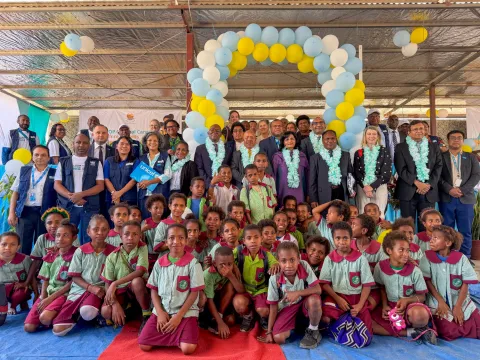
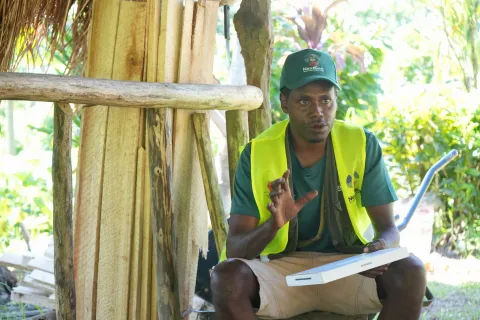
In Simbu Province, I met Henry Taine, a dedicated community health worker who had just arrived at Mu Lutheran Primary School with his team and a small blue cooler box filled with precious vials of polio vaccine.
As curious students peered from their classroom windows, Henry spoke about the campaign. He spoke softly but with conviction about what polio is, how it spreads, and how a few drops of vaccine can protect them for life.
Then, one by one, the children stepped forward. Henry swiftly administered two polio drops to each student, while two fellow health workers quietly recorded the numbers and marked the fingers of those who had been immunized.
I watched them work methodically. It took less than five seconds to vaccinate each child. Just five seconds for protection that could last a lifetime. To be fully protected against this crippling disease, they will need a second round of immunization a month later.
“Schools are one of our priority spots,” Henry said, packing away the vials. “We can reach many children quickly. But our real success depends on the people - the social mobilisers - who help families understand why this matters,” Henry said.

A surprise stop and a warm welcome
After the school visit, I followed Henry as he packed up his supplies and stepped back onto the road.
We stopped unannounced at Womai, a small roadside settlement along the Highlands Highway. No one was expecting a vaccination team that day, but Henry moved with quiet confidence, greeting parents, answering questions, and explaining why polio vaccination is important.
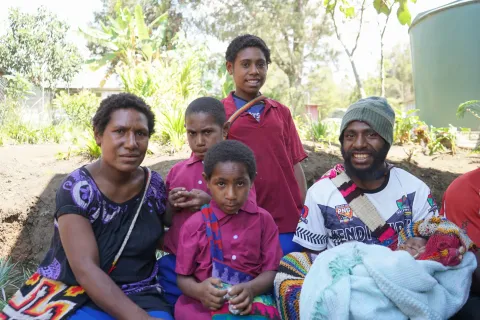
Within minutes, expressions shifted from curiosity to understanding. Parents who had been hesitant began calling for their children. Henry opened his cooler box again, and right there by the road, vaccinated several children with their life-saving drops on the spot.


Amenda: The bridge between communities and health system
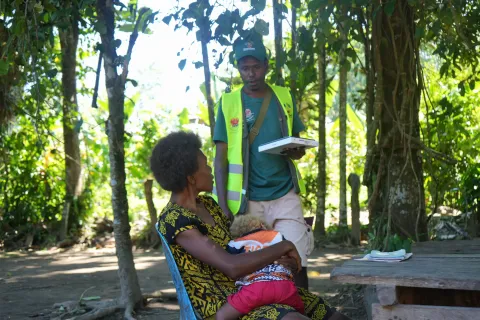
The next day, in Jiwaka Province, I shadowed Amenda, a passionate social mobiliser, whose job is far less visible but equally crucial. Social mobilisers like Amenda are the bridge between the health system and the communities. They visit homes, talk to parents, dispel fears and myths, and build the trust that allows health workers like Henry to vaccinate children with life-saving vaccines.


“This is challenging work. Sometimes people listen to us, and sometimes they don’t. But I do this with my heart. I walk long distances to convince families because if I don’t, children might be left out, and they’ll be at risk.”
I followed her as she walked from house to house, often on steep, muddy paths. It was slow deliberate work, walking from house to house, reminding families to have their children immunized, answering questions, and gently addressing fears or resistance. In some places, she was warmly welcomed, in others, she was met with uncertainty , but she never gave up.


At one home, a mother voiced concerns she had heard about the vaccine. Amenda listened patiently and gently explained how safe the vaccine is - and how dangerous polio can be if children remain unprotected. Feeling more at ease after their conversation, the mother invited Amenda into her house to talk to other family members.


Thanks to Amenda’s persistence, more than 300 children in her community were reached and vaccinated against polio.
The real heroes of the campaign
There are no headlines for the health worker who walks miles under the sun with a vaccine carrier, and no applause for the social mobiliser who patiently repeats the same message again and again until every parent understands.
But without them, the Polio campaign can never succeed.
In every vial of vaccine, in every marked little finger, lives the effort of people like Henry and Amenda - quiet, determined, and deeply committed to one simple goal: to keep every child in Papua New Guinea safe from polio.