Papua New Guinea intensifies final push to stop polio with targeted third vaccination campaign
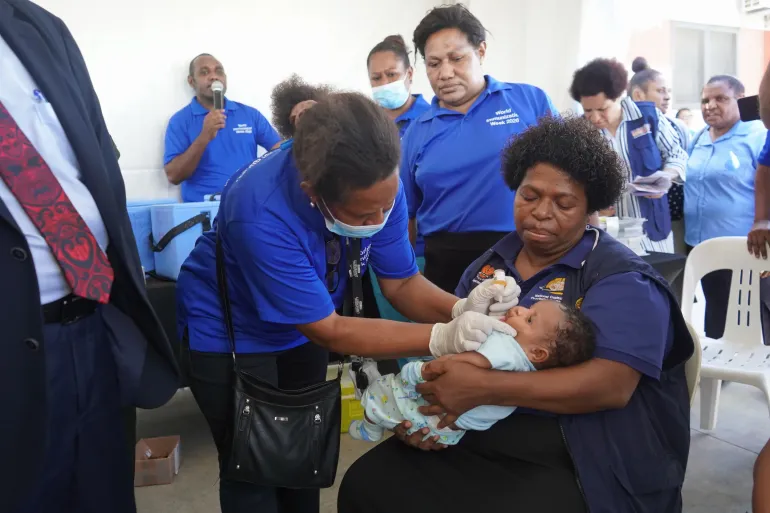
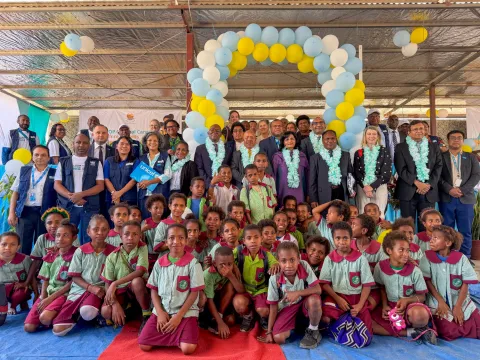
Port Moresby, 27 April 2026 – The Government of Papua New Guinea, together with UNICEF, the World Health Organization and key partners, today launched the third round of the polio vaccination campaign. The campaign launch coincides with World Immunisation Day and marks a critical step toward stopping the transmission of polio and protecting children.
Building on strong progress from previous nationwide polio rounds, the campaign will focus on Morobe, Enga, the National Capital District, and Central Province, where immunisation coverage remains low, and the risk of polio virus transmission is high, to ensure that children who may have been missed, receive the lifesaving vaccine.
The campaign will target all children aged 0 to 59 months, irrespective of their vaccination status in the previous two rounds, delivering two drops of the oral polio vaccine through health facilities and outreach teams over a 16-day campaign period. The goal is to reach more than 95 per cent of eligible children to break the polio transmission cycle.
Papua New Guinea has made significant progress in responding to the outbreak. Following two nationwide vaccination rounds, each reaching approximately two million children, no new polio cases have been reported since October 2025, either from environmental samples or from acute flaccid paralysis cases. However, recent environmental samples have detected signals of the virus, indicating that it may still be circulating silently and that continued vigilance is essential. Recent monitoring also highlights significant missed opportunities to deliver routine vaccines during campaigns, pointing to critical gaps in service delivery that must be addressed to fully protect children.
“Polio is a serious and highly infectious disease that can cause lifelong paralysis, but it is entirely preventable through vaccination,” said Pascoe Kase, Secretary for Health. “We have made strong progress, but we cannot afford to be complacent. This campaign is about reaching every child and closing the remaining gaps.”
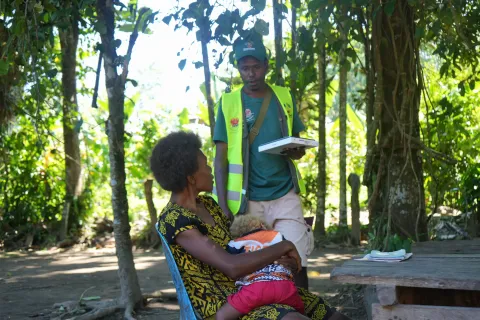
Health teams will be deployed through fixed sites, mobile and outreach services, with a strong focus on hard-to-reach communities and children who may have missed earlier rounds. This round will be accompanied by strengthened real-time monitoring, including weekly performance reviews at provincial and district levels to rapidly identify gaps and ensure corrective action.
“Papua New Guinea is at a decisive moment - progress is real, but the system gaps are equally clear”, said Dr Veera Mendonca, UNICEF Representative to Papua New Guinea. “This round must do more than deliver vaccines; it must correct the missed opportunities we are seeing in routine immunisation. Every child reached is a chance to fully protect them - and we cannot afford to miss that chance again. Ending polio now depends on disciplined execution, real-time accountability, and ensuring that no child is left unreached or under-immunised.”
“This campaign reflects strong national leadership and partnership,” said Dr Josaia Tiko, Acting WHO Representative in Papua New Guinea. “We have the tools, the experience and the evidence to stop polio. Continued detection of the virus in environmental samples is a clear reminder that transmission can persist silently. What is needed now is sustained effort, high-quality campaigns and strong surveillance to reach every missed child and fully interrupt transmission.”
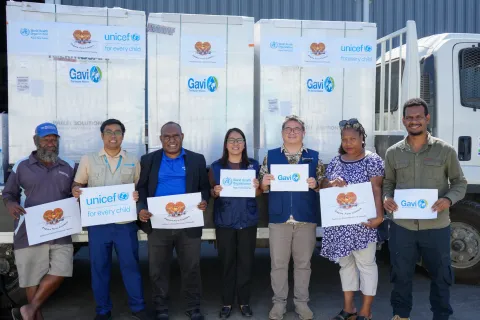
The polio response is supported by a broad coalition of partners, including the Global Polio Eradication Initiative, Gavi, the Vaccine Alliance, and donor partners such as the Governments of Australia, New Zealand and Japan, among others. Their support has enabled rapid mobilisation of vaccines, logistics and community engagement efforts across the country.
Since the outbreak was confirmed in 2025, Papua New Guinea has mounted one of its largest public health responses, targeting nearly three million children across all provinces despite significant geographic and access challenges. This coordinated effort has helped prevent further cases and protect millions of children from paralysis.
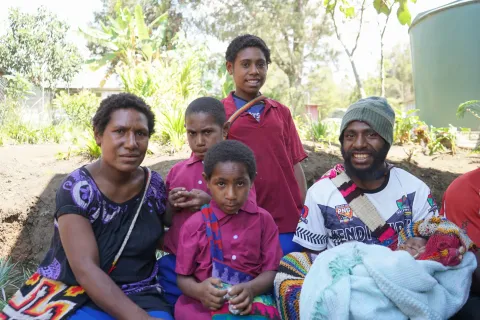
Parents and caregivers are strongly encouraged to ensure that all eligible children are vaccinated during this round, even if they have received previous doses. Vaccination teams will be available at health facilities and through mobile and outreach services across communities.
Sustaining progress will also depend on strengthening routine immunisation, including catch-up vaccinations for children who may have missed essential doses. Every contact with a child during this campaign must be used to provide full immunisation, ensuring no child leaves without receiving all eligible vaccines and building lasting protection against polio and other preventable diseases.
Media contacts
About UNICEF
UNICEF promotes the rights and wellbeing of every child, in everything we do. Together with our partners, we work in 190 countries and territories to translate that commitment into practical action, focusing special effort on reaching the most vulnerable and excluded children, to the benefit of all children, everywhere.
For more information about UNICEF and its work for children in Papua New Guinea, visit https://www.unicef.org/png/