She walks with them to the clinic
In Papua New Guinea, community champions like Bathsheba are helping protect every child, one step at a time

In Situm, a small community in Morobe Province, the call can come at any time.
Sometimes it is a mother in labour. Sometimes it is a worried parent asking about vaccines. Often it is a newborn who needs to be taken to the clinic at first sight.
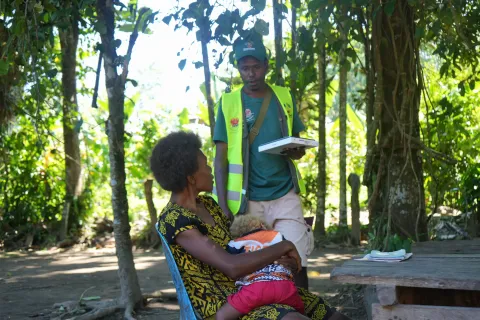
When that call comes, Bathsheba does not hesitate. She gets up, gathers what she needs, and starts walking.
For nearly 15 years, Bathsheba has supported families in her community. She has worked alongside mothers during pregnancy, referred patients for tuberculosis and HIV treatment, and assisted survivors of violence.
Today, she is also a Vaccine Champion, helping ensure children receive lifesaving vaccines.
“I really enjoy being a vaccine champion,” she says.“I’m doing this work to help save the lives of children and families.”
Walking every step with families
Bathsheba grew up in Situm. People know her. They trust her. They welcome her into their homes.
After finishing school, Bathsheba could not find formal employment. Instead, she began volunteering in her community, supporting outreach for TB and HIV. she started supporting pregnant women by encouraging them to go for antenatal visits and accompanying them to deliver in a health facility.
For Bathsheba, her role goes beyond encouraging mothers to go for antenatal visits.
“I walk with the mothers to the clinic,” she explains. “I stay with them until the baby is born and vaccinated. Then I know the child is protected.”
It is this simple act, walking alongside families, that is helping more children receive the vaccines they need.
Why her work matters
In Papua New Guinea, too many children are still missing out on essential health services.
While progress has been made over the years, immunisation coverage remains low, especially in remote and hard-to-reach areas. Many children do not receive all the vaccines they need on time, leaving them vulnerable to preventable diseases.
For families in places like Situm, distance, cost and access can make even a simple clinic visit difficult.
This is where community champions like Bathsheba make a difference.
She does not just share information. She listens. She explains. And when needed, she walks with families all the way to the clinic.

“Some people say they don’t want the drops. They say it won’t help their child,” she says.
“Sometimes they turn me away.”
Facing doubt with patience
Not every conversation is easy. As a Vaccine Champion, Bathsheba sometimes encounters hesitation and misinformation about vaccines.
But she does not give up. Instead, she listens and responds with patience.
“Most of the time, people listen,” she says. “They accept me. They know I am here to help.”
Trust, she knows, cannot be rushed. It must be built over time.
The hidden cost of helping others
For many years, Bathsheba carried out this work without pay. She walked long distances, often early in the morning and late at night. Some days, she left home without eating.
“I wake up hungry and still go,” she says. “Sometimes I am exhausted.”
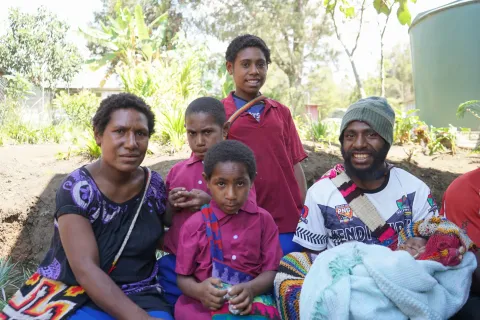
At home, the pressure is real. Bathsheba is raising three boys who are all in school. Her husband supports her, but like many families, they face financial challenges. The introduction of a modest allowance through her role as a Vaccine Champion has made a difference. It helps cover transport costs and supports her family, allowing her to continue her work.
A stronger system, rooted in community
Bathsheba’s story is not just about one person. It reflects a broader effort to strengthen immunisation systems by working through communities.
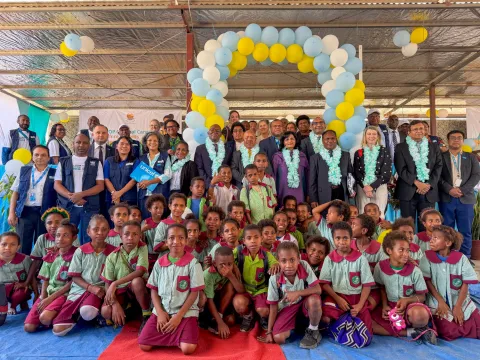
UNICEF, together with the Government and partners, is supporting community-based approaches that build trust, improve access and ensure more children are reached with life saving vaccines.
Because in places where health systems face challenges, it is often people like Bathsheba who bridge the gap between services and families.

Looking ahead
For Bathsheba, this work is about more than vaccines. It is about giving children a fair start in life.
She hopes one day to take on a larger role, using her experience to support even more communities.
“I have the experience,” she says. “I just need the opportunity.”
As Papua New Guinea continues its efforts to reach every child with essential services, Bathsheba’s work shows what is possible when families have someone they trust, someone who walks alongside them, and someone who does not give up.
In Situm, that someone is Bathsheba.
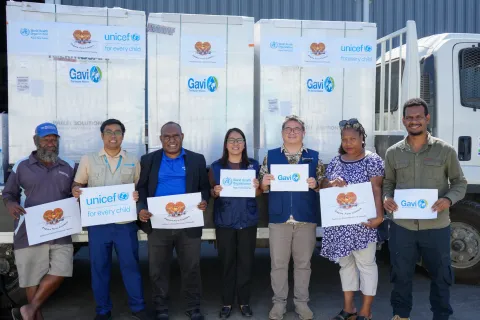
The Human-Centered Design (HCD) project, funded by Gavi, the Vaccine Alliance and led by UNICEF Papua New Guinea, is strengthening uptake for routine immunization in six zero-dose provinces by placing communities at the heart of solutions.
Through co-design workshops with health workers, Village Health Assistants, and local leaders, the project identified key barriers to vaccination and developed practical, locally tailored communication tools and community engagement approaches.
With support from partners such as World Vision and Burnet Institute, health workers and community members have been trained as Vaccine Champions - raising awareness, building trust, and connecting underserved families to life-saving immunization services.
To date, more than 35,000 caregivers have been reached across six provinces, driven by the commitment of champions like Bathsheba, one of 162 dedicated Vaccine Champions.