DSWD, NACC, UNICEF to host ASEAN high-level forum on strengthening family care, child protection systems
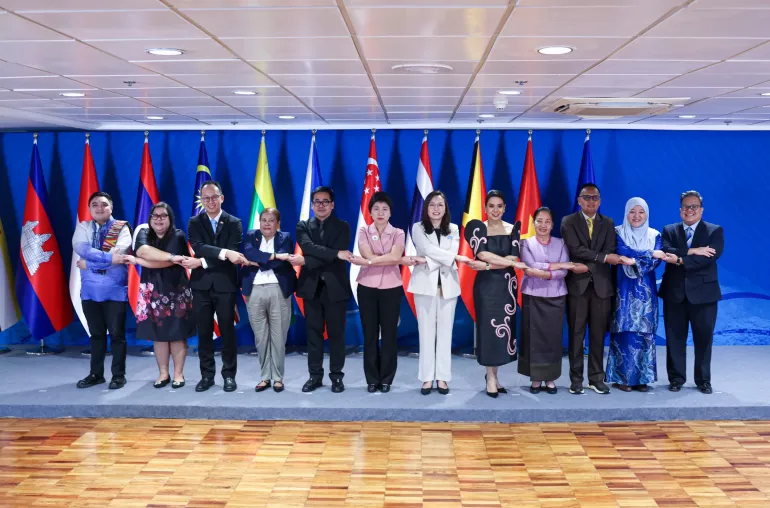
The Department of Social Welfare and Development (DSWD), as the ASEAN Socio-Cultural Community (ASCC) Council chair, with support from the National Authority for Child Care (NACC), and in partnership with the United Nations Children's Fund (UNICEF), is holding a high-level forum with ASEAN Member States to lead the conversation on ways to strengthen family care and child protection systems in the region.
The two-day forum on Child Care Reform: Strengthening Family Care and Child Protection Systems, scheduled for September 24-25, will be attended by Secretary Rex Gatchalian, NACC Undersecretary Maria Gabriela Concepcion, UNICEF Representative to the Philippines Kyungsun Kim, ASEAN Senior Officials Meeting on Social Welfare and Development (SOMSWD) leaders, other senior government officials, development partners, international organizations, child protection practitioners, child-caring and child-placing agencies, and other key stakeholders.
The high-level forum aims to discuss strategies to prevent unnecessary family separation, ensure quality family-based care when needed, and achieve safe reunification and lasting support arrangements for children who have been separated from their families due to poverty, disability, migration, family stress, emergencies, or limited access to social services.
“As part of our ASCC chairship, the DSWD is pushing for stronger family care and child protection systems to ensure that every child grows up in a nurturing family environment. While residential care plays an important protective role for children who cannot safely remain with their families, it should be used only as a temporary measure of last resort. Every child deserves the opportunity to grow up in a safe and stable family environment, which is why investing in stronger family and community-based support systems is essential,” Asst. Secretary Irene Dumlao, the DSWD spokesperson, said on Wednesday (September 23).
The forum will also underscore the importance of investing in prevention and early intervention, including strengthening family support services, expanding community-based programmes, improving case management, and building a skilled social service workforce that can identify risks early and connect children and families to the support they need.
The forum supports the Philippines’ 2026 priority on Resilient and Empowered Families, which includes strengthening family-based care and strengthening efforts to reduce reliance on institutional care for children.
“We aim to provide a platform for ASEAN Member States to exchange national experiences, best practices, innovative strategies, and effective models across the full spectrum of family preservation and family-based alternative care, including reunification, kinship, foster care, adoption, and kafala,” Asst. Secretary Dumlao said.
UNICEF highlighted that sustainable care reform must target the root causes of family separation, reinforce child protection systems, and facilitate a smooth transition from institutional care to community- and family-centered support.
"For a child, care is not an abstract concept. It is experienced in everyday life. Investing in the care reform agenda means making practical support accessible and strengthening systems that protect children so that they can grow up safely in families, with lasting relationships and the support they need to thrive,” UNICEF Representative to the Philippines Kyungsun Kim said (YADP/ATP).
Media contacts
About UNICEF
UNICEF promotes the rights and wellbeing of every child, in everything we do. Together with our partners, we work in 190 countries and territories to translate that commitment into practical action, focusing special effort on reaching the most vulnerable and excluded children, to the benefit of all children, everywhere.
For more information about UNICEF and its work for children in the Philippines, visit www.unicef.ph.
Follow UNICEF Philippines on Facebook, Instagram, LinkedIn, TikTok and Twitter and YouTube.