UNICEF urges a broader approach to child online safety beyond social media restrictions
Protecting children holistically requires action from governments, regulators, technology companies, parents, and communities
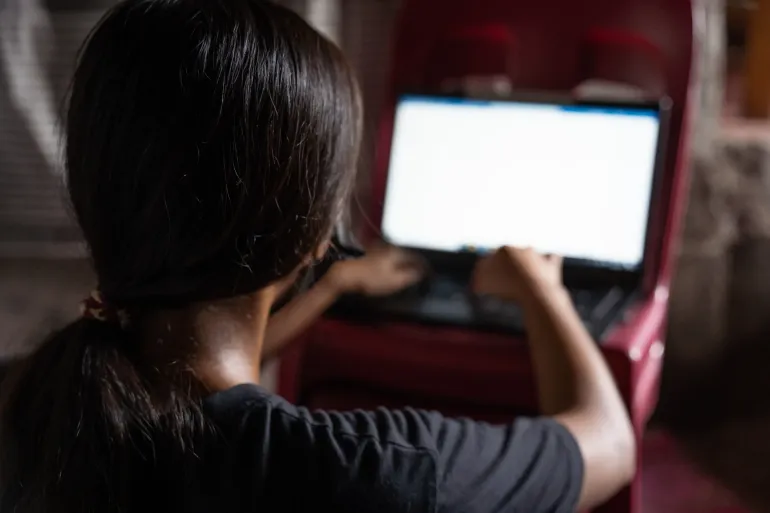
MANILA, 08 October 2026 – As proposals to restrict children’s access to social media platforms continue, UNICEF is urging policymakers to take a comprehensive approach to child online protection. This includes strengthening broader child protection systems and creating a safer overall environment for children, as age restrictions or social media bans alone are unlikely to keep children safe online.
Calls for social media restrictions have intensified amid recent school shootings and investigations into online networks allegedly grooming and manipulating young people to commit violence. These incidents form a wider pattern of online harm. Online sexual abuse and exploitation of children, grooming and sextortion underscore that children face not only harmful content, but serious forms of technology-facilitated violence. UNICEF emphasizes that effective protection requires safer environments, not simply focusing on digital space or restricting access to social media platforms.
“Children are being exposed to real harm in digital environments that were not designed with their safety and well-being in mind. At the same time, we must recognize that growing up today means growing up in a digital world, and children's experiences online and offline are deeply interconnected, with risks in one environment often fueling harm in the other. We all have a shared responsibility to ensure that digital platforms are safe, age-appropriate and rights-respecting by design, while strengthening the systems and support that help keep children safe in their homes, schools, and communities,” said Kyungsun Kim, UNICEF Representative to the Philippines.
According to the Philippines Kids Online study, children use the internet primarily for education and to connect with friends their own age. Digital platforms can provide important opportunities for learning, connection and participation, while also exposing children to risks. If poorly designed or implemented, bans may restrict access to information and support networks or push children towards less regulated spaces, without addressing the responsibility of technology companies to make their services safer. More effective policies combine age-appropriate safeguards with supportive parenting, stronger digital literacy, greater platform accountability, and accessible reporting and response services.
Making digital spaces safer
UNICEF calls for a comprehensive safety-by-design and child-rights-based approach that anticipates and reduces risks before children are harmed, while protecting their privacy, access to information and opportunities to participate online. Technology companies and service providers should assess risks to children before launching products and features; build safety, privacy and age-appropriate protections into their design; address harmful content, algorithms, addictive design features and data practices; and provide effective moderation, reporting tools and support for children, parents and caregivers. Governments should set clear standards and accountability mechanisms, equip regulators to monitor compliance and address systemic risks, and ensure that age-assurance measures are proportionate, privacy-respecting and inclusive. Digital literacy and accessible reporting and response services are also essential so that children and families can recognize risks and seek help.
Globally, age-based restrictions on social media are gaining momentum. UNICEF’s rapid analysis found that nearly 40 jurisdictions are discussing, proposing, adopting or implementing such measures, reflecting growing concern over children’s exposure to online harms. However, age assurance and parental consent remain complex. Age checks can be difficult to implement effectively without creating privacy risks, while parental consent may be unreliable where children use shared devices, borrowed accounts, or inaccurate information. Such measures may also disproportionately affect children whose caregivers have limited digital literacy, connectivity, or availability.
A shared agenda for child safety – online and offline
UNICEF emphasizes that any proposed restrictions should be informed by evidence and form part of broader efforts to strengthen the child protection system and create a more holistic protective environment for children, while safeguarding their safety, privacy, access to information and right to participate. A government-led process drawing on the expertise of academia, civil society and industry, as well as the experiences of children and adolescents themselves, can help identify practical solutions suited to the Philippine context. Evidence, technical expertise, and child-rights perspectives can support practical measures that strengthen online safety while preserving access to learning, information, and participation.
Building on an industry pre-convening focused on safety by design, private-sector accountability and children’s participation, the ASEAN ICT Forum on Child Online Protection in November will bring regional stakeholders together to strengthen cooperation on child online safety and digital inclusion.
Media contacts
About UNICEF
UNICEF promotes the rights and wellbeing of every child, in everything we do. Together with our partners, we work in 190 countries and territories to translate that commitment into practical action, focusing special effort on reaching the most vulnerable and excluded children, to the benefit of all children, everywhere.
For more information about UNICEF and its work for children in the Philippines, visit www.unicef.ph.
Follow UNICEF Philippines on Facebook, Instagram, LinkedIn, TikTok and Twitter and YouTube.