Government of Japan, UNHCR and UNICEF initiative expands birth registration services to 1.2 million people in Sulu
New boat, vehicles and youth-led initiatives expand efforts to reach communities still facing barriers to birth registration
MANILA, 21 September 2026 – Around 1.2 million people in Sulu will benefit from improved access to birth registration services through the Initiative on Promoting Digital Birth Registration supported by the Government of Japan, the United Nations High Commissioner for Refugees (UNHCR) and the United Nations Children’s Fund (UNICEF).
According to the 2020 Census of Population and Housing, around 20 per cent of Sulu’s population remains unregistered, with geographic isolation among the barriers that continue to make civil registration difficult for some families.
The initiative also provided a new boat and mobile birth registration vehicles to the Provincial Government of Sulu and seed grants to youth advocates, supporting mobile birth registration in remote communities and raising awareness on the right to legal identity.
Grateful for the support extended to the Province of Sulu, Mr. Erwin Q. Tan, Provincial Administrator of the Province of Sulu, expressed the Provincial Government's sincere appreciation for the assistance and partnership provided, highlighting its significant contribution to the province's development and the well-being of its constituents. “We are sincerely grateful for the support extended to us. This assistance reflects the value of working together toward shared goals and meaningful progress,” Tan added.
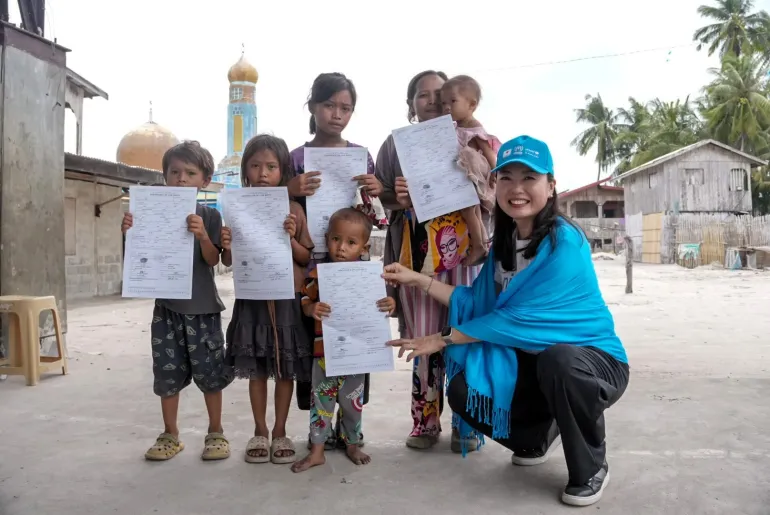
Access to civil documentation remains a challenge for many residents of Sulu, particularly in remote, marginalized, and displacement-affected communities. Through strengthened collaboration among the Provincial Government of Sulu, Bangsamoro Ministry of Social Services and Development (MSSD), UNHCR, UNICEF, local government units and partners, thousands of previously undocumented individuals have obtained birth certificates, improving access to legal identity, protection, and essential services.
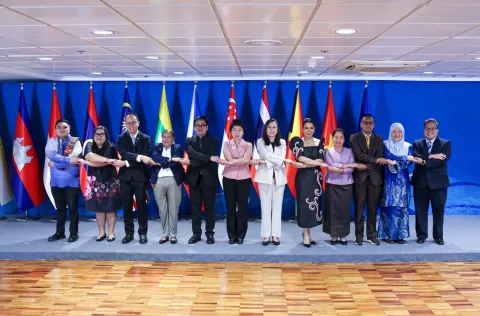
During the ceremonial handover of the assets on 7 September, State Counsel Armie Gutierrez-Bugarin of the Department of Justice's Refugees and Stateless Persons Protection Unit (DOJ-RSPPU) underscored that the initiative reflects the Philippines’ commitment to implementing the National Action Plan to End Statelessness (NAP). “Through partnerships at the national and local levels, we continue to move closer to a future where every individual is able to establish and prove their legal identity,” she said.
The Sulu Government will lead efforts to maximize the new resources and sustain birth registration outreach across the province, helping ensure that improvements in access continue beyond the initiative.
The significance of this shared commitment was highlighted by UNHCR Philippines Head of the National Office, Maria Ermina Valdeavilla-Gallardo, who noted in her message of commitment that, “Every person has the right to be recognized, protected, and included. Together with the Government of the Philippines, the Provincial Government of Sulu, Japan, UNICEF and our partners, we are helping ensure that even the most remote and marginalized communities can access legal identity and confidently say: ‘I belong.’”
Beyond expanding access to birth registration, the initiative is strengthening local civil registration systems by equipping frontline government personnel with the resources and capacity to deliver services more effectively.
“Legal identity is every child’s right, yet it remains out of reach for many children, especially those in the most vulnerable and geographically isolated communities. By strengthening civil registration systems and bringing services closer to families, we can help ensure that every child is recognized, protected, and able to access the essential services they need to reach their full potential. UNICEF is proud to work alongside our partners to make this a reality for all children, wherever they are, because every child counts,” said Kyungsun Kim, UNICEF Representative in the Philippines.
Funding from the Government of Japan has expanded the initiative through investments in transport, civil registration capacity, and community-led efforts to make birth registration more accessible.
Building on these investments, UNHCR and UNICEF, together with partners, implement the Birth Registration Advocacy for Vulnerable Populations to End Childhood Statelessness (BRAVE) Project, which promotes birth registration and helps ensure that every child has a legal identity, access to essential services, and protection from the risk of statelessness.
Young people play a key role in bringing the initiative closer to communities. Through the seed grants, youth advocates will lead locally driven activities that encourage families to understand the importance of birth registration and access available services.
Jamil Matarul, a BRAVE Advocate, emphasized the collective efforts of the Sangguniang Kabataan and fellow youth volunteers, saying, “Through the initiative, we help families understand the importance of registering their children and ensure that no child is left behind.”
The impact of these efforts is already being felt by families across Sulu. In a separate birth certificate handover ceremony in the island barangay of Laminusa, Siasi, a mother expressed her gratitude after receiving her children’s birth certificates. “Today, my children are recognized and included. This birth certificate gives them hope, opportunities, and a brighter future,” she said, highlighting the importance of legal identity in securing access to essential services and opportunities for children in remote communities.
This story reflects the broader impact of the birth registration initiative in BARMM and Sulu, which is expanding legal identity and improving access to essential services for vulnerable communities by strengthening birth registration systems. Through this support, more than 5,000 individuals in the province have been registered and issued birth certificates.
Across the Bangsamoro region and Sulu, the birth registration initiative has already supported the registration of more than 26,000 individuals, helping families secure legal identity and gain access to the rights, protection, and essential services that it enables.
ABOUT THE INITIATIVE FOR PROMOTING DIGITAL BIRTH REGISTRATION
The Initiative is being implemented by UNHCR Philippines to improve the birth registration rate in the Bangsamoro Autonomous Region in Muslim Mindanao (BARMM) and Sulu province. Through funding from the Government of Japan, UNHCR Philippines and UNICEF Philippines together with its partners Community and Family Services International (CFSI), Relief International (RI), Consortium of Bangsamoro Civil Society (CBCS) and in collaboration with the Ministry of Social Services and Development (MSSD), Philippine Statistics Authority – Bangsamoro Autonomous Region in Muslim Mindanao (PSA-BARMM), and the Office of Presidential Adviser on the Peace Process (OPAPRU), works on strengthening the protection space for the Sama Bajaus and unregistered children within the context of forced displacement due to armed conflict. The initiative also covers decommissioned combatants and their families as part of the efforts to complement the normalization efforts of the Philippine Government.
The Initiative is seen to benefit some 30,000 individuals during its 30-month implementation period and is expected to further benefit 800,000 individuals or 80,000 families in the next 10 years.
Media contacts
About UNICEF
UNICEF promotes the rights and wellbeing of every child, in everything we do. Together with our partners, we work in 190 countries and territories to translate that commitment into practical action, focusing special effort on reaching the most vulnerable and excluded children, to the benefit of all children, everywhere.
For more information about UNICEF and its work for children in the Philippines, visit www.unicef.ph.
Follow UNICEF Philippines on Facebook, Instagram, LinkedIn, TikTok and Twitter and YouTube.