United for Change
How Lady Health Workers are transforming the maternal and child nutrition landscape in Gilgit-Baltistan

Khaplu, Gilgit-Baltistan: In the remote Khaplu Valley, the mountainous terrain provides a striking mix of beauty and hardship. The villages are isolated, and healthcare is a distant luxury for many. Basic health units are often far from these small, scattered communities, making access to medical care a significant obstacle.
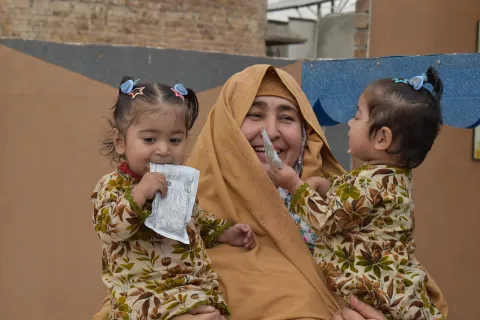
Lady Health Workers (LHWs) are quietly transforming lives in this remote region. With the support of UNICEF, these women are providing healthcare to the community and empowering families to break cycles of malnutrition and address sociocultural issues.
Bushra, an LHW who has dedicated over 13 years to serving her community. Each day she visits homes in her community, offering advice on maternal and child health, family planning, and nutrition. She recalls the early days of her service when pregnancy-related deaths were disturbingly common. Anaemia and other forms of malnutrition among expectant mothers were rampant, and both mother and child would often perish during childbirth.
“At least three or four pregnancy-related deaths used to occur per year, especially during delivery,” she shares. “The situation was heartbreaking, and it felt like there was little we could do to stop it.”
Today, Bushra’s voice is filled with pride as she reflects on the change she has witnessed. “Now, we have almost no maternal deaths, and that is my greatest achievement in all these years,” she says. Through consistent and compassionate interventions, Bushra and her colleagues have helped save generations of lives, a remarkable transformation in a community once plagued by malnutrition, diseases and preventable deaths.
One of the greatest challenges faced by these communities was a lack of awareness about proper nutrition. For years, many new and expectant mothers remained unaware of the importance of a balanced diet, leading to malnourished babies.
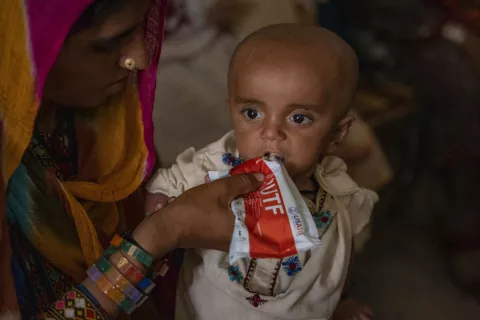
“Nutrition has historically been a lesser-known issue for mothers in this area. It wasn’t something many thought about, but the effects were devastating,” says Ehtisham ul Haq, a Nutrition Officer from the District Health Office (DHO), who works closely with the LHWs. When LHWs come across cases of severe malnutrition, they immediately refer them to the nearest nutrition centre at the local health facility and ensure regular follow ups.

Overcoming cultural barriers to nutrition
One particular habit that contributed to this widespread malnutrition was the consumption of a locally brewed salty tea. Made with added ingredients of sodium bicarbonate and salt, the tea was consumed throughout the day, often replacing meals. The practice was so ingrained in the culture that it was difficult to challenge.
“The tea caused iron deficiency, high blood pressure, and gut issues,” Bushra explains. “We met regularly with our supervisors to discuss ways to address this, but it took time to change such deeply held practices.”
One of the district’s Lady Health Supervisor, Naheed Fatima, describes the salty tea as “Balti liquor,” a nickname given due to its addictive nature. The LHWs, supported by the DHO and UNICEF, were able to educate mothers about the dangers of the tea and encourage healthier alternatives. Today, this harmful practice is largely a thing of the past.
“It was a huge barrier to improving health in the community, but with training of the LHWs and their repeated counselling in their communities, we began to make progress,” Naheed explains.
Another alarming issue that required immediate attention was the growing use of tea whitening milk to feed newborns, mistakenly viewed as a low-cost alternative to breast milk. Made from vegetable oils and additives, this product, which is marketed as milk for adding to black tea, quickly gained popularity among mothers looking for an affordable solution.
“We worked with UNICEF to educate mothers about the dangers of this product,” Ehtisham recalls. “We showed them the packaging, highlighting the ingredients, and explained that it wasn’t milk at all but a harmful mixture of oils and additives.” Through this targeted intervention, the harmful practice was gradually eradicated from the region. Today, mothers are better informed about the importance of breastfeeding and are more committed to using proper, safe nutrition for their infants.
An essential aspect of the LHWs’ work is educating mothers-in-law, who often hold entrenched beliefs that hinder maternal health and nutrition. In some cases, mothers return to work in the fields just two to three months after childbirth, leaving their babies with their mothers-in-law and relying on substandard formula. “Through ongoing counselling, we are challenging these practices,” says Naheed. “We are seeing mothers gradually understand the importance of breastfeeding, not just for the health of their babies but also for their own well-being.” While progress is being made, this remains an ongoing issue that continues to require attention and effort.

Supporting mothers through nutrition education
The work of the LHWs extends beyond individual counselling, with monthly support group sessions for mothers in the community. These sessions provide a space for learning, addressing misconceptions, and offering support.
“We teach mothers about diet diversity, the importance of breastfeeding, and how to monitor their child’s wellbeing,” says Naheed. An essential part of these sessions is teaching mothers to use mid-upper-arm circumference (MUAC) tapes to screen their child for malnutrition, empowering them to identify signs of malnutrition early while promoting family care practices including father’s engagement.
The sessions are attended not only by mothers but also by voluntary community activists, who help spread the knowledge to others. This grassroots approach has proven highly effective, leading to a more informed and proactive community in improving health.
In addition, the LHWs encourage the adoption of a nutrient-rich diet, promoting the "Balti diet," which includes apricot seeds, walnuts, eggs, milk, vegetables, and meat. “We encourage mothers to use locally available ingredients to create healthy, balanced meals for themselves and their children,” explains Bushra. This dietary shift, combined with increased health monitoring, has made a significant impact on both maternal and child health and nutrition in the region.
The LHWs have also tackled the growing issue of sub-standard, unapproved junk food flooding local markets. “Our LHWs trained children and teachers in schools about the dangers of these foods,” says Ehtisham. “The children became advocates, convincing their parents to switch to homemade meals.” This shift has improved nutrition and reduced diet-related illnesses.
With the continued support of the Child Investment Fund Foundation (CIFF), UNICEF Pakistan has strengthened efforts to improve child and maternal nutrition in 62 high-burden districts across the country.

In 2024, this partnership helped screen nearly 1.5 million children and provide treatment to over 59,000 children with severe acute malnutrition (SAM). CIFF's support also enabled the training of more than 1,500 healthcare providers and nearly 1,500 Lady Health Supervisors, mentoring over 9,000 Lady Health Workers and forming more than 5,400 Mother-to-Mother Support Groups. These efforts reached over 700,000 primary caregivers and mothers, supporting the screening and referral of SAM cases in communities.
The efforts of Bushra and the other LHWs have profoundly impacted the health of Khaplu Valley. Through education, counselling, and community engagement, they have transformed the region’s health landscape, saving lives and improving well-being. As Naheed puts it, “Our work is not just about health and nutrition; it’s about changing lives and empowering communities.”
Thanks to their dedication, along with UNICEF’s support, the communities in Khaplu are healthier, more informed, and better equipped to address maternal and child health challenges. The impact of their work continues to ripple through the region, transforming lives, one child and mother at a time.