Nearly two million severely malnourished children at risk of death globally due to funding shortages for therapeutic food
UNICEF launches urgent appeal for US$165 million to reach children as some countries run critically low on therapeutic food for treatment
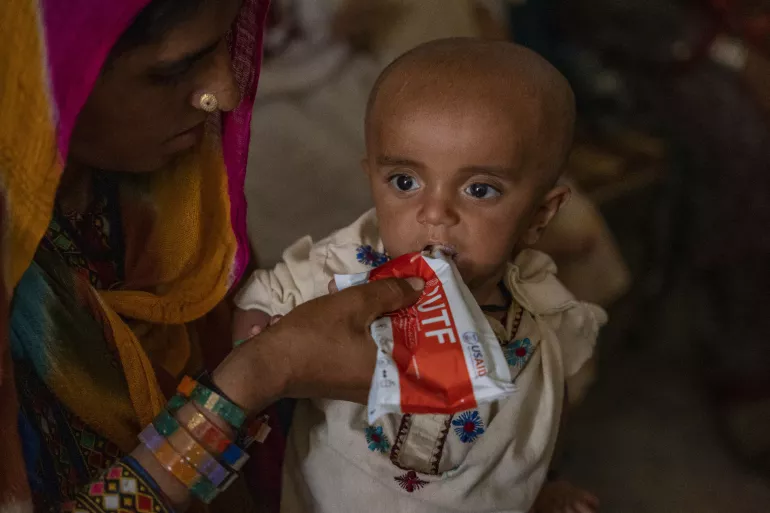
NEW YORK-ISLAMABAD, 15 October 2024 – Globally nearly two million children suffering from severe wasting, also known as severe acute malnutrition, are at risk of death due to funding shortages for life-saving Ready-to-use-Therapeutic-Food (RUTF) to treat wasting, UNICEF warned today.
Levels of severe wasting in children under five years remain gravely high in several countries, fueled by conflict, economic shocks and climate crises.
“In the past two years an unprecedented global response has allowed the scale-up of nutrition programmes to contain child wasting and its associated mortality in countries severely affected by conflict, climate and economic shocks, and the resulting maternal and child nutrition crisis,” said UNICEF Director of Child Nutrition and Development Victor Aguayo. “But urgent action is needed now to save the lives of nearly two million children who are fighting this silent killer.”
It is estimated that funding shortages for RUTF are leaving nearly two million children at risk of not receiving treatment in the 12 hardest-hit countries. Mali, Nigeria, Niger and Chad are either already experiencing or imminently facing stockouts of RUTF, while Cameroon, Pakistan, Sudan, Madagascar, South Sudan, Kenya, the Democratic Republic of Congo and Uganda could run out of stock by mid-2025.
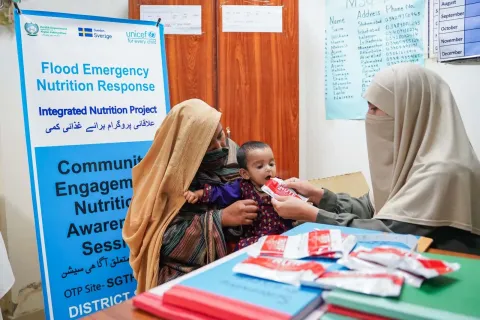
This year, only 262,000 severely wasted children in Pakistan (one third of those in need) have received lifesaving RUTF treatment (as of August 2024). The current supply of RUTF in Pakistan is projected to end in March 2025, threatening ongoing treatment efforts.
“The urgency of replenishing RUTF stocks cannot be overstated, as it is vital for the survival and recovery of severely malnourished children. Immediate action and sustained support are imperative to address this crisis effectively,” said Abdullah Fadil, UNICEF Representative in Pakistan. “Ensuring a steady supply of RUTF and enhancing prevention and treatment programmes in high-risk areas will be crucial to mitigate the impact of severe wasting, save lives and safeguard the health and future of Pakistan’s youngest and most vulnerable population,” he added.
UNICEF is calling for US $11.9 million to address the immediate funding shortfall to procure 300,000 cartons of RUTF in Pakistan as part of this global appeal.
UNICEF is calling for US$165 million in a renewed No Time to Waste 2024 Update and Call to Urgent Action, to fund therapeutic feeding, treatment and care for the two million children at-risk of death due to critical shortages of RUTF.
Since No Time to Waste – an acceleration plan to respond to the global food and nutrition crisis – launched in 2022, UNICEF has raised over US$900 million to scale up programmes, services and supplies for the early prevention, detection and treatment of child wasting. In that time, 21.5 million children and women received essential services for the early prevention of child wasting, 46 million children were reached with early detection services, and 5.6 million children were reached with life-saving treatment.
To address severe child malnutrition in the long-term, UNICEF launched the Child Nutrition Fund (CNF) last year, with the support of the UK Foreign Commonwealth and Development Office, the Bill and Melinda Gates Foundation, and the Children’s Investment Fund Foundation.
As a UNICEF-led multi-partner financing mechanism, one of the goals of the CNF is to support local and regional production of first foods – fortified foods, food supplements and RUTF for young children – in areas experiencing high levels of child malnutrition, to circumvent global supply chain disruptions, reduce environmental impacts of shipment, and boost job opportunities and economic growth within communities. Once fully implemented, the Child Nutrition Fund will help insulate countries from the funding shortages and fluctuations in demand currently driving part of the growing RUTF shortages.
Children suffering from wasting, which is caused by a lack of nutritious and safe foods and repeated bouts of disease, are dangerously thin and their immune systems are weak, leaving them vulnerable to growth failure, poor development, and death.
“UNICEF has repeatedly warned that without sustainable prevention strategies and sustained financing, there would be RUTF stockouts in several countries, with the Sahel hardest hit by funding shortages,” Aguayo added. “We are now seeing that happening. Funding from this appeal would complement recent RUTF contributions, by sustaining the production and availability of RUTF, including from manufacturers in the global south.”
#####
Notes to editors:
Download multimedia content.
Below is a timeline indicating when RUTF stock is projected to run out in the 12 hardest-hit countries:
| Country | Projected Stockout |
| Mali | Stockout has begun |
| Nigeria | Stockout has begun |
| Chad | October 2024 |
| Niger | October 2024 |
| Cameroon | December 2024 |
| Pakistan | March 2025 |
| Sudan | March 2025 |
| Madagascar | April 2025 |
| Kenya | May 2025 |
| South Sudan | June2025 |
| DR of the Congo | June 2025 |
| Uganda | June 2025 |
RUTF is an energy dense, micronutrient paste made using peanuts, sugar, milk powder, oil, vitamins and minerals. Uninterrupted treatment for wasting cases typically takes six to eight weeks and requires specialised therapeutic food alongside medical care.
In recent weeks, the Government of the United States announced a new contribution of US$100 million. This donation will go a long way to support UNICEF’s efforts, but it will not be enough to reach every child in need.
NEW: Subscribe to UNICEF’s global media updates on WhatsApp.
Media contacts
Additional resources

About UNICEF
UNICEF promotes the rights and wellbeing of every child, in everything we do. Together with our partners, we work in 190 countries and territories to translate that commitment into practical action, focusing special effort on reaching the most vulnerable and excluded children, to the benefit of all children, everywhere.
For more information about UNICEF and its work for children, visit www.unicef.org