A second chance of survival for twin sisters in Khyber Pakhtunkhwa
In Peshawar, a grandmother’s prayers and therapeutic food helped twin sisters fight for survival
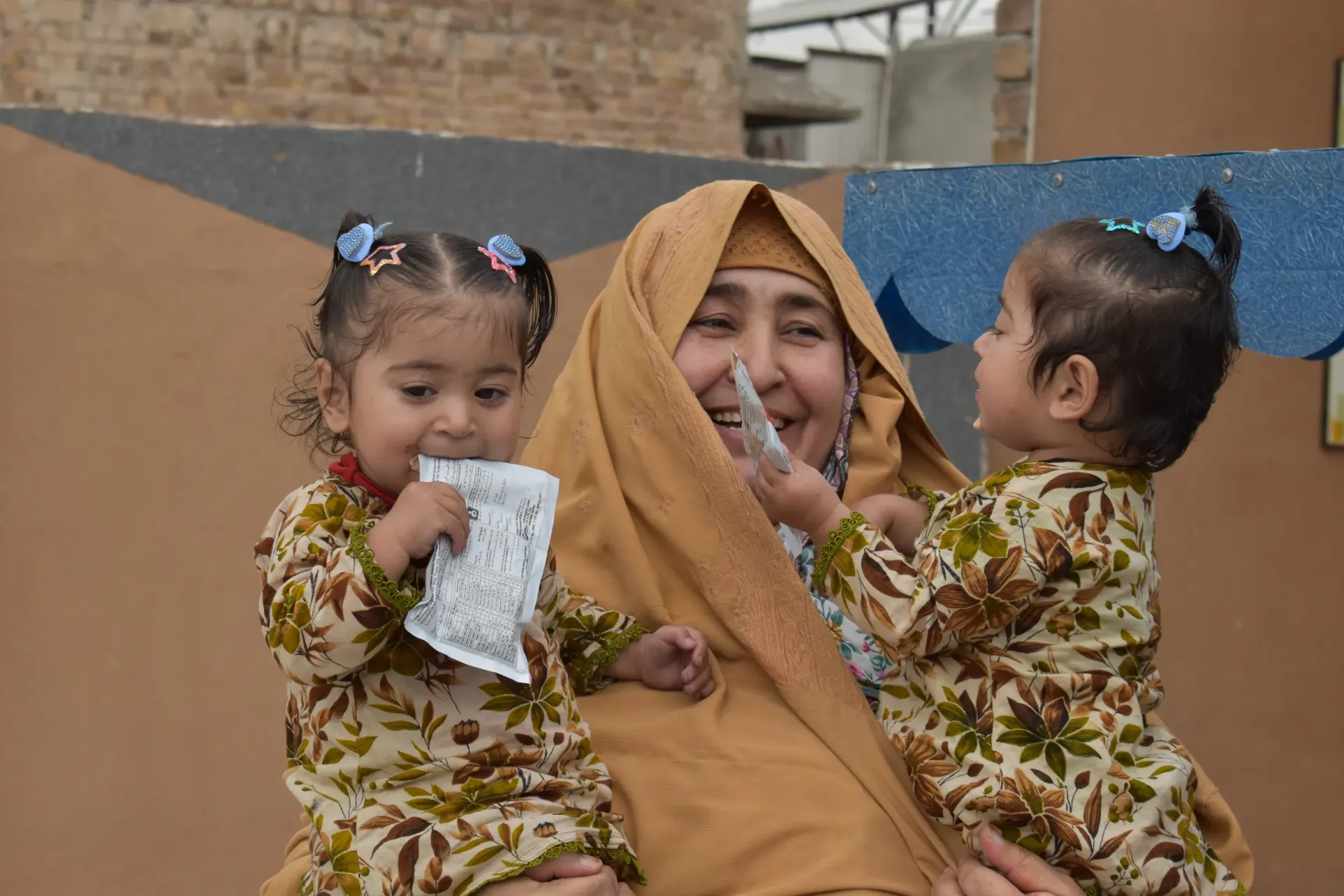
Peshawar, Khyber Pakhtunkhwa: “I still remember that day. It was December 2024, outside the labour room, my hands raised in prayer and my eyes filled with tears,” says Dilbara Bibi. “I was asking God for just one thing, to protect my daughter-in-law and her unborn babies. Then the nurse came out carrying two babies and said the words I had been begging to hear: both children are alive. For us, it was everything.”
For Dilbara Bibi, the safe birth of her twin granddaughters in a hospital in Peshawar felt like a miracle. But for Safa and Shifa, surviving birth was only the beginning of a much harder journey.
In Khyber Pakhtunkhwa, where nearly 40 per cent of children are undernourished, many families struggle to give their children the nutrition they need to survive and grow. For this family, that struggle would soon become painfully real.
Dilbara, a mother of seven, had brought her 23-year-old daughter-in-law, Zaiba Khan, to the hospital. Zaiba, whose husband works as a rickshaw driver, became pregnant again just six months after the birth of her first child. She was warned that carrying twins before her body had recovered could lead to serious risks, including the possible loss of one baby.
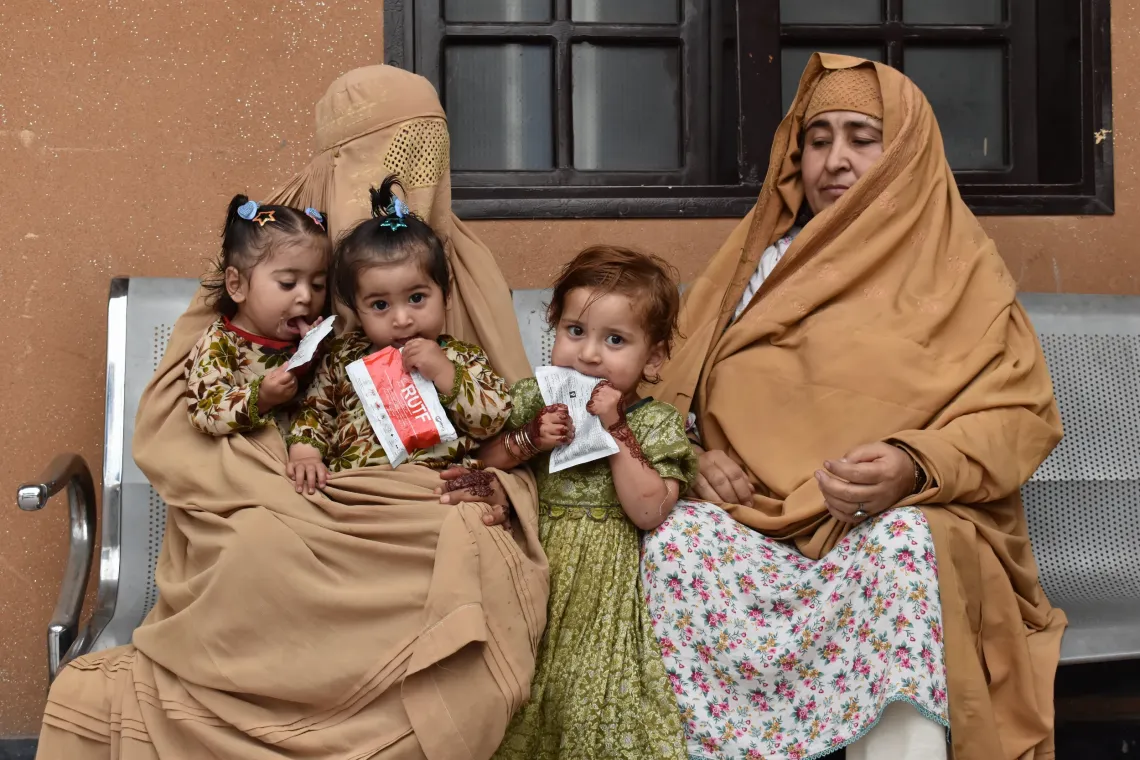
Zaiba still remembers the fear she carried through the final months of her pregnancy.
“When the time of birth came, I was terrified,” she says. “The doctors warned me that one of my babies might not survive. Then I heard my daughters cry for the first time and realized they were both alive. It was as if life returned to me.”
The relief was short-lived. While Shifa was born stronger, Safa was fragile from the start.
“Shifa was stronger, but Safa was very weak, like a flickering flame,” recalls Dilbara. “I felt deep regret. As the elder, I could not convince the family to leave more time between pregnancies. In our culture, women rarely make these decisions, and we often understand the cost too late.”
In the months that followed, the family struggled to meet the twins’ nutritional needs. Their path to recovery began when they were seven months old at the Civil Dispensary Nazar Bostan supported by UNICEF and Children’s Investment Fund Foundation in Peshawar. By then, both girls were suffering from severe acute malnutrition.
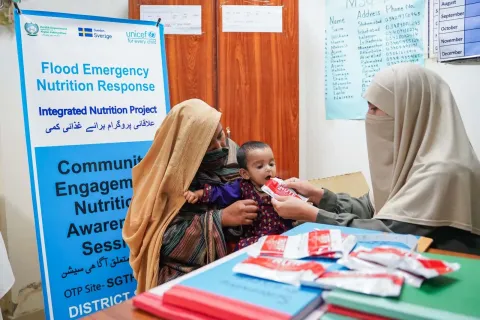
They were enrolled for treatment with Ready-to-Use Therapeutic Food (RUTF), a nutrient-rich therapeutic paste that can be eaten straight from the sachet, without water, cooking, or refrigeration.
First developed in 1996, RUTF changed the treatment of severe wasting by allowing children to recover at home rather than only in hospital. Since 2000, UNICEF has helped bring this lifesaving treatment to children around the world, improving survival for millions. In around 869,000 children received lifesaving support through RUTF from 2024 to 2025 including 131,000 children in Khyber Pakhtunkhwa.
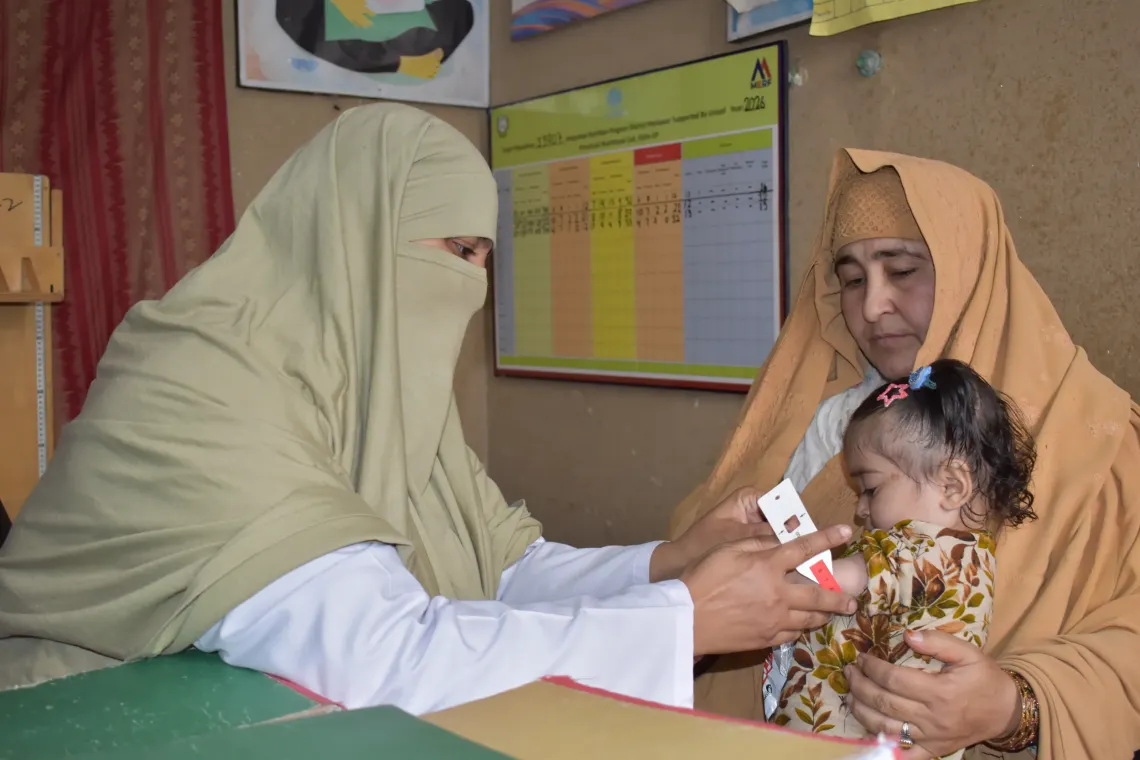
"When Safa and Shifa arrived, both were severely malnourished and dangerously weak,” says Sehrish Khan, Nutrition Assistant at the Civil Dispensary. “We started them on RUTF and gradually reduced the dose as they improved. Alongside the treatment, I also counselled Zaiba on nutrition, hygiene and safe feeding practices at home.”
For the family, the small sachets soon became a source of hope.
Over four months of treatment with RUTF, both girls began to recover. Their bodies grew stronger. They became more alert and active. But soon afterwards, Safa weakened again and needed another round of treatment. She regained strength and began trying to stand.
“Her little legs were shaking, and she held onto things as she tried to take her first steps,” says Dilbara.
Thirty years after RUTF was first developed, its impact is still seen in moments like these, when a child who was once dangerously weak begins to sit, play and walk again. For parents, recovery is measured not only in a child’s weight gain, but in the return of appetite, movement, and energy.
17-month-old Safa and Shifa’s story reflects a wider crisis facing children across the province. In Khyber Pakhtunkhwa, 51 per cent of children are exclusively breastfed, yet more than 54 per cent do not receive regular meals and over 86 per cent lack a diverse diet, according to the Khyber Pakhtunkhwa Multiple Indicator Cluster Survey (MICS) 2019.
Sehrish says these numbers are reflected in the families she sees every day, families living with poverty, limited awareness, and social norms that often leave girls with less food and less care.
In 2025, with support from the Children’s Investment Fund Foundation and other donors, including Sweden and the United States Government, UNICEF supported 310 Outpatient Therapeutic Programme sites across all 34 districts of Khyber Pakhtunkhwa, including refugee camps and emergency-affected areas. These sites treated over 60,000 children with severe acute malnutrition using lifesaving RUTF.
For Dilbara, the impact is deeply personal.
“I do not know where this food comes from, but I know it gave my granddaughters life,” she says. “Five children in our family have recovered from malnutrition. They call it ‘chocolate’ and eat it with joy. It gives them strength.”
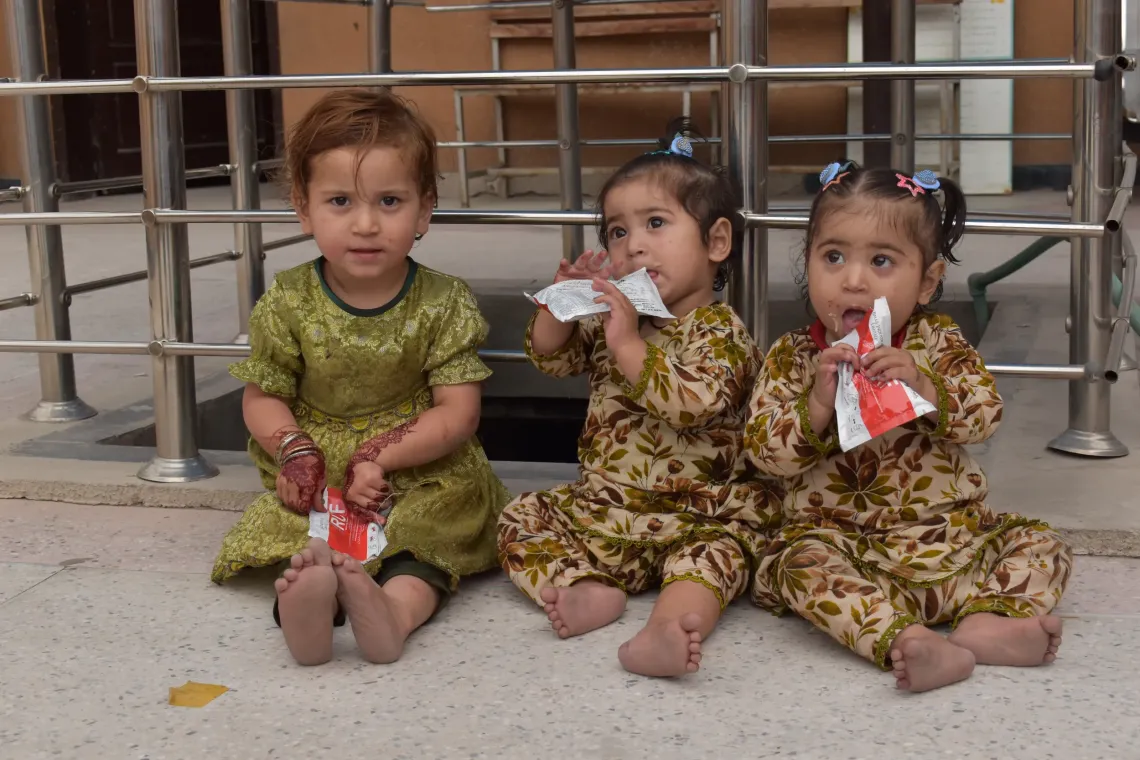
Despite the lifesaving support these services provide, 72 sites across districts including Peshawar, Malakand, Chitral, and Mardan, some serving Afghan refugees, were forced to close in early 2026. This led to a 30 per cent drop in treatment and micronutrient services, cutting off critical care for children who depend on it.
For children like Safa and Shifa, access to timely treatment can mean the difference between life and death, between weakness and recovery, between uncertainty and a second chance.