From Uncertainty to Confidence
A family-centred early childhood intervention pilot is giving parents the support, confidence and practical guidance they need to help children develop and thrive.
- English
- Македонски
- Shqip
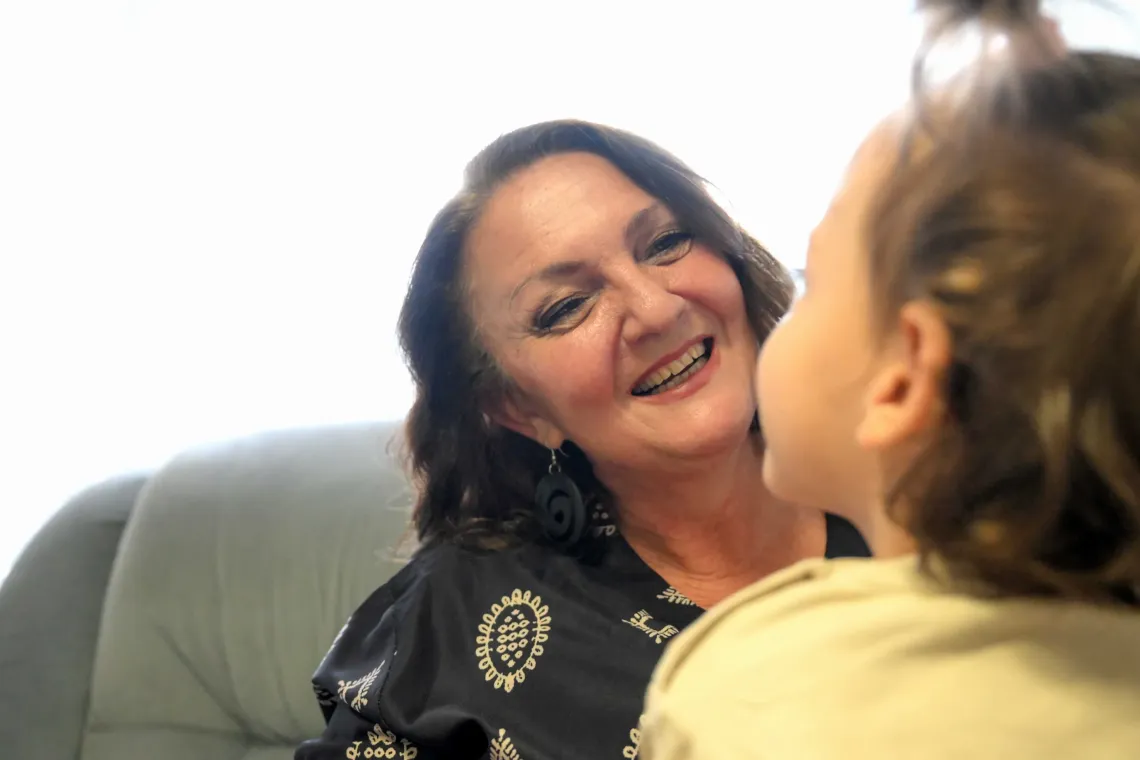
As two-year-old Jana enters the room with her mother, she immediately recognizes Ljubica, affectionately known as Bube.
“Here’s my girl!” Bube says, greeting Jana with a warm hug.
Jana settles beside her and remains close throughout the visit, playing and smiling. Their connection is easy to see. Over the past year, Bube has become a familiar and trusted person in Jana’s life, visiting the family each week and helping her parents support her development through everyday activities.
Bube is Jana’s primary service provider under a new family-centred early childhood intervention (SORID) pilot, supporting the family at home while drawing on the expertise of a wider team.
The path to support was not straightforward. Jana was born prematurely and faced several developmental risks. When her parents, Marija and Petar, brought her home from hospital, they were given a long list of specialists to consult. Determined to provide the best possible support for their daughter, they followed every recommendation they could. But navigating the complex system was often confusing.
“We went to so many different places,” Marija recalls. “One place would tell you one thing, and somewhere else something different. You’d be referred somewhere but couldn’t get an appointment, and the professional opinions didn’t always align. In the beginning, it was overwhelming.”
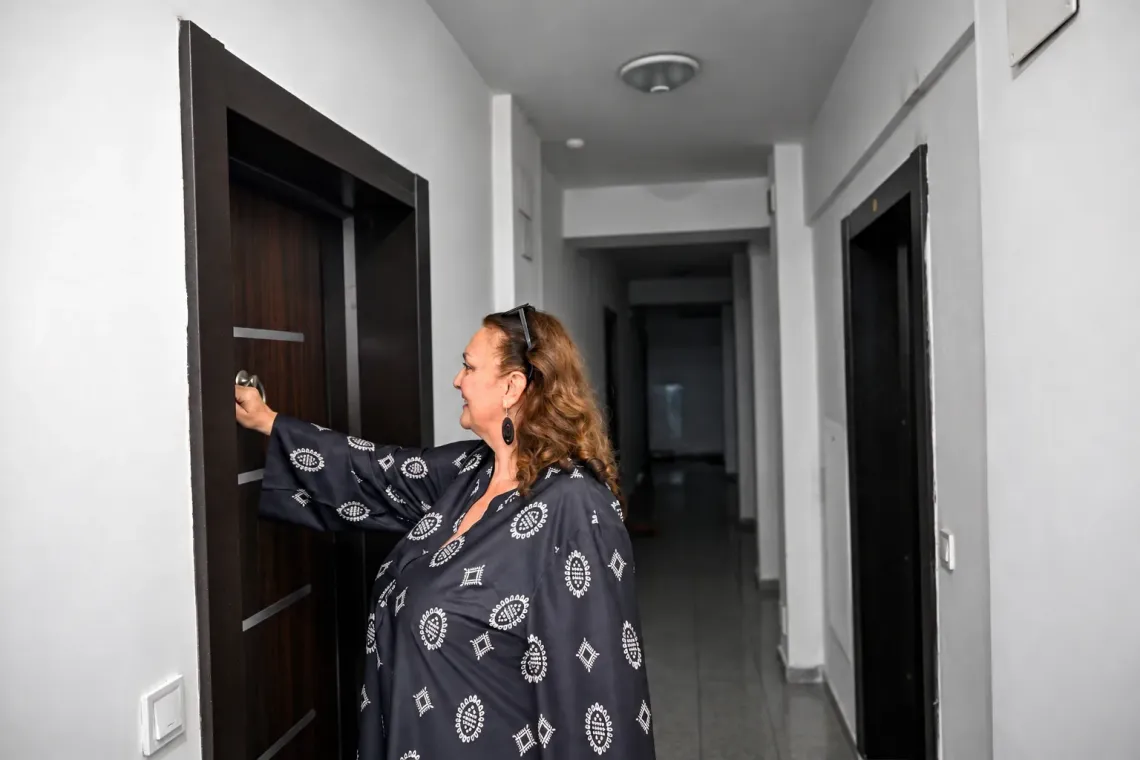
One person beside the family, supported by a team
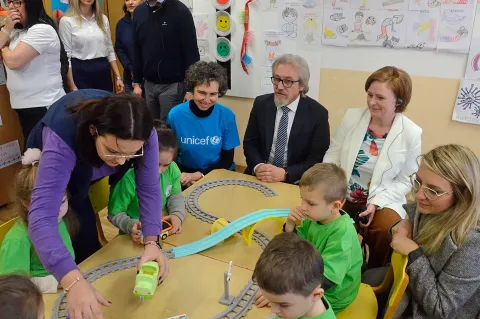
Over the past year, a family-centred early childhood intervention (SORID) has been piloted in Skopje, Štip and the Polog region. Instead of leaving parents to piece together services on their own, the model brings together professionals from health, education and social protection around the child and family.
These professionals work as a transdisciplinary team, combining their expertise with the family’s knowledge of the child’s needs and daily routines. Together, they develop an Individualized Family Support Plan drawing on specialized expertise as needed. Support is provided mainly through family coaching at home for children under three, and increasingly through kindergartens and other community settings as children grow. The primary service provider coordinates this support, so the family does not have to navigate services alone.
For Marija and Petar, the change is both practical and personal. They no longer need to interpret different recommendations on their own. They now have one primary service provider who meets with them regularly, follows Jana’s progress and consults other professionals when additional expertise is needed.
“Bube is very important to us and has helped us greatly,” Marija says. “She comes to our home every week. We talk about what Jana has achieved and what we should work on next. We practice at home, and we have clear guidance about where we need to go and what we need to do.”
The regular contact has also made it easier for the parents to raise questions as soon as they notice new development or reaction.
“If something is unclear, or we notice a new development, behaviour or a reaction, we call Bube or send her a video,” Petar says. “There is a huge difference.”
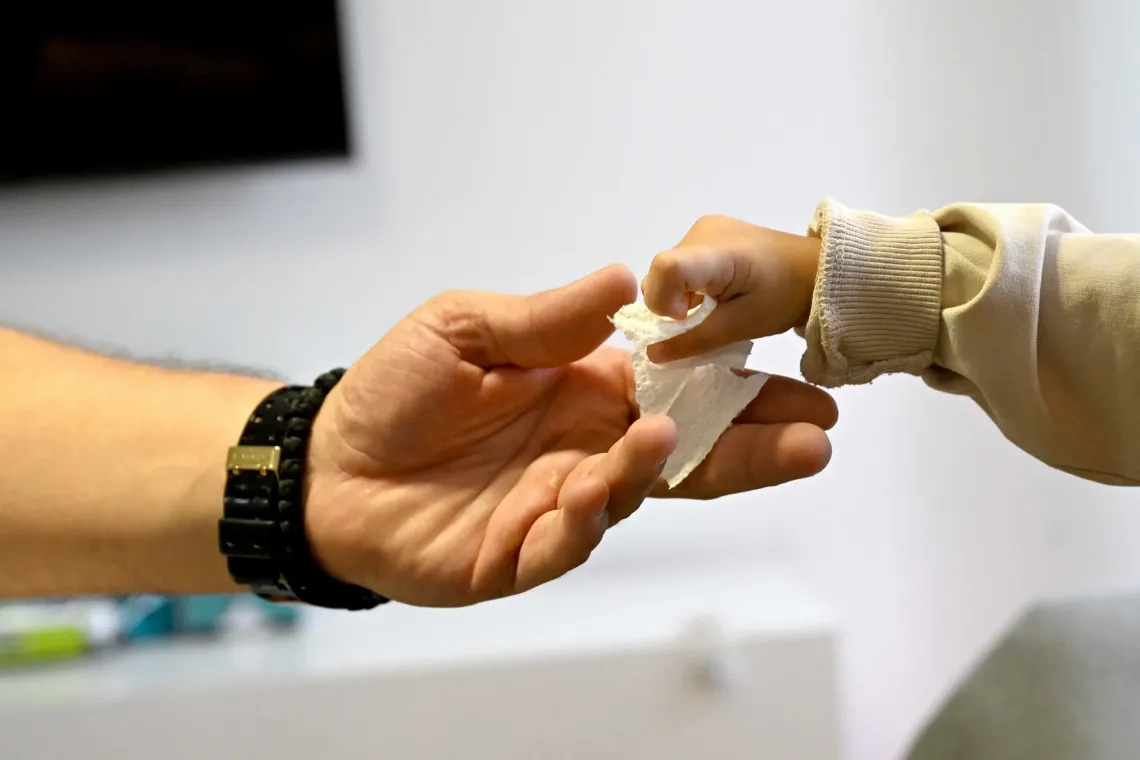
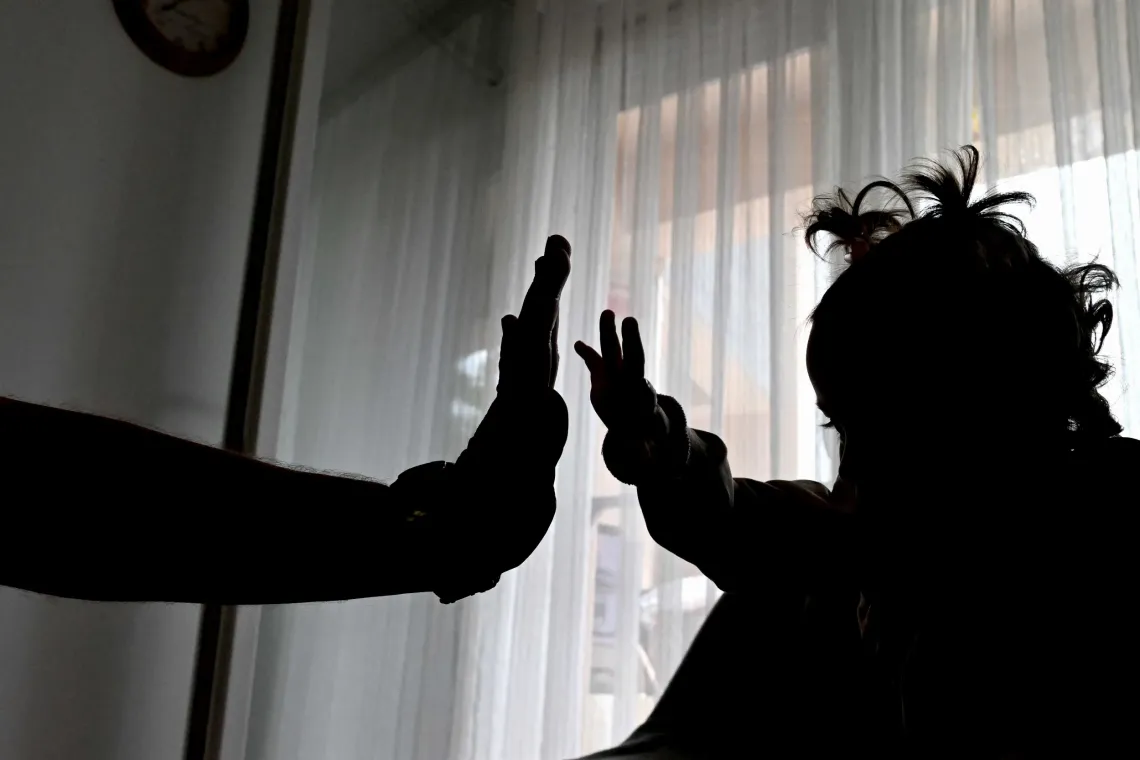
As he speaks, Petar offers Jana a piece of paper. She reaches for it and takes it from him. “This did not happen before,” he says.
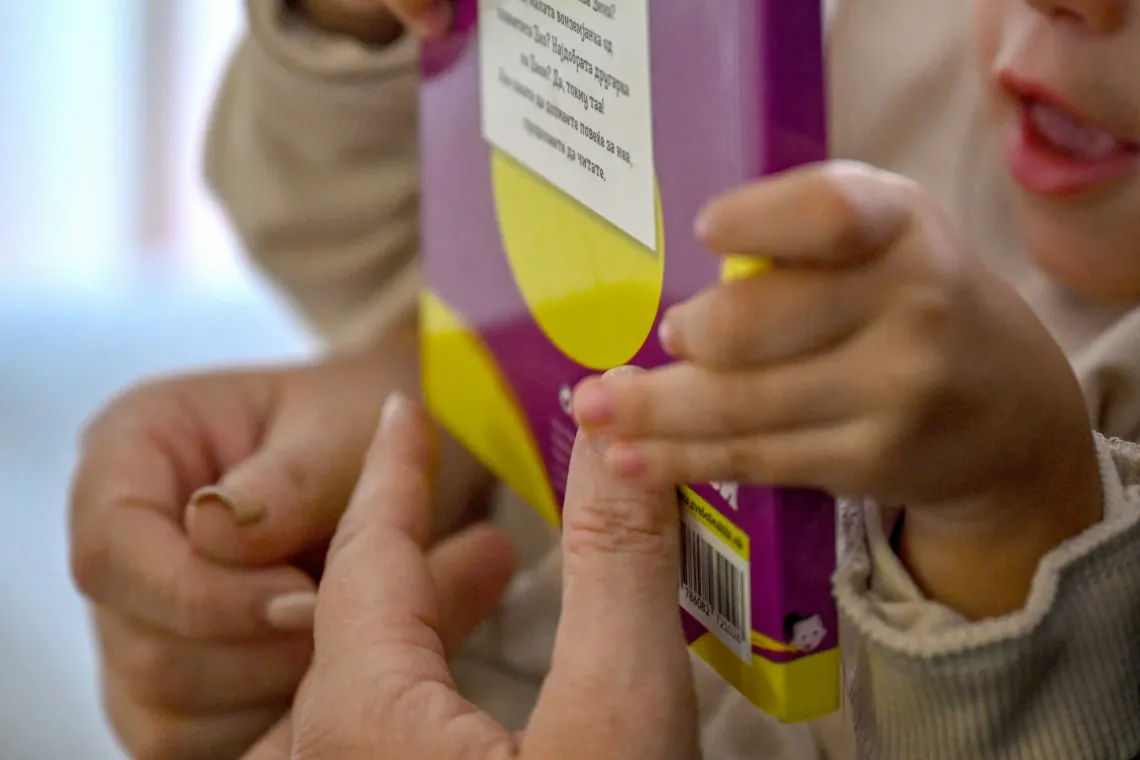
Marija remembers when Jana kept her hands tightly closed and could not hold an object. Today, she is learning to take objects, hold them and pass them to another person – what seems like an ordinary gesture, marks important progress.
“When Bube sets her mind to something, she does not give up,” Marija says, smiling.
Supporting parents to support their child
For Bube, moments like this capture the purpose of family-centred early childhood intervention (SORID).
“When you strengthen a parent’s capacity to support their child, the child’s overall development moves forward,” she explains.
“Children may still need specialized therapies. It is not a question of one service or the other. But a therapy session may last an hour, once or twice a week. The rest of the support is every day, at home.”
Young children learn and develop through everyday interactions with familiar people in familiar environments. The intervention therefore helps parents build confidence, knowledge and skills to support their child's development throughout daily routines, from meals and play to walks, bath time and interactions with siblings.
As a primary service provider, Bube's role is not to deliver a stand-alone therapy sessions during the visits. Instead, she observes Jana in her natural environment, demonstrates practical strategies and supports her parents in incorporating them into activities that are already part of family life.
“I can model what needs to be done, observe how the family is doing it and offer guidance,” Bube says. “But the mother and father are the ones who support the child throughout the week.”
That shift also recognizes the parents as experts on their own child. Bube says that, during their first conversations, Marija and Petar found it difficult to identify the changes they wanted to prioritize. As their knowledge and confidence grew, this changed.
“Now they tell me, ‘Bube, this is what we would like to work on next and what we want Jana to achieve,’” she says. “The parent begins to recognize what their child may be able to do. My role is to provide strategies and support.”
Turning mealtimes into opportunities to learn
One of the family's biggest concerns was feeding. In the family-centred model, support begins with the changes parents say would make the greatest difference in everyday family life.
“At the beginning, she did not eat anything,” Marija says. “I tried everything I could because, as a parent, the only thing that mattered was that she ate something.”
Bube arranged the home visits during Jana’s mealtimes. She observed how Jana was seated, how she moved her hands and mouth, and how food was offered.
“Bube showed me how to seat her upright and make sure she was stable. I used to blend everything. Now Jana eats more solid food and chews. She also drinks from a cup.” Marija says.
“No two children are the same,” Bube explains. “It starts with a functional assessment to understand where the child is in relation to the changes prioritized with the family. In Jana's case, eating solid food was identified as a first priority for her. So, we looked at what she could do with her hands, how she was using her mouth, to chew and swallow. Based on that and in consultation with the team, we developed strategies tailored specifically to her needs."
"We introduced silicone brushes to stimulate the muscles involved in eating and provided guidance on how to offer food in ways that would encourage movement of the mouth. We break each goal into manageable steps, then explain, demonstrate and write down the guidance. Every week we review the child's progress and adjust the support."
“Thanks to Bube’s guidance, she now takes the spoon, puts it into the bowl and brings it towards her mouth,” Petar says.
Learning through connection
Throughout the conversation, Petar remains close to his daughter. He speaks to her, responds to her sounds and follows her attention. At one point, Jana reaches for his glasses. He gently places them on her head.
“Look how beautiful you are, Jana,” the adults tell her. She smiles broadly as everyone laughs together.
These exchanges may seem like small family moments, but they are also opportunities for Jana to communicate, practice new skills and learn through a responsive relationship with the people closest to her.
“She has even started to become a little shy,” Bube observes. For the family, it is another welcome sign of Jana becoming increasingly aware and responsive to the people and interactions around her.
Jana has also begun using words. One phrase has become a particular favourite: “There you go.”
For Marija and Petar, the changes are visible not only in what their daughter can do, but also in their own confidence as parents. They still seek specialized services, but they no longer feel that they are navigating every question alone.
“Every family facing similar challenges should have access to support like this. None of us at home is an expert.”, says Petar.
”Sometimes we worried for no reason; other times we missed things that mattered. Having someone who can guide you makes all the difference.”, he explains.
Building a system that supports every family
Jana’s progress shows what coordinated family-centred support can make possible. Yet this type of support is not currently available to every family who needs it.
In North Macedonia, it is estimated that more than 11,000 children under the age of six may need early childhood intervention services.
Many families, however, still struggle to access coordinated support, particularly families facing vulnerabilities, Roma families and those living in rural and remote communities.
To respond to these needs, the Ministry of Health, the Ministry of Social Policy, Demography and Youth, and the Ministry of Education and Science, with support from UNICEF, are piloting this approach and laying the foundations for a coordinated national early childhood intervention system. A Memorandum of Cooperation between the three ministries provided the framework for the pilot.
Under the pilot, trained professionals from health institutions, rehabilitation centres, kindergartens, resource centres and social service providers are working together to support children at risk of developmental delays and disabilities and strengthen the families who care for them.
Experience from the pilot is also informing longer-term reforms. A draft Law on Early Childhood Intervention proposes a coordinated, family-centred and transdisciplinary system for children from birth to six years of age. If adopted, the law would provide for Early Childhood Intervention Services across the country, Individual Family Service Plans and a primary service provider as each family's main point of contact, coordinating support across health, education and social protection sectors.
The earliest years of life present a unique window of opportunity for development, when children's brains develop more rapidly than at any other stage of life. The goal of the model is simple but ambitious: every family should have access to affordable, quality support close to home, regardless of where they live. For families, that means having one trusted person to turn to, a wider team when specialist expertise is needed, and practical support that helps children learn, participate and thrive in everyday life.