Children see the friend, before the disability
Breaking down the barriers to inclusive early childhood education
- English
- Македонски
The right to early childhood education is a basic child right for all children. It is also among the most effective pathways to integration and inclusion. This is why it’s unfair when children miss it out simply because of where they live, their ethnicity, the wealth of their families, and even their abilities. In this country, only 0.5% of children enrolled in pre-school education are children with disabilities. There are many reasons for this including the opinion of around 50 per cent of the general public which would not accept that a child with physical disabilities attends the same class or kindergarten as children without disabilities. The situation is unfair, but Mihail’s story is one that shows things are changing.
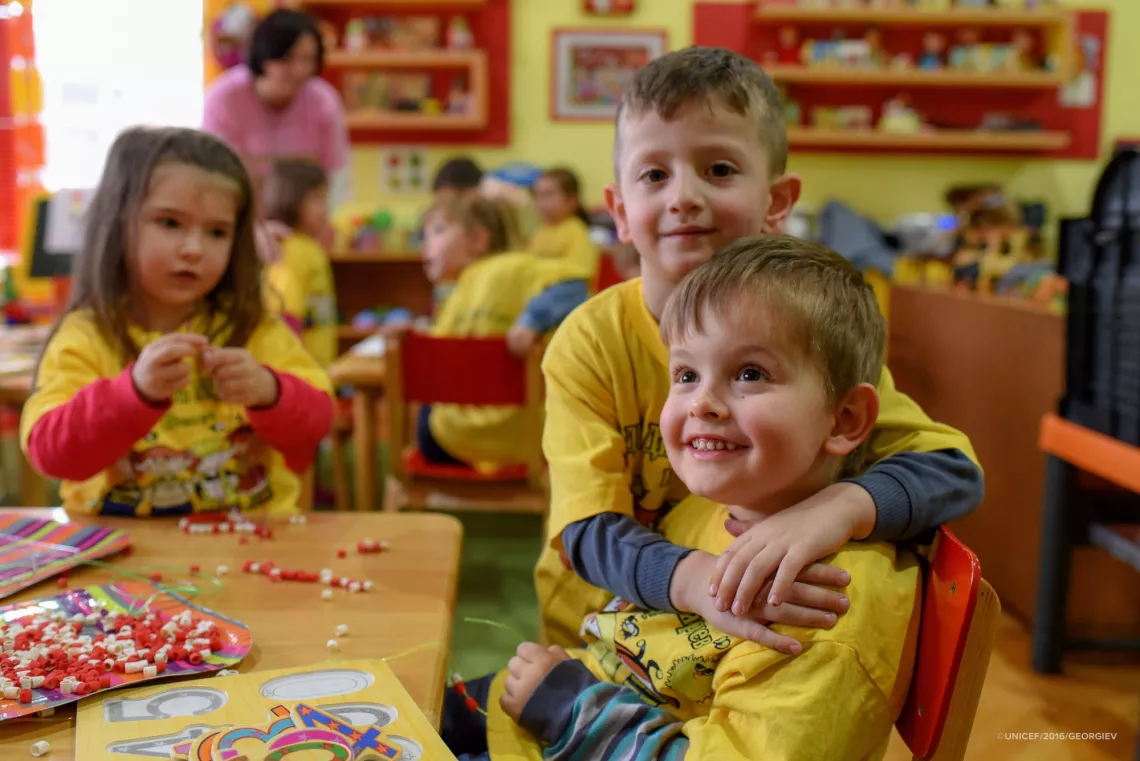
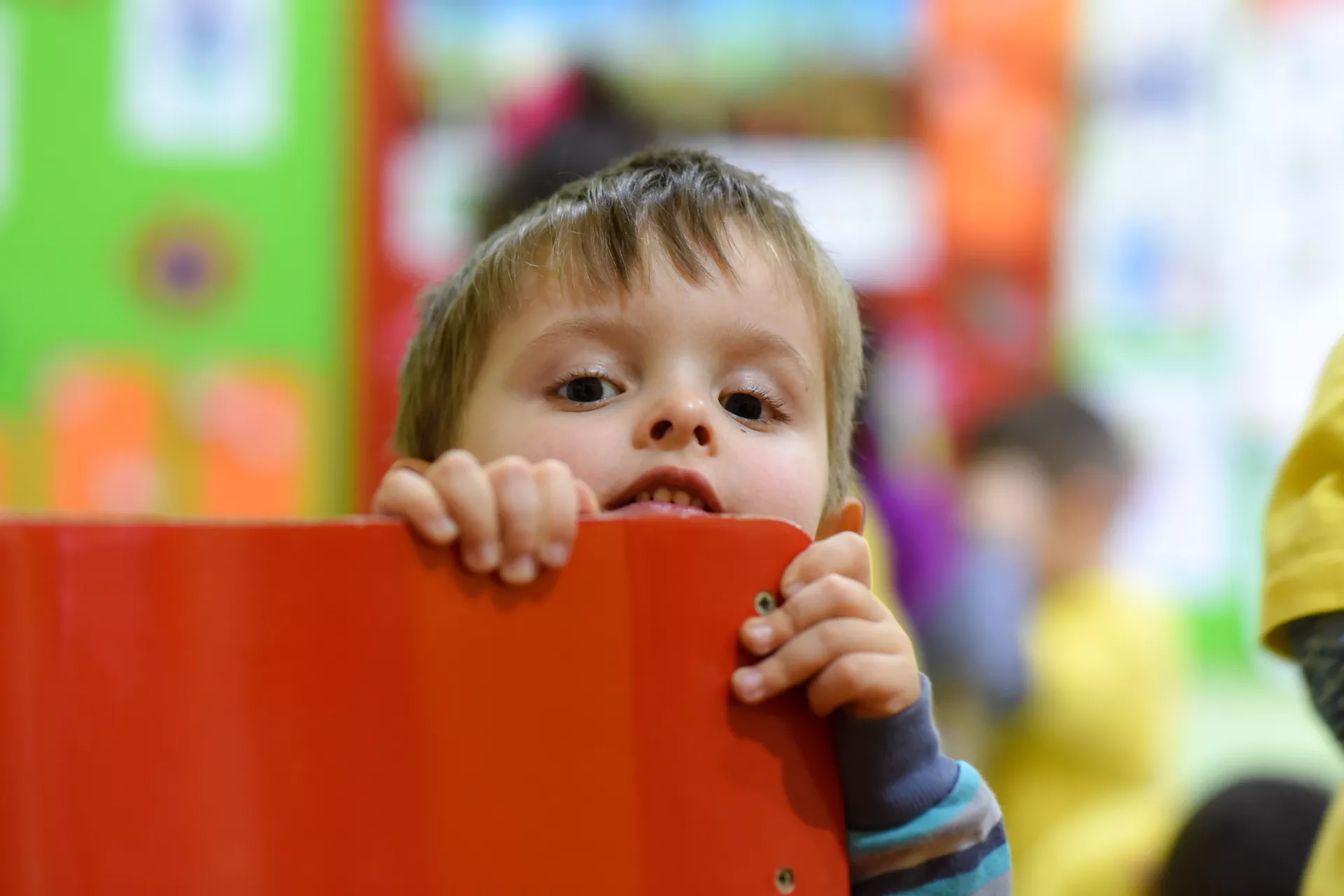
All children have enormous potential. When included in quality pre-school programmes together with their peers, children with disabilities get the opportunities they need to reach that potential. Mihail, four year old, from Veles has cerebral palsy. He is one of the few children with disabilities who attend kindergarten in the country. Playing games together with other children, and especially with his best friend Ljupco, is one of the things he loves most.
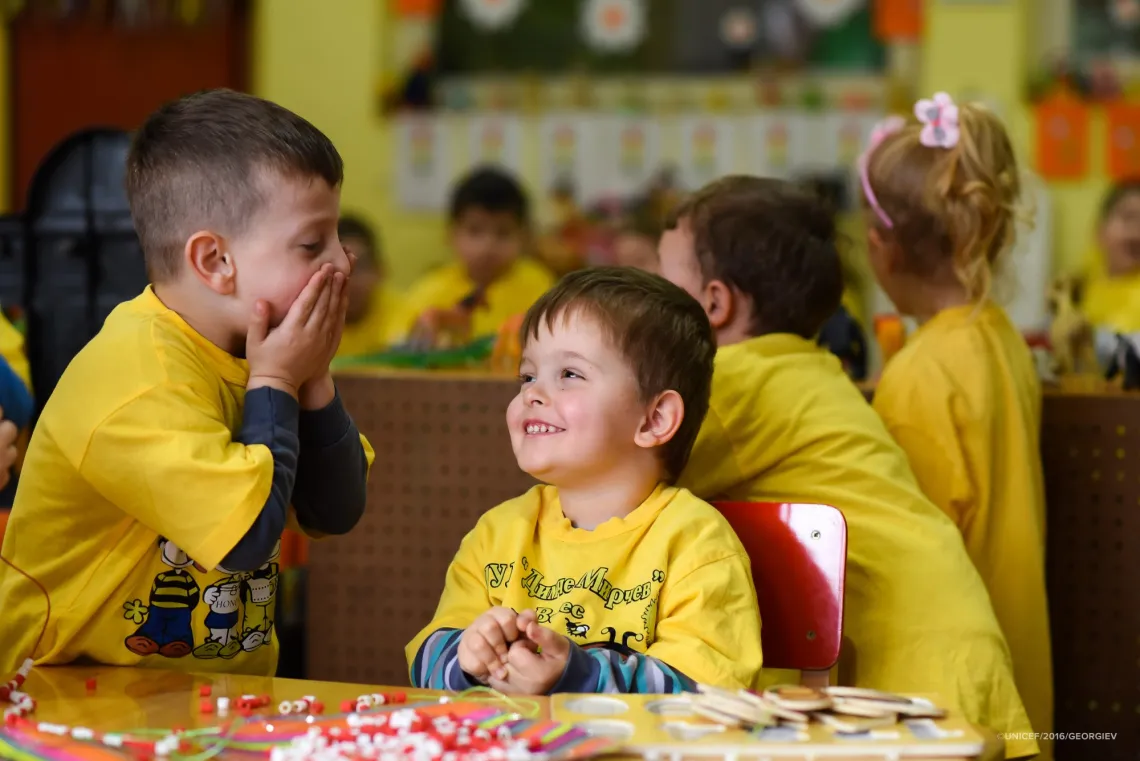
Focusing on a child’s disability without first seeing the child, constrains their potential. Mihail and Ljupco became friends from the very first day. Like all children, their friendship is based on what they can and enjoy doing together. “What I love to play with Miki is racing cars,” says Ljupco.
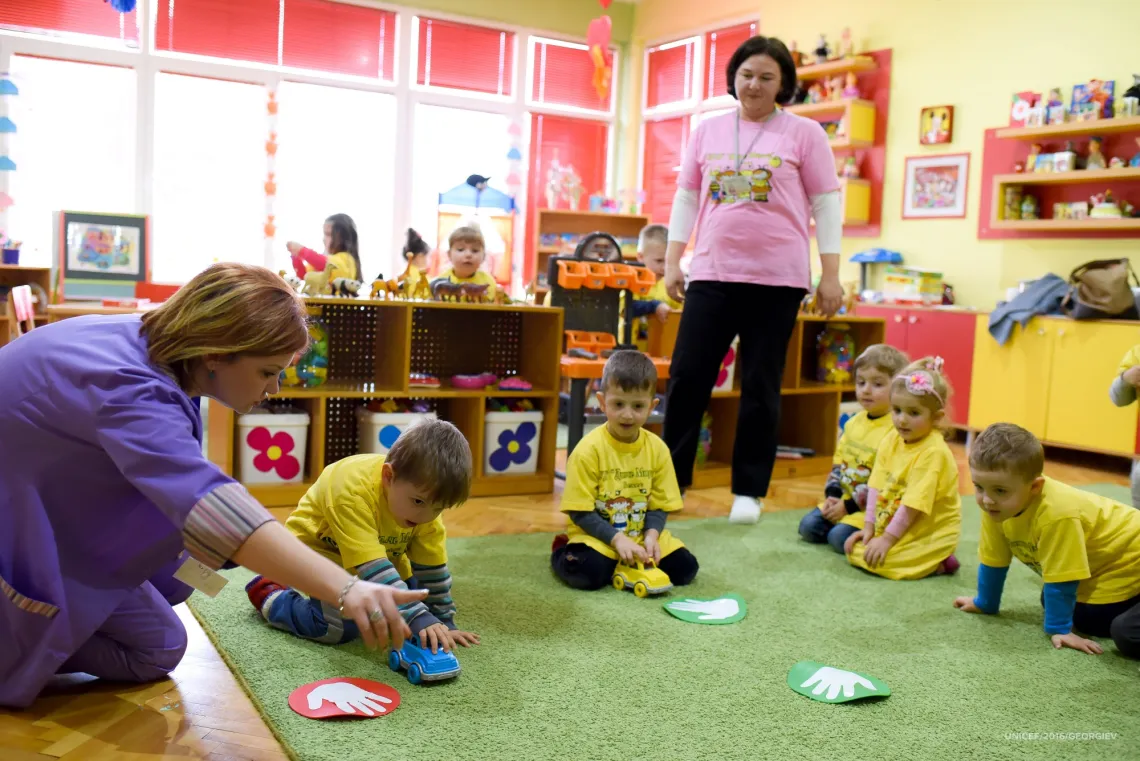
You wouldn’t think that being a race car driver was a sport for children, let alone for a child with cerebral palsy. But Maya, the educator at the kindergarten “Disney”, OJUDG “Dimche Mirchev” — Veles, came up with a game that all children can play, regardless of their abilities. In fact, Maya developed the game after consulting with a special educator. It requires children to move a car while on their knees, around obstacles to the finish line. This game is both suitable for Mihail’s condition and is recommended for muscle strengthening.
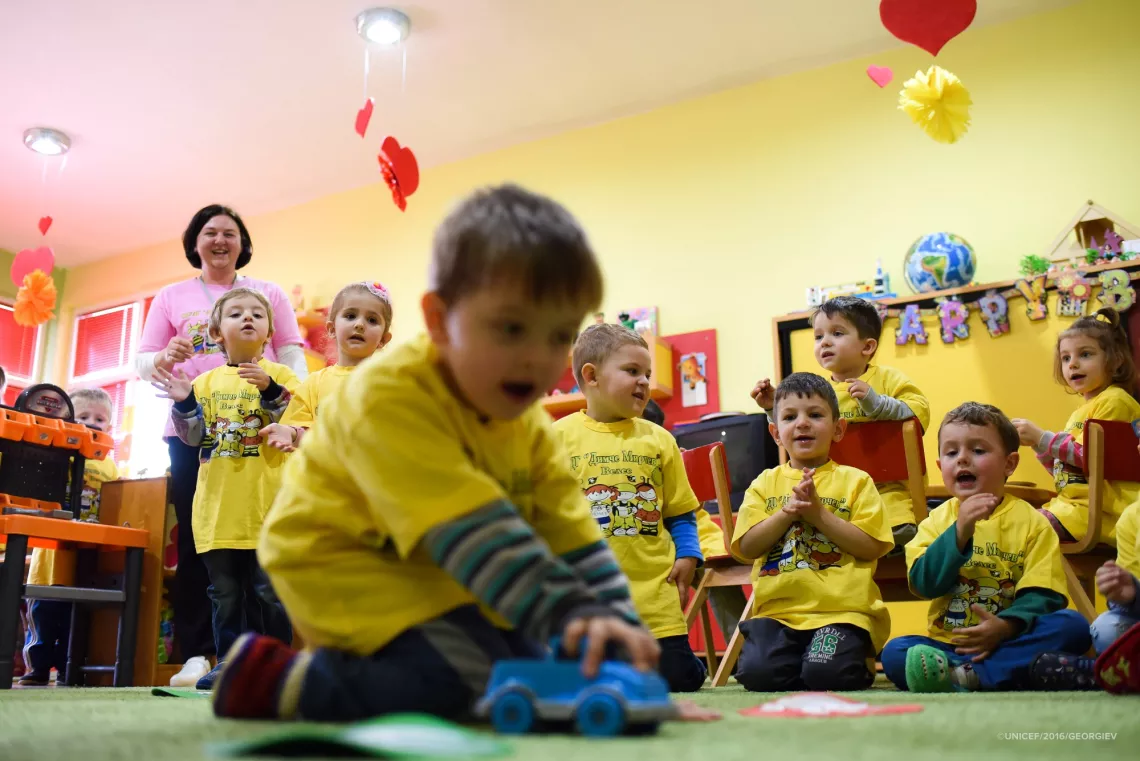
All the children benefit from the wide range of methodologies that inclusive teachers use to respond to the needs of all learners — including those of children with disabilities. At Mihail’s kindergarten, all the children love the car game and cheer on their class mates. “When included in playing games on an equal basis with other children, Mihail builds self-confidence and independence. Cheering makes him proud of his achievements. The same goes for all the other children,” says the educator Maya.
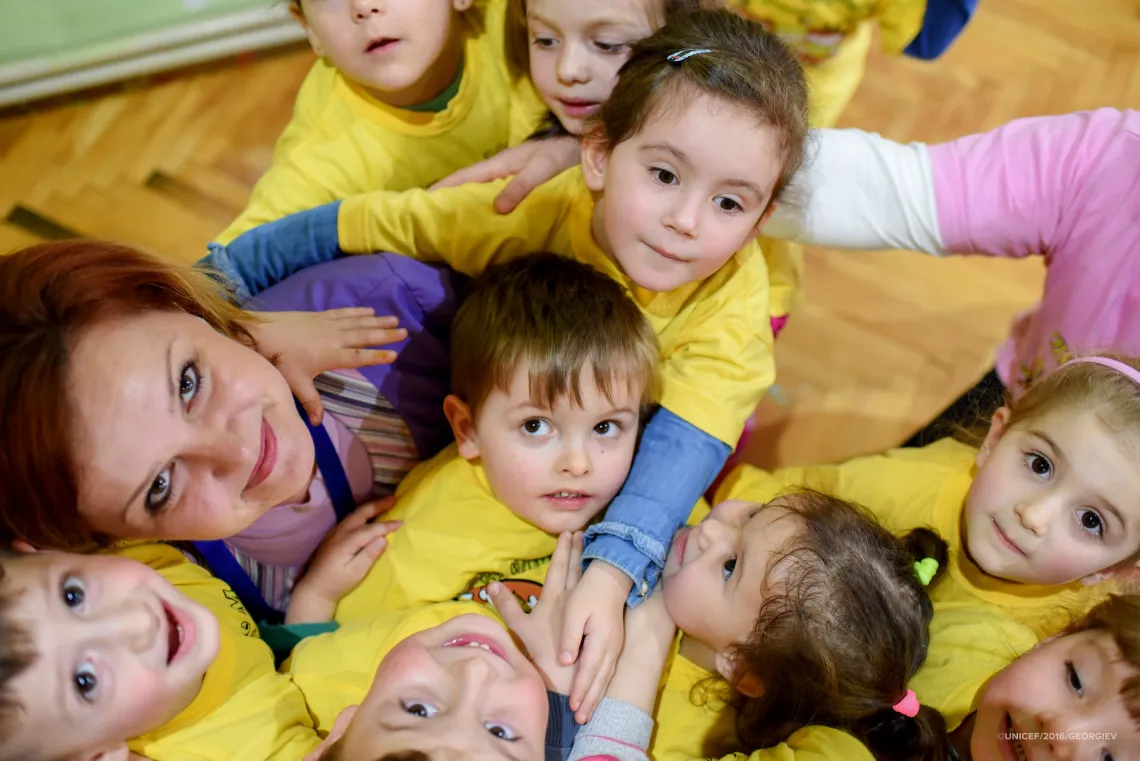
Maya, is also a future trainer on inclusive practices in pre-school education and she attended all UNICEF supported workshops on inclusion of children with disabilities in regular kindergartens. “I learned from the workshops how to adapt the existing curriculum to the needs of all children including children with disabilities. We do everything together, and we ensure that Mihail fully participates in all activities” says Maya.
Like any child, children with disabilities carry the promise of happy, meaningful lives, of vital community participation, and of making contributions to build inclusive and sustainable societies. But society cannot be equitable unless all children are included, and children with disabilities cannot be included unless the environment around them changes to support their participation.